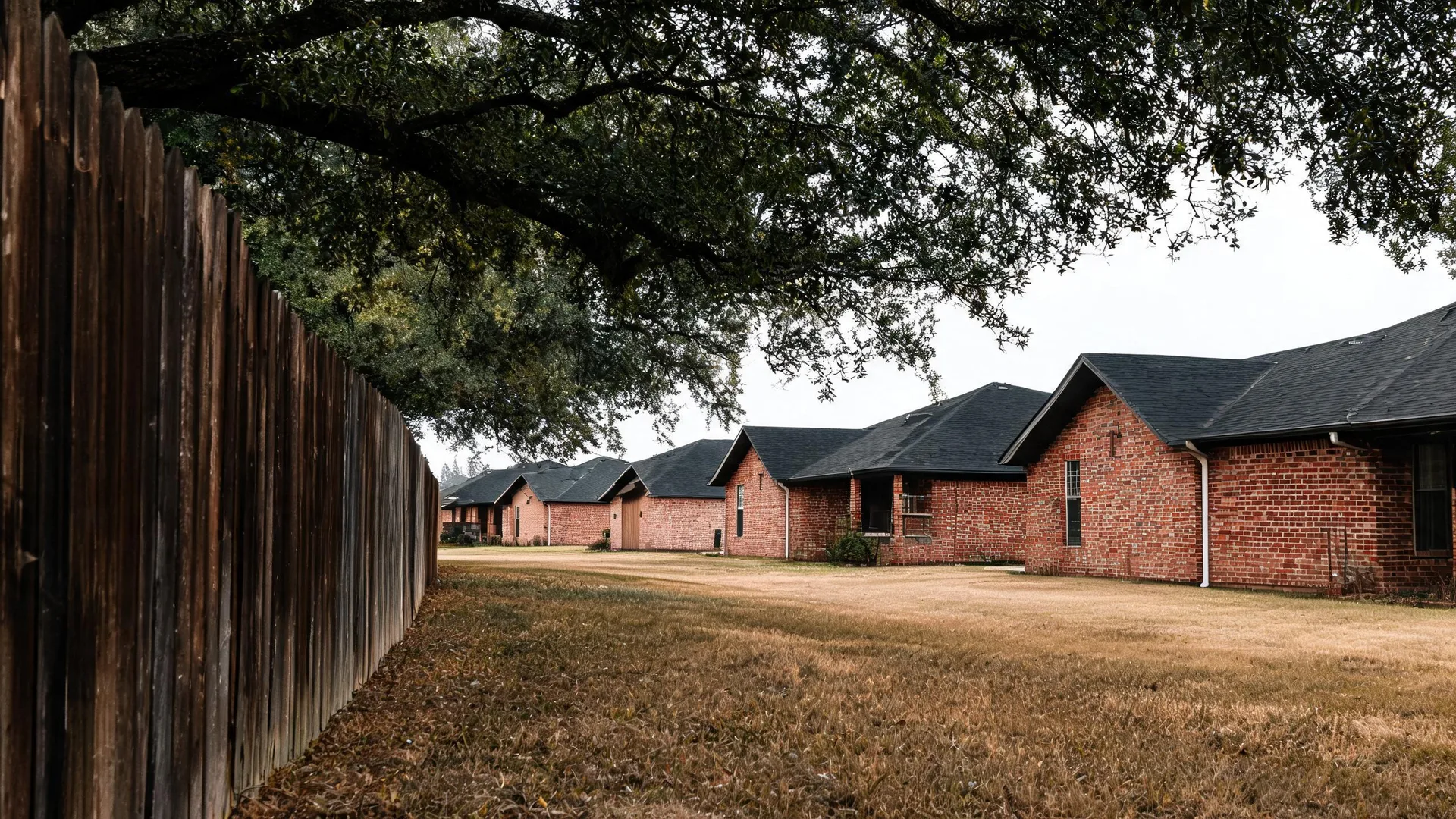





A row of single-story brick houses with dark shingled roofs behind a dry grass field, bordered on the left by a weathered wooden fence and overhung by large tree branches.

Heat Pump Repair in Anadarko, OK

Tell us about the job

Takes about a minute. No obligation.

RepairHeat PumpCaddo County, OK
Step 1 of 2

What ZIP code is the job in?

Caddo County recorded 102 hail events between 2015 and 2024. The outdoor unit of your heat pump sits right out in that weather with nothing between it and the sky. Hail dents fins, bends the cabinet, and can knock the fan or coil out of true even when the damage looks minor from the yard. A unit that takes that kind of beating year after year is going to show problems sooner than one that doesn't. If your heat pump is acting up after a storm, or just not keeping up the way it used to, the cause is worth finding before any parts get replaced.

6 months
November through April, your system heats
5 months
May through September, it cools
29°F
the average winter night it heats against
93°F
the average summer afternoon it cools against
Isometric cutaway illustration of a gray house showing interior rooms, a central air handler with ducts in the attic, and refrigerant lines running to an outdoor condenser unit beside the building.
Your system heats November through April and cools May through September.

NOAA nClimDiv, 1991–2020 normals

Half the homes in Caddo County were built in 1972 or earlier.

A heat pump that old is closer to the end of its life than the middle.

November is when a weak heat pump gets found

Cooling runs May through September
Heat runs November through April
102 hail events from 2015 to 2024

Caddo County saw 105 damaging wind events between 2015 and 2024, on top of the hail. That kind of wind carries branches and loose debris into the outdoor unit. A bent fan guard or a cracked blade doesn't always stop the unit from running. It just stops it from running right. Oklahoma also loses power hard. A quarter of households in the state went at least a day without it in 2024. A heat pump that sits dead for a day in cold weather puts the whole house at the mercy of whatever backup heat it has, and not every system switches over the way it's supposed to. If a storm came through and the heat pump never got looked at after, that's worth fixing before winter asks more of it.

Have the cause found before you fix anything

If your heat pump has been acting up, especially after a storm, get the cause diagnosed before any parts get replaced. A unit that takes a beating from hail and wind year after year wears in ways you can't always see from the yard.

Find a contractor
A gray heat pump outdoor unit mounted on a concrete pad next to the stone-accented exterior wall of a house.

Know the age before you spend on it

If your heat pump came with the house, find out how old it is before paying for a repair. One that's near the age of the house itself, especially if the house dates to 1972 or earlier, may not be worth a new compressor or coil. Ask whoever comes out to look what the system's age means for the repair you're facing. That answer should come before any part gets ordered.

It runs but can't keep up

A heat pump that used to hold the house at the setpoint and now falls behind has lost capacity somewhere. The charge could be low. The outdoor coil could be caked with debris blocking airflow. The reversing valve could be sticking instead of switching all the way over. Whatever the cause, the air coming out of the vents stops matching what the thermostat is asking for.
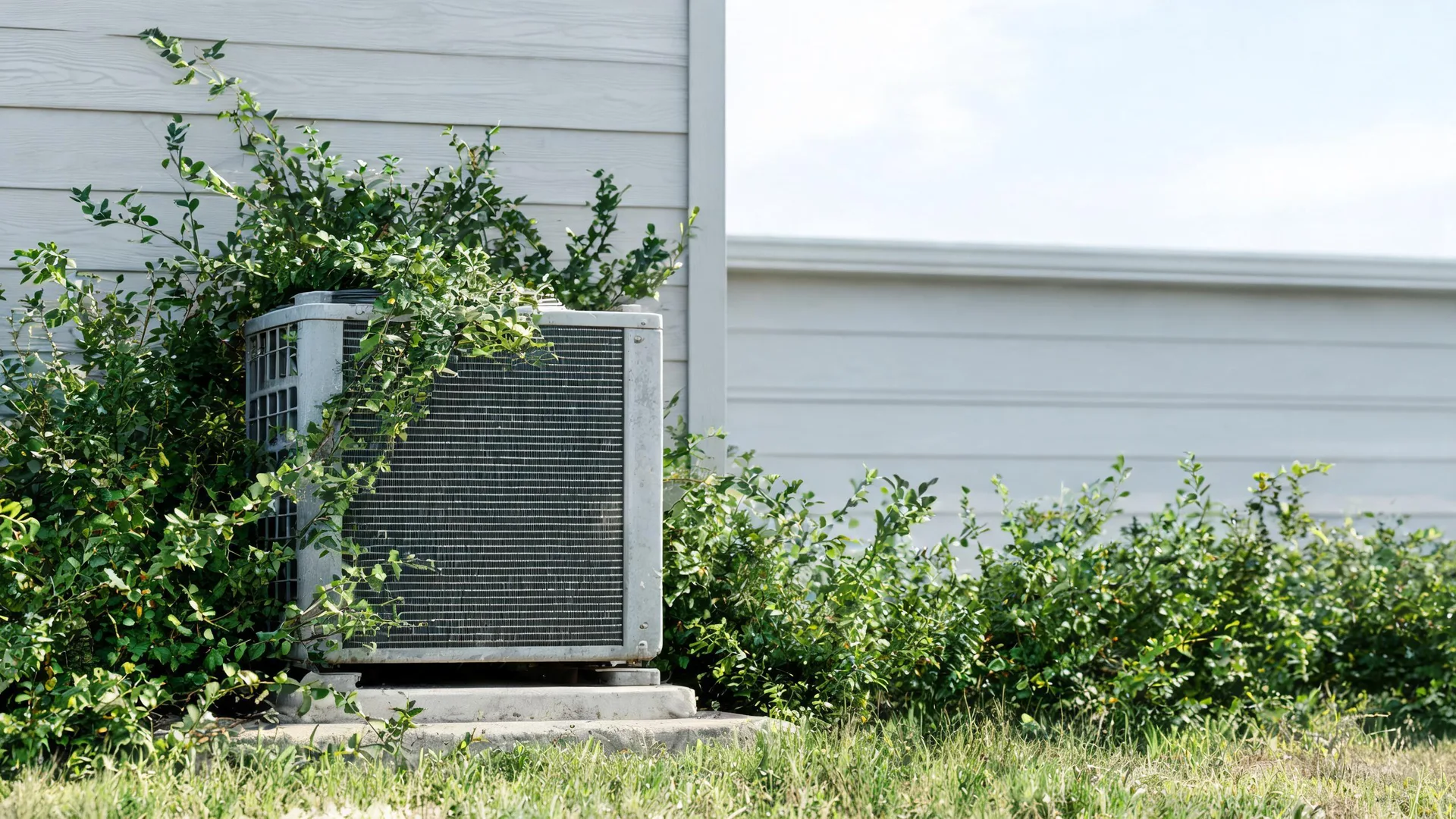
Starting and stopping too soon wears it out

A unit that kicks on, runs briefly, shuts off, then starts again soon after is short cycling. A clogged filter choking airflow can cause it. So can a failing capacitor or a sensor misreading the coil. Each short cycle is a hard start for the compressor, and a compressor that keeps getting cut off before finishing a cycle wears out faster than one that's left to run.

Before anyone comes out, there are a few things worth checking yourself. Look at the thermostat first. Make sure it's set to heat, not fan only, and that the setpoint is actually above room temperature. Check the breaker for the outdoor unit and the one for the air handler. A tripped breaker on either side will stop the system cold. Walk outside and look at the unit itself. If the outdoor coil is packed with leaves, grass clippings or ice, clearing it can bring a unit back that otherwise looks dead. Check the filter too. A filter so clogged that air can't pass through it will make a heat pump struggle no matter what else is right with it. If you've done all that and it still isn't holding the house at temperature, the problem is inside the system, not something you can see from the yard.

A heat pump that needs a part now doesn't always need a second repair later, but it's worth asking what else on the unit is close behind. The compressor is the expensive part to replace, and most techs will tell you straight whether it's still good or starting to go. A failing capacitor or a bad contactor is a normal wear item, the kind that fails once and gets swapped without much thought. A compressor losing oil pressure or a coil that's corroded through is a different conversation, because those point to a system winding down rather than one part breaking. Ask what's actually failing before you ask what it costs to fix. If the answer is a part that fails on its own regardless of the unit's age, fixing it is usually the right call. If the answer touches the compressor or the coil, that's the moment to ask whether the rest of the system is old enough to make the repair a short-term fix.