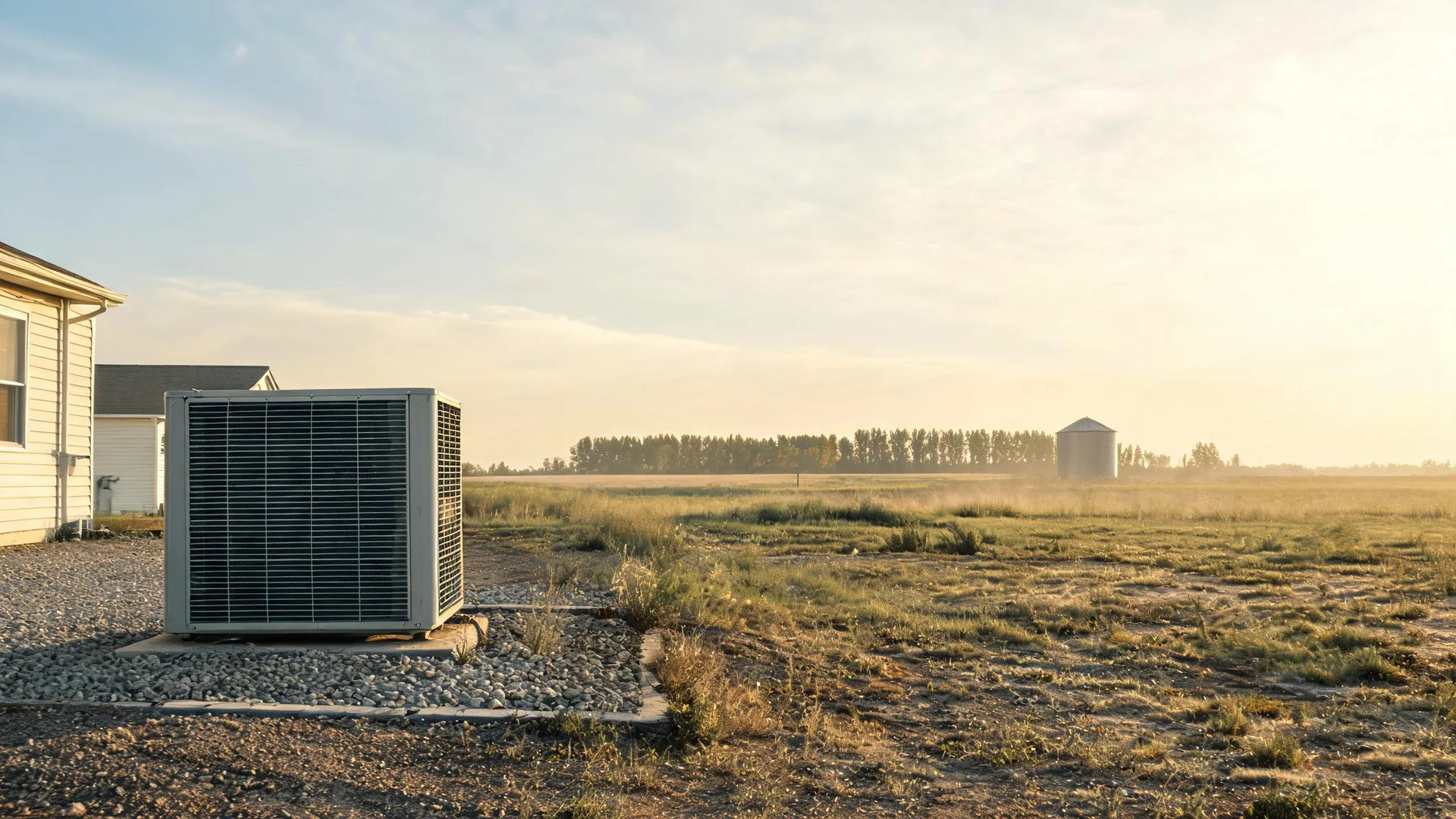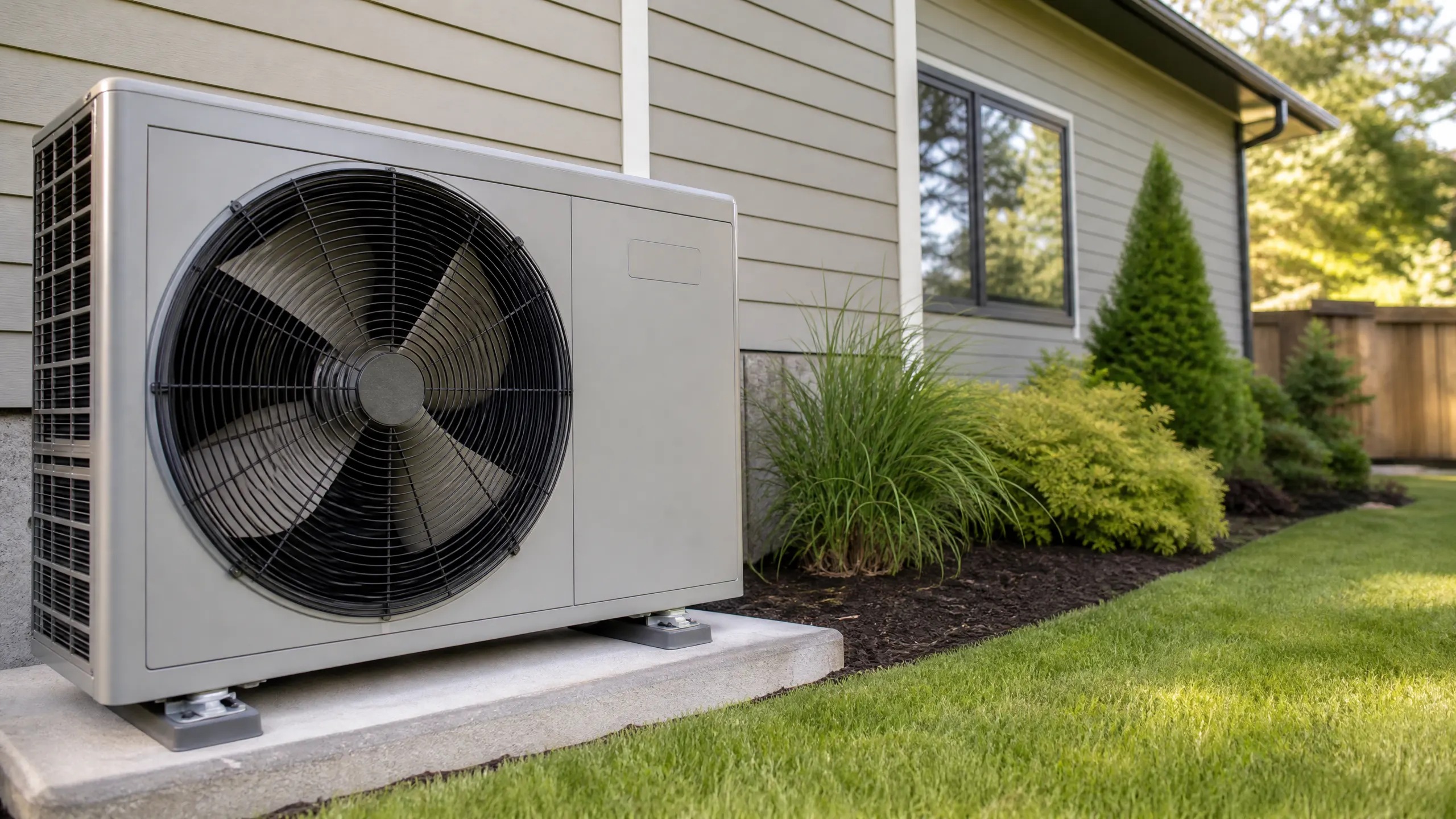
Running all summer long
Summer air around Ardmore sits heavy, with a dew point averaging 66°F through June, July and August. A heat pump has to work harder to pull that moisture out, and it does that work for months at a stretch.
Takes about a minute. No obligation.
Summer air around Ardmore sits heavy, with a dew point averaging 66°F through June, July and August. A heat pump has to work harder to pull that moisture out, and it does that work for months at a stretch.
Carter County saw 75 hail events between 2015 and 2024. The outdoor unit sits exposed to that, and dented fins or a damaged fan blade can turn into a bigger problem if they go unchecked.
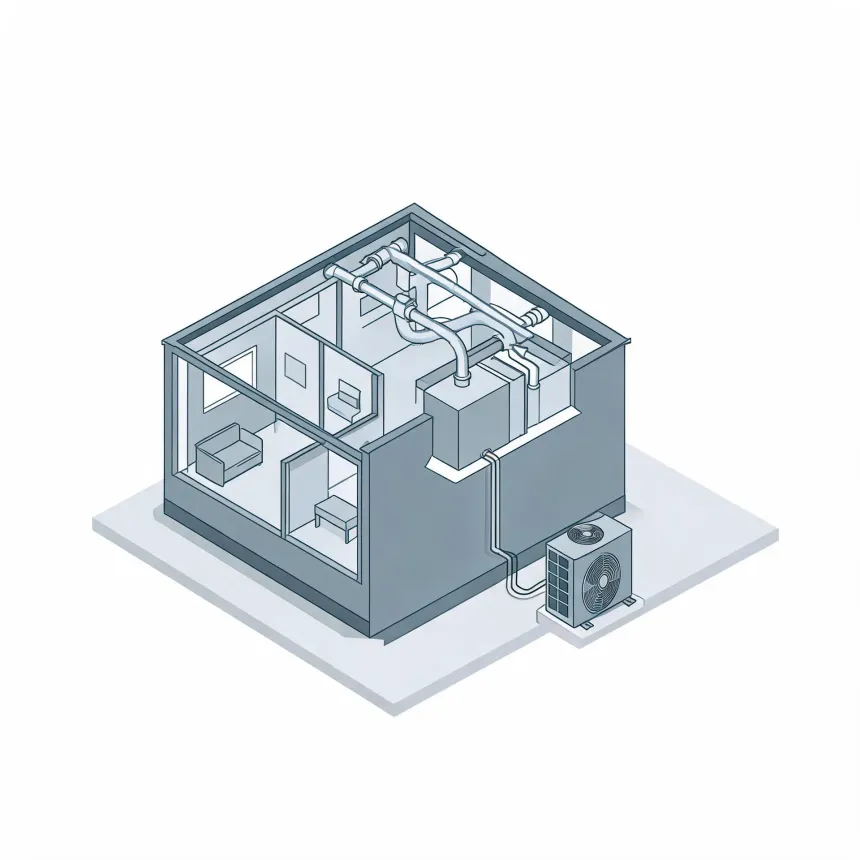
NOAA nClimDiv, 1991–2020 normals
A heat pump runs in both directions, cooling the house and heating it too, so parts wear on both sides of the system.
A worn part doesn't wait for a season. It gives out whenever its turn comes, whether that's the reversing valve sticking or a capacitor going weak.




If the outdoor unit came through a storm recently, don't wait for it to act up before someone looks at it. Bent fins or a cracked fan blade can run for weeks before the system starts losing capacity, and by then the compressor has been working against that damage the whole time. A tech can check the coil, the fan blade and the refrigerant lines in one visit and tell you whether the storm left anything behind. That's worth doing after any hail or high wind, even if the unit kicked back on fine and the house is holding temperature.
Whatever is going on with your heat pump right now, it has been running hard to keep up with Ardmore's summers and winters both, and that catches up with parts eventually. A tech can look at the whole system in one visit and find out what's actually failing, not just what's acting up today.
Find a contractorA heat pump that's starting to fail usually tells you before it quits outright. The air coming out of the vents feels cool when it should feel warm, or the other way around, because the reversing valve is stuck between modes. The outdoor fan spins but the compressor never kicks on, or the system short cycles, shutting off a minute or two after it starts. Ice builds up on the outdoor coil and stays there past when the defrost cycle should have cleared it. There's a clicking at startup that never resolves into a steady hum. The system runs and runs but the house never quite gets there, no matter how long you leave it. Any one of these means a part is already failing. None of them fix themselves, and running the system through it usually wears down whatever's left faster.
A reversing valve that's slow to shift or a capacitor that's weakening still lets the system run. But the compressor has to push through that resistance every cycle. It draws harder to do the same job, and that extra strain lands on windings and bearings that were fine on their own. What started as one weak part starts dragging the compressor down with it.
If the outdoor coil can't shed heat properly, refrigerant comes back to the compressor still partly liquid instead of fully gas. A compressor is built to pump vapor. Liquid slugging it on every stroke can crack valves or bend the parts inside it, and that kind of damage doesn't heal when the problem finally gets fixed. The same goes for frost that builds past where defrost can clear it: the longer it sits, the more it blocks the airflow the whole system depends on.
A few checks are safe to do before anyone comes out. Look at the thermostat first. If it has batteries, swap them, and make sure it's set to heat or cool rather than sitting on fan or off. Check the air filter and replace it if it's gray or clogged, since a blocked filter starves the whole system of airflow and can mimic a much bigger problem. Walk outside and look at the breaker panel for anything tripped, both the one for the indoor air handler and the one for the outdoor unit. Clear away any leaves, grass clippings or ice sitting against the outdoor unit so air can move through the coil. None of this fixes a stuck reversing valve or a failing compressor, but it rules out the simple stuff before someone drives out to look at the rest.
A diagnostic visit starts before the panels come off. A tech will ask what you noticed first, when it started, and whether it happens in heat mode, cool mode, or both, because that narrows down whether the problem is in the reversing valve, the compressor, or somewhere in the airflow. Gauges go on the lines to check refrigerant pressure, since too much or too little tells its own story about leaks or a failing metering device. They'll check the capacitor and contactor in the outdoor unit, since those wear out on a schedule and are easy to test. Inside, they'll check static pressure and airflow across the coil, because a system can have a perfect charge and still fail if air isn't moving through it right. By the end you should know what's actually wrong, not just that something is.