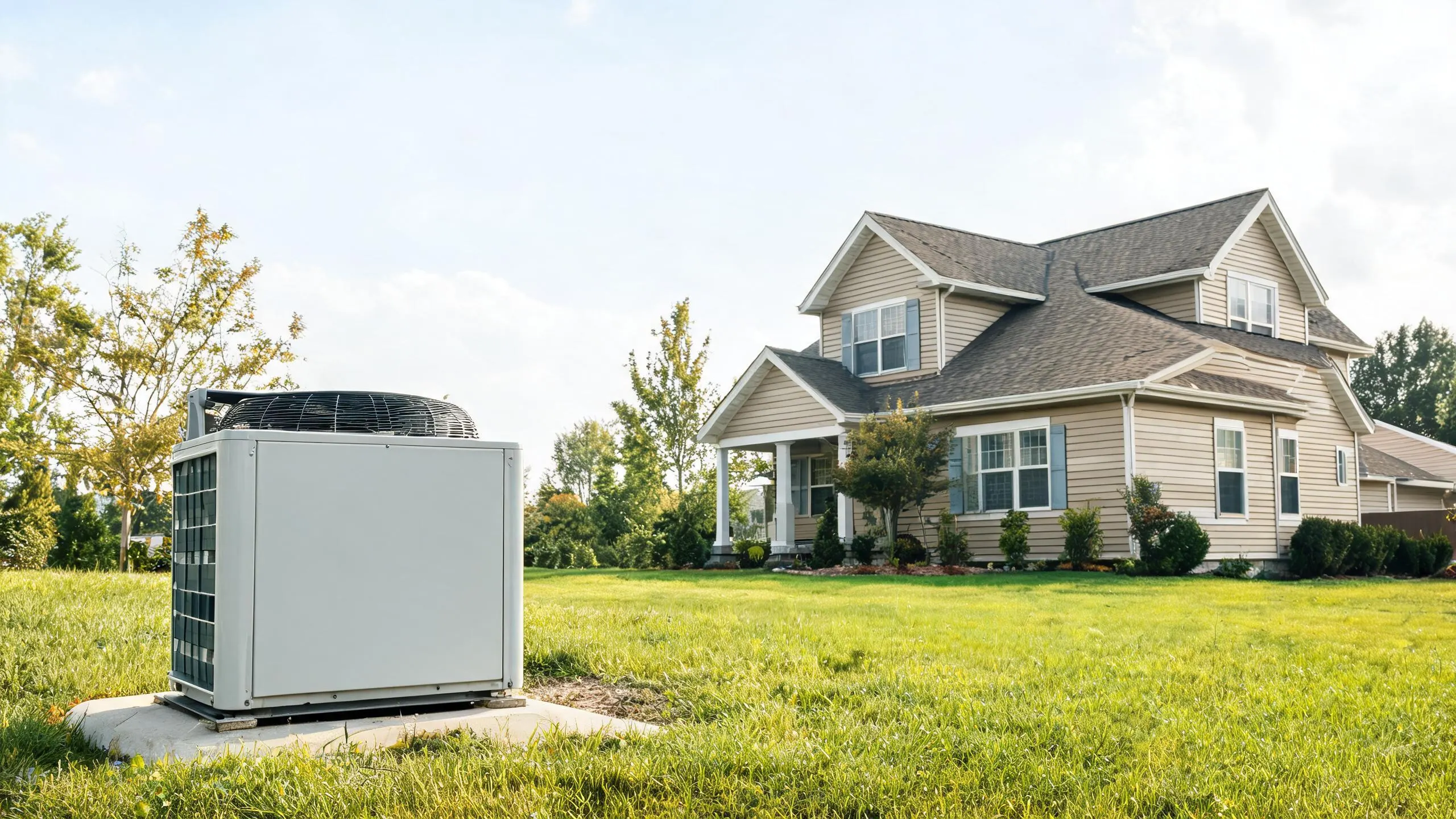






An outdoor HVAC condenser unit on a concrete pad in front of a two-story suburban house.

Heat Pump Repair in Broken Arrow, OK

Tell us about the job

Takes about a minute. No obligation.

RepairHeat PumpWagoner County, OK
Step 1 of 2

What ZIP code is the job in?

Most heat pump failures trace back to the reversing valve or the defrost cycle. The reversing valve is what switches the system between heating and cooling, and when it sticks, the unit can get stuck blowing cold air when you need heat, or it won't switch back in spring. A failed defrost control board or sensor is another common one, since that's what tells the outdoor coil when to melt off the frost that builds up in cold weather. If it doesn't fire right, ice builds up on the coil and chokes off airflow until the system can barely move heat at all. Low refrigerant charge from a slow leak will do the same thing over time, starving the compressor and making it work harder than it should. Capacitors and contactors wear out too, just from age and from cycling on and off thousands of times, and when they go, the outdoor unit may hum but not start, or not start at all.

7 months
October through April, your system heats
5 months
May through September, it cools
30°F
the average winter night it heats against
91°F
the average summer afternoon it cools against
Isometric cutaway illustration of a house showing attic ductwork, an indoor air handler, furnished rooms, and an outdoor condenser unit connected by lines along the exterior wall.
Your system heats October through April and cools May through September.

NOAA nClimDiv, 1991–2020 normals

Half the houses in Wagoner County were built in 1995 or later.

A heat pump installed with a newer house usually hasn't hit the end of its working life, so a repair call makes more sense than a replacement quote.

September is when a weak defrost board gives out

Cooling runs May through September
Heat runs October through April
Power costs 12.24 cents a kWh statewide

Repair it

If your system came with a newer house, it likely has plenty of life left. Repair is usually the right call.

Find a contractor
A man in a navy T-shirt, tan work pants and cap, seen from behind, carries a worn canvas tool bag up wooden porch steps toward a dark blue front door.
A white mini-split heat pump outdoor unit mounted on a concrete pad beside a gray-sided house, surrounded by gravel and green shrubs.

Before a tech touches anything, they're already listening and looking

A diagnostic call starts outside, not at the thermostat. A tech will check the outdoor unit first, looking at the coil, the fan, and whether the compressor is actually running or just humming. Gauges go on next to check refrigerant pressure, since that tells them whether the charge is right or whether there's a slow leak behind the symptoms. Inside, they'll pull the cover off the air handler and check the filter, the coil, and the wiring at the board. A lot of the actual diagnosis happens with a multimeter, testing the capacitor, the contactor, and the defrost sensor for the readings they're supposed to give. If the system is stuck in one mode, they'll test the reversing valve directly, since a valve that's sticking mechanically reads different from a solenoid that's failed electrically, and those call for different repairs. The visit ends with the tech telling you what failed, not just that something did, and what it takes to fix that one part versus what it means if it already took something else down with it.

What you can check yourself

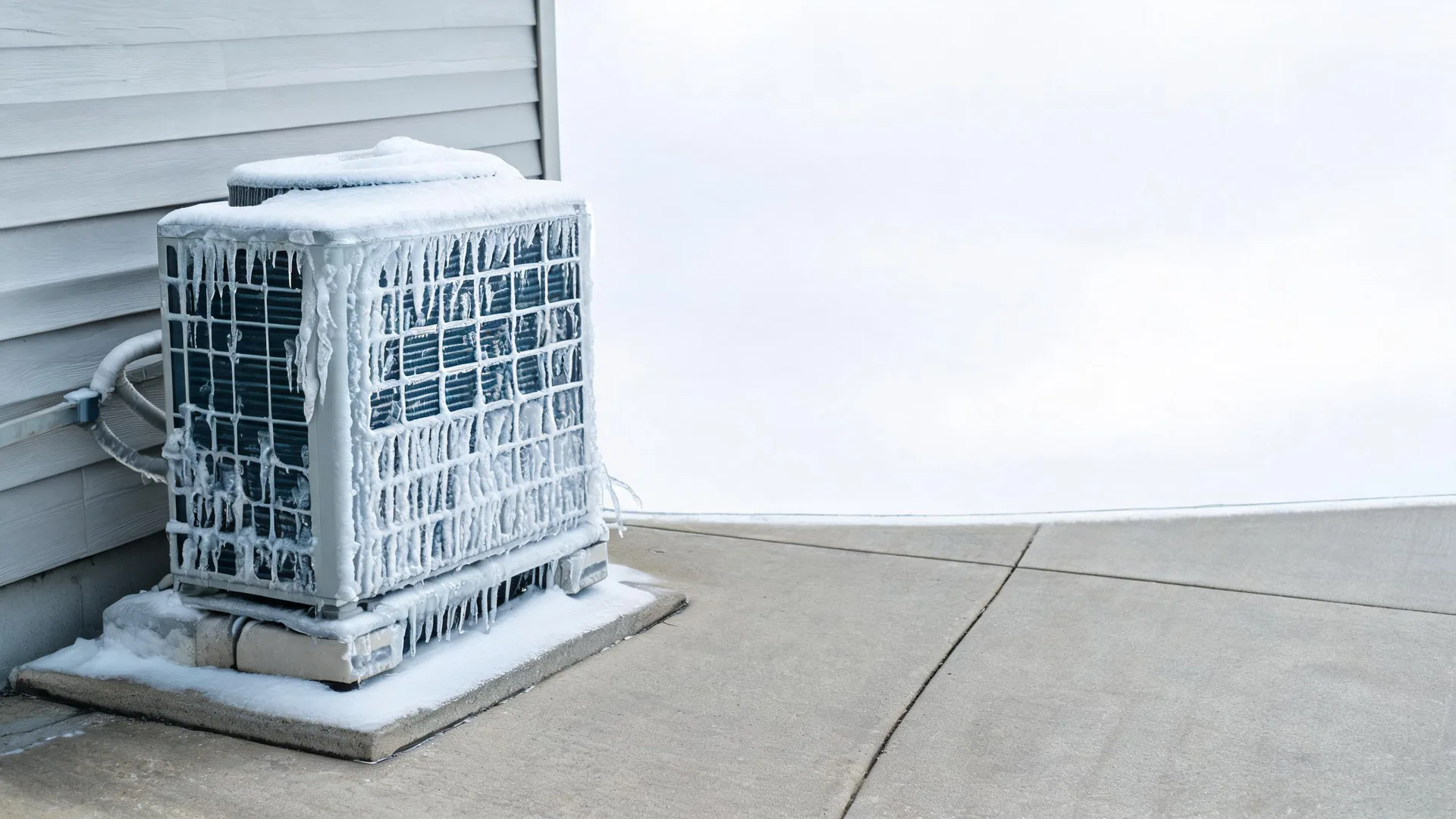
Look at the outdoor unit first. If the coil is caked in ice, flip the system off and let it thaw before anyone touches it. Running it iced over can damage the compressor. Check that nothing is blocking the outdoor unit, no leaves piled against it, no fence built too close. Inside, pull the air filter and hold it to the light. If you can't see through it, swap it or clean it. A clogged filter chokes airflow the same way a bad defrost cycle does. Check the thermostat is actually set to heat and the temperature is set above room temperature. A setting bumped by accident looks exactly like a failure from the outside.
What tells you to stop and call

If the breaker trips more than once, stop resetting it and get someone out. That usually means a short or a compressor pulling too much current. If the outdoor unit hums but the fan doesn't spin, don't keep cycling it. A seized motor or bad capacitor can take the compressor down with it if it keeps trying to start. Ice that comes back within a day of thawing points to a defrost control problem, not something a filter change will fix. Any burning smell from the indoor unit means power down and call. That one does not wait.

A heat pump that's icing over or short cycling will keep trying to do its job until something gives out completely. Run it iced over and the coil can't absorb or release heat properly, so the compressor works harder to get the same result, and that extra strain is what takes a compressor from struggling to dead. A reversing valve that's starting to stick gets worse the same way. Each cycle it hesitates a little longer, and forcing it back and forth on a schedule it can't keep up with wears the solenoid out faster than if it were left alone. Low refrigerant does something similar to the compressor, since it depends on refrigerant flowing through it to stay cool while it runs. Once that cooling effect drops off, the compressor starts running hotter than it was built for, and that kind of heat damage doesn't reverse itself. A small problem caught early is usually one part. The same problem ignored for a few more weeks can take the compressor down with it, and a heat pump doesn't run right with a dead compressor no matter what else gets fixed.

Age isn't the only thing that decides this. A compressor is the expensive part, and once it's damaged by running low on charge or overheating, replacing it often costs close to a new system anyway, so a tech may recommend replacing the whole unit even on one that's not old. On the other hand, a bad capacitor, a failed defrost sensor, or a stuck reversing valve are each one part, and swapping that part brings the whole system back to normal. The question worth asking a tech isn't just how old the unit is, but what exactly failed and whether it took anything else down with it. A unit on its second or third compressor, or one that needs refrigerant added every year because of a slow leak nobody's found, is telling you something different than a unit that's run fine for years and just had one part quit.