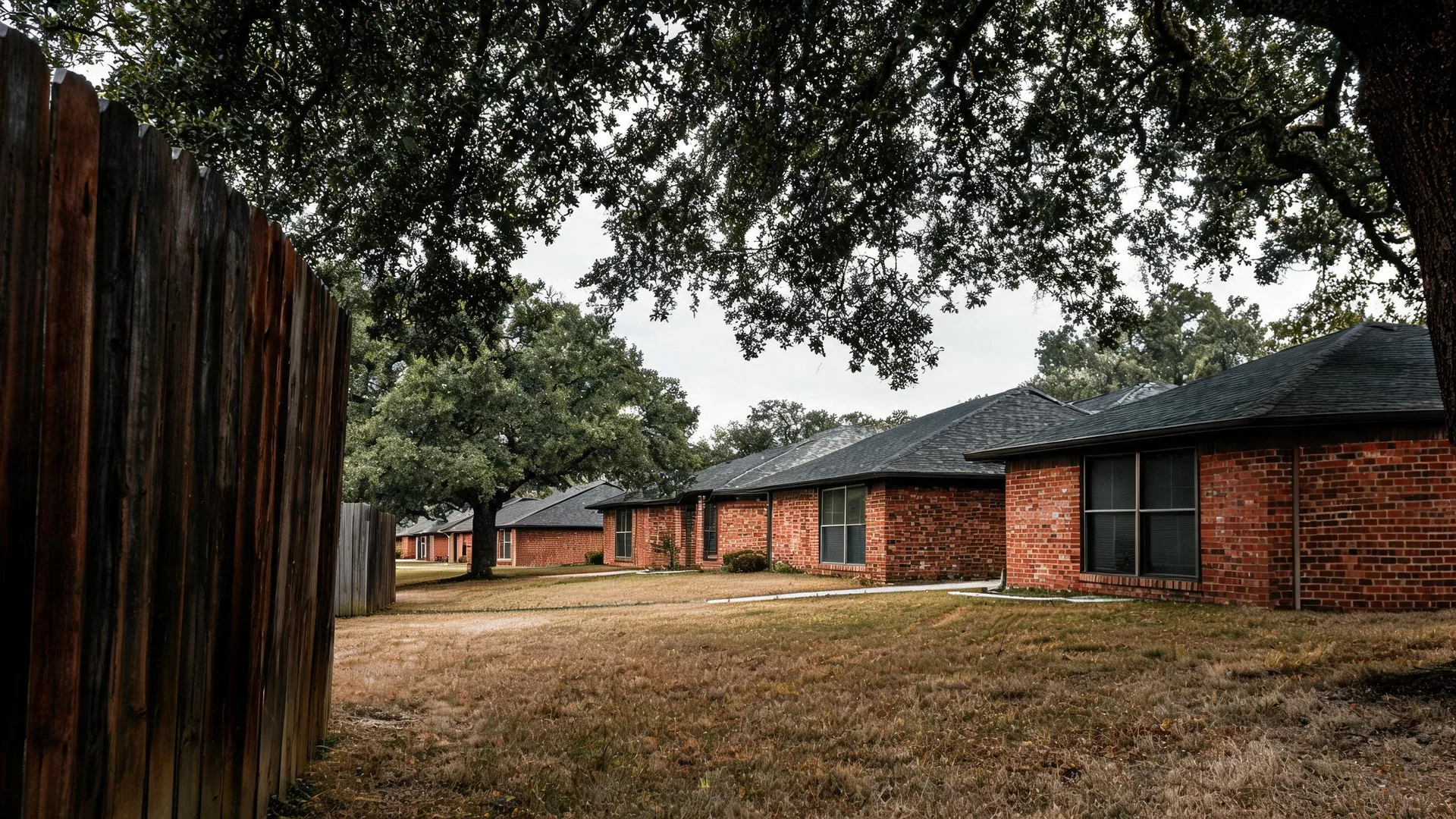
A row of single-story red brick buildings with dark shingled roofs behind a dry brown lawn, with a weathered wooden fence in the left foreground and large oak branches overhead under an overcast sky.

Heat Pump Repair in Chandler, OK

Tell us about the job

Takes about a minute. No obligation.

RepairHeat PumpLincoln County, OK
Step 1 of 2

What ZIP code is the job in?

The air stays heavy all summer

Dew points in Lincoln County average 67°F through June, July and August, higher than most of the country sees. A heat pump pulling that much moisture out of the air runs longer to get the same cooling done, and the parts that handle that load wear down faster for it.


Hail adds another kind of wear

The county logged 59 hail events between 2015 and 2024. An outdoor unit takes that weather straight on, and dented fins or a cracked cabinet can affect how the system runs even when the damage looks minor. A problem that seems to come out of nowhere often traces back to something the unit has been dealing with for a while.

7 months
October through April, your system heats
5 months
May through September, it cools
29°F
the average winter night it heats against
92°F
the average summer afternoon it cools against
Isometric illustration of a cutaway single-story house showing interior ductwork and an air handler connected by lines to an outdoor condenser unit on a pad beside the building.
Your system heats October through April and cools May through September.

NOAA nClimDiv, 1991–2020 normals

A heat pump has to work in both directions, pulling heat in during winter and pushing it out in summer.

That reversing valve and the outdoor coil behind it carry load all year long, so they're often the first places trouble shows up.

Storms here don't skip this county, so storm damage is a real reason to get the unit looked at

130 severe weather events from 2015 to 2024
25% of homes statewide lost power a day or more in 2024
50 damaging wind events from 2015 to 2024
Seven Months of Heat, Starting in OctoberHeat pumps here work hardest right when the cold hits, and a weak part usually gives out in those first few weeks.

If the outdoor unit has been through a hailstorm or straight-line winds in the last few years, have it looked at even if it's running fine right now. A bent fin or a hit to the cabinet doesn't always show up as a problem the same week it happens. Sometimes the unit limps along for months before the refrigerant charge or the coil airflow gets bad enough to notice. Lincoln County sees damaging wind and hail most years, so this isn't a one-time check. After any storm that drops hail or snaps branches, it's worth a look before the next hot stretch or cold snap asks the system to work hard.

Get It Diagnosed, Not Just Patched

This heat pump runs hard in both directions here, and it's taken storm hits on top of that. When something's off, it's rarely one single cause. Getting it diagnosed properly, instead of just patched for the symptom, is what makes the fix actually hold.

Find a contractor
A man in a cap, dark long-sleeve shirt and brown pants carries a canvas tool bag up wooden porch steps toward a navy front door beside a potted shrub.
A gray heat pump outdoor unit mounted on a concrete pad next to a residential house with lap siding and stone accents.

Why Letting It Run Can Cost You the Compressor

A heat pump that's struggling doesn't fix itself by staying on. If the airflow is weak because the filter is clogged or the coil is dirty, the system keeps pulling in a return of warm or cool air it can't properly treat, and it runs longer to chase a setpoint it can't reach. That extra runtime loads the compressor, and the compressor is the part nobody wants to replace. A refrigerant leak behaves the same way. A system low on charge keeps trying to move heat with less to work with, so it runs longer, the compressor gets hotter than it should, and the leak that started small doesn't stay that way. Even something as simple as a failing capacitor can turn into a bigger repair if the motor it's supposed to start keeps straining against it cycle after cycle. The pattern holds across most of these problems: whatever is making the system work harder than it should keeps happening every time it runs, and every run adds to the wear. Shutting it off and calling someone before the next cycle is often what keeps a repair a repair instead of a replacement.

What you can check yourself

Look at the thermostat first. Make sure it's set to the right mode and the setpoint actually calls for heat or cooling. Check the air filter and swap it if it's gray or clogged. Walk outside and look at the unit itself. Clear away leaves, grass clippings or anything stacked against it, and make sure the fan isn't blocked or iced over. Go to the breaker panel and check that nothing has tripped. These take a few minutes and rule out the simplest causes before anyone comes out.

What to leave alone

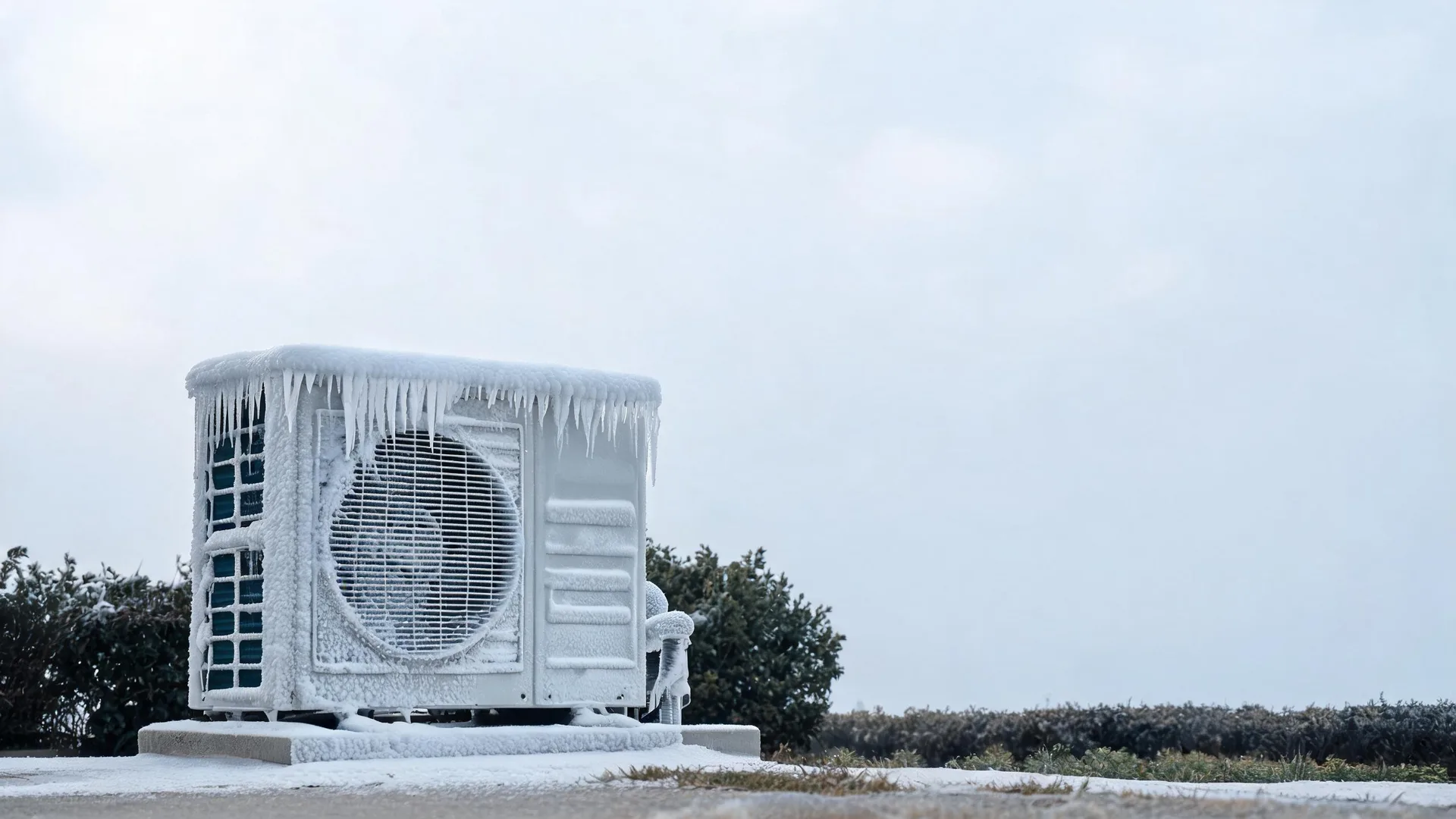
Don't pull the outdoor cabinet apart or touch the wiring behind it. Don't add refrigerant, even if you have some on hand. If you see ice on the coil, turn the system off and let it thaw instead of chipping at it. A heat pump that's icing, tripping a breaker repeatedly, or making a grinding or screeching sound needs a tech before it runs again. Running it through that kind of problem usually turns a small repair into a bigger one.

Short cycling is one of the easier signs to catch. The system kicks on, runs for a couple minutes, then shuts off before the house actually changes temperature. That's not normal wear, that's something telling it to stop early, often a sensor or a safety switch doing its job. Strange smells are worth paying attention to too. A musty smell usually points to moisture sitting somewhere it shouldn't, while a burning smell means it needs to be shut off and looked at before it runs again. Air coming out lukewarm instead of hot or cold is another one. Sometimes that's the reversing valve not switching all the way, sometimes it's low refrigerant, but either way the system is running without doing the job it's supposed to do.

A diagnostic visit starts with questions before any panel comes off. What's it doing, when does it happen, has it been like this a while or did it just start. Then the tech checks the easy things first, same as you would: thermostat settings, filter, breaker, airflow at the vents. After that it's gauges and meters. Refrigerant pressure tells a story about the charge and whether the coil is moving heat the way it should. Electrical readings on the compressor and the motors catch a part that's drawing more current than it should before that part fails outright. Outside, the tech looks at the coil and the fan, since airflow problems there show up as poor performance inside the house. The point of all this is to find the actual cause, not just the symptom you called about. A system that's short cycling could be a dirty sensor or it could be a failing component, and those two problems get fixed differently. A good diagnostic visit ends with the tech telling you what's wrong and what it'll take to fix it, not a guess dressed up as an answer.