A single-story brick house with a two-car garage photographed at dusk, with interior lights glowing through the windows and trees on either side.

Heat Pump Repair in Chickasha, OK

Tell us about the job

Takes about a minute. No obligation.

RepairHeat PumpGrady County, OK
Step 1 of 2

What ZIP code is the job in?

How old the unit is matters less than what's failing

A heat pump that won't switch between heating and cooling is usually the reversing valve, and that's a repair worth making even on an older unit. A compressor that's failing is a different story. The compressor is the most expensive part in the system, and once it starts going, the rest tends to follow.

A problem that keeps coming back is telling you something

A breaker that trips again after it's reset, or a coil that keeps icing up, isn't fixed, it's masked. Something underneath is driving it, like a refrigerant leak or a failing motor, and until that gets found, the same repair bill will keep showing up.

6 months
November through April, your system heats
5 months
May through September, it cools
30°F
the average winter night it heats against
92°F
the average summer afternoon it cools against
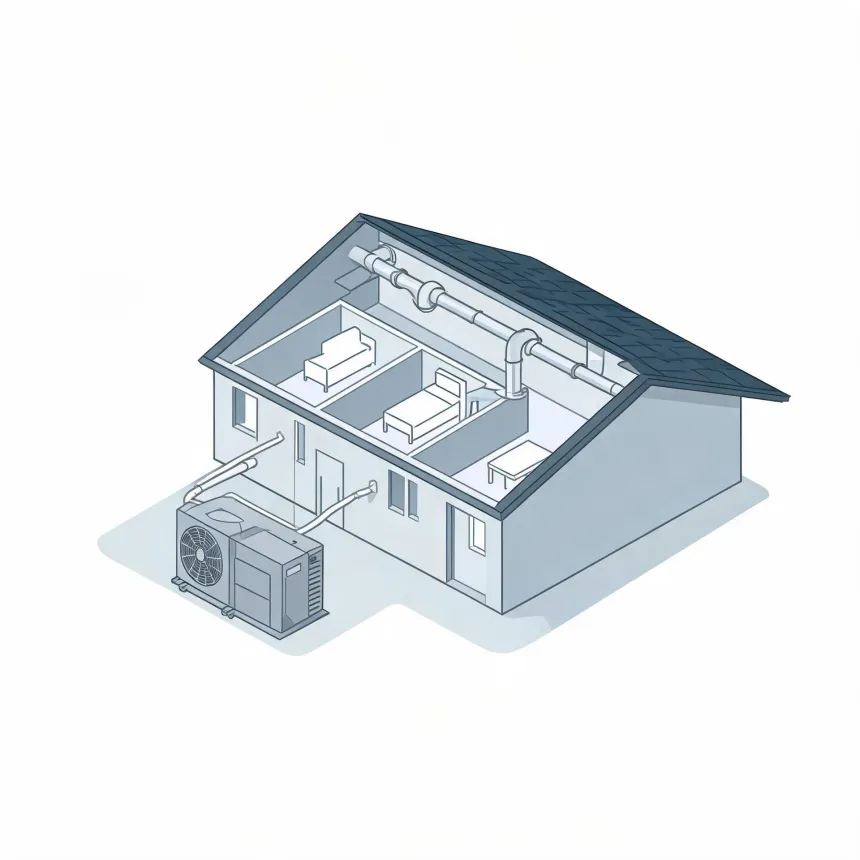
Isometric line illustration of a cutaway single-story house showing interior rooms with furniture and attic ductwork connected to an outdoor condenser unit beside the building.
Your system heats November through April and cools May through September.

NOAA nClimDiv, 1991–2020 normals

A heat pump that's working right doesn't make you think about it.

Short cycling, warm air in heating mode, or ice on the outdoor coil means something's already failing.

November and May are when a weak heat pump gets found out

Cooling runs May through September
Heat runs November through April
145 damaging wind events from 2015 to 2024

Half the houses in Grady County were built in 1982 or later. If yours is one of them, the heat pump giving you trouble might not be as old as it feels. A unit that came in with a newer build has usually had less time to accumulate the wear that leads to compressor failure, and a lot of the common problems, a bad capacitor, a stuck reversing valve, a failed sensor, are worth fixing regardless of the system's age. Mobile homes make up a share of the houses here too, and those often run smaller heat pump systems that a contractor will need to size up correctly for a repair or part replacement. Either way, the age of the house is a reason to ask before you assume the unit is done.

Get it looked at early

Problems tend to show up in the first weeks of the season, when the load hits a part that was already weak.

Find a contractor
A man in a navy T-shirt, tan work pants and cap, seen from behind, carries a worn canvas tool bag up wooden porch steps toward a dark blue front door.
A gray air-source heat pump mounted on a concrete pad next to a house with gray vinyl siding, surrounded by gravel and flanked by green shrubs and white hydrangea flowers.

Running it while something's wrong wears down more than the part that's already failing

A heat pump that's struggling doesn't fail all at once. It fails a little more every hour it runs while something underneath is wrong. A refrigerant leak gets worse the longer the compressor keeps pulling on a system that's low. It has to work harder to move the same heat, which runs it hotter, and heat is what kills a compressor. A failing run capacitor makes the motor it supports strain on every start, and each start wears the motor a little more until one of them quits. Ice on the outdoor coil blocks the airflow the system needs, so the compressor leans harder to make up for it. Left alone, a problem that started as a part worth replacing can end as a compressor worth replacing instead.

What you can check yourself

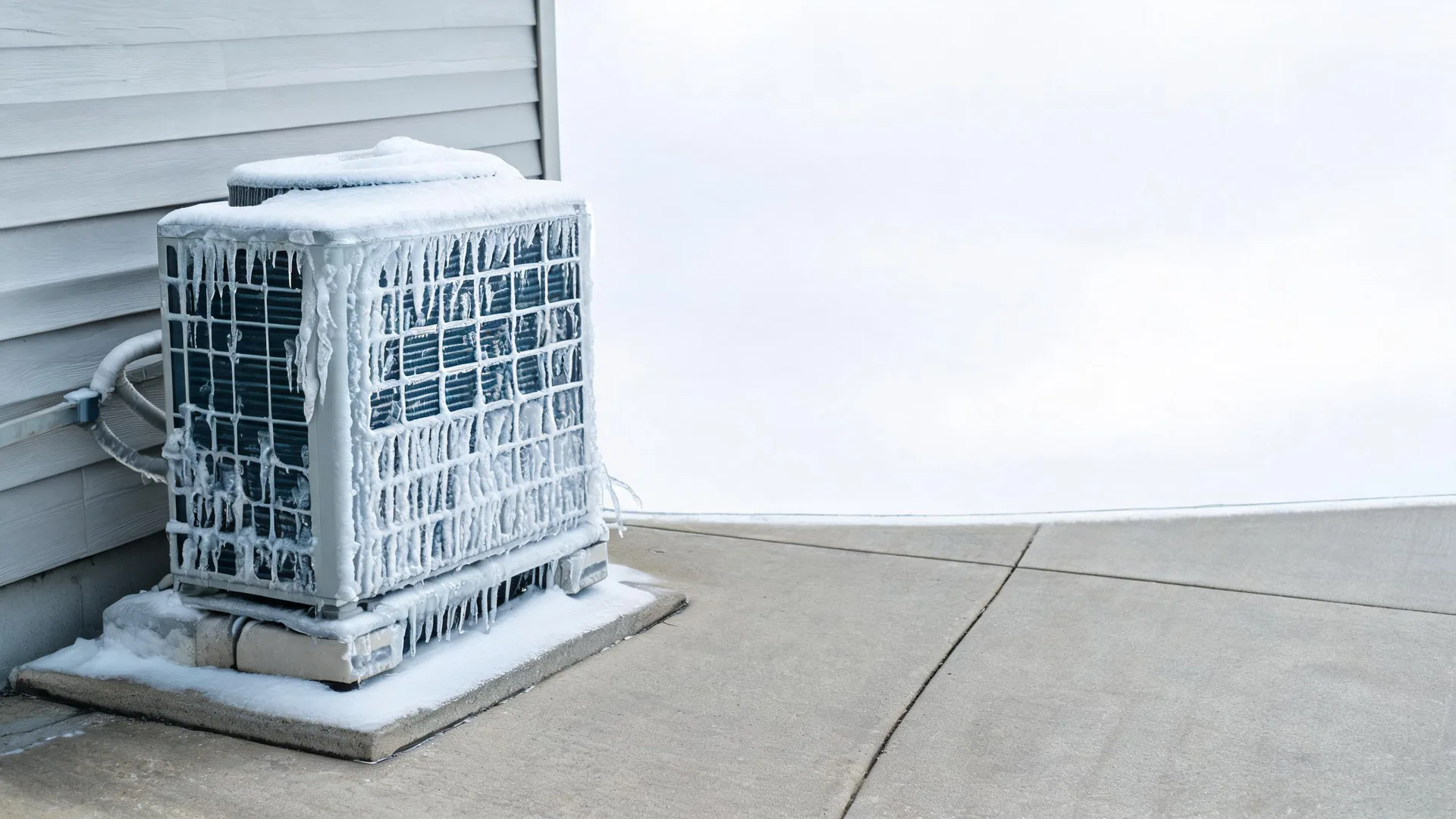
Look at the outdoor unit first. If it's caked in ice or snow, that's worth a photo before you call, since it tells the contractor something about what's going on inside. Check that the outdoor unit has clear space around it, nothing piled against it or blocking the top. Inside, check the thermostat is set to the right mode and the batteries aren't dead. Then check the air filter. A clogged filter starves the system of airflow and can look like a much bigger problem than it is.

What to leave alone

Don't pull panels off the outdoor unit or touch the refrigerant lines. If the breaker has tripped, you can reset it once, but if it trips again, stop and leave it off. A breaker that won't hold is telling you something is actively wrong, and running the system on a reset like that can turn a repair into bigger damage. Write down what you noticed, warm air, a smell, a noise, and when it started. That's more useful to a contractor than guessing at the cause yourself.

Most heat pump failures trace back to a handful of parts, and they tend to go out the same ways every time. The capacitor gives the compressor and fan motors the push they need to start, and it weakens with age until a motor starts hesitating or stops starting at all. The reversing valve is what switches the system between heating and cooling, and when its coil fails or the valve sticks, the system gets stuck in one mode no matter what the thermostat asks for. Refrigerant doesn't get used up, so if a system is low, it's leaking from somewhere in the line set or coil, and it'll keep getting lower until that's found. The defrost control board and its sensor tell the system when to clear ice off the outdoor coil in winter, and when that sensor fails, ice builds up unchecked and blocks airflow the compressor needs. Contactors pit and wear from switching power to the compressor thousands of times a season, and a worn one can fail to close or weld shut. None of these start as compressor problems, but ignored long enough, any of them can turn into one.

A diagnostic visit starts outside at the unit itself, watching how it runs before anything gets opened up. A contractor will check the pressures on the refrigerant line, since that number tells them right away if the system is low and losing refrigerant somewhere. They'll test the capacitor with a meter rather than guess from how the motor sounds, because a weak capacitor can still start a motor some of the time and still be the problem. The contactor gets checked for pitting, and the wiring gets checked for anything scorched or loose, since a bad connection can mimic a failing part. If the complaint is warm air in heating mode, they'll run the system through a cycle and watch the reversing valve actually switch, not just assume it's working because the thermostat says it should. Most of this is testing one part at a time until the readings point to the one that's actually failing, not the one that's easiest to blame.