






A lit single-story brick ranch house with a two-car garage photographed at dusk on a quiet residential street lined with oak trees.

Heat Pump Repair in Claremore, OK

Tell us about the job

Takes about a minute. No obligation.

RepairHeat PumpRogers County, OK
Step 1 of 2

What ZIP code is the job in?

A heat pump that's struggling will often keep trying anyway, and that's where the damage happens. A refrigerant leak gets worse because the compressor keeps pulling on a system that doesn't have enough charge to protect it, and a compressor that burns out that way doesn't get repaired, it gets replaced. A dirty outdoor coil makes the whole unit work harder to move heat, and that strain lands on the same compressor. Ice on the outdoor unit is another one. A little frost is normal on a cold day, but if it keeps building because the defrost cycle isn't kicking in, it blocks airflow completely and the system can't do its job in either direction. A weak capacitor or a failing contactor tends to fail completely once it's been run too long under that kind of stress. None of this means shut the system off and wait. It means get the noise, the ice, or the weak airflow looked at before it takes something bigger down with it.

7 months
October through April, your system heats
5 months
May through September, it cools
29°F
the average winter night it heats against
90°F
the average summer afternoon it cools against
Isometric line illustration of a cutaway house showing interior rooms with furniture, ceiling ductwork, and an outdoor condenser unit connected by lines along the exterior wall.
Your system heats October through April and cools May through September.

NOAA nClimDiv, 1991–2020 normals

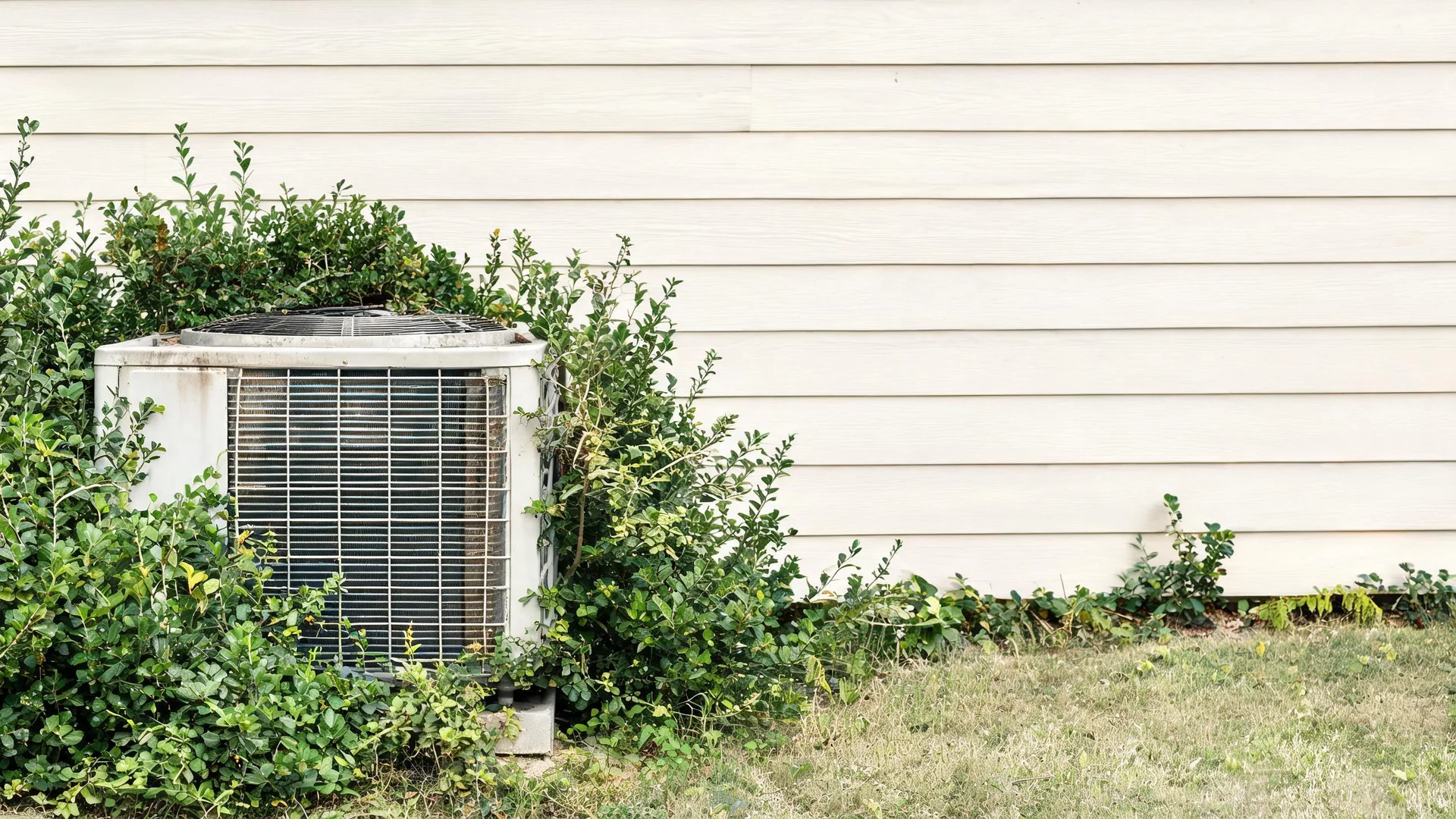
Check the outdoor unit before anything else.

Frost that stays past midday, a fan that won't turn, or a coil packed with leaves all point to the same visit.

Half the homes in Rogers County were built in 1993 or later, right in a heat pump's working life

Half the homes here were built by 1993
109 damaging wind events from 2015 to 2024
63 hail events from 2015 to 2024

October is when heat here switches over, and that first cold stretch is when a weak part finally gives out. A heat pump that idled all summer on the cooling side gets asked to reverse itself and pull heat from cold air, and anything marginal in the reversing valve or the defrost control shows up fast. September is worth using for that reason. A unit checked then, before the first real cold snap, gets caught on its own terms instead of in the middle of a cold night with the house losing ground. Heat runs here through April, so a problem that starts small in October has seven months to get worse if it's left alone.

Repair it

If your system came with a newer house, it likely has plenty of life left. Repair is usually the right call.

Find a contractor
A man in a dark long-sleeve shirt and brown work pants, seen from behind, carries a worn canvas tool bag as he steps up porch stairs toward a navy blue front door of a light gray clapboard house, with a potted shrub beside the entry.
A gray outdoor HVAC unit mounted on a concrete pad beside a house with gray lap siding and a stone foundation.

Built recently, worth repairing

If the house was built anywhere near 1993 or later, the heat pump itself may well be younger than that, especially if it's been swapped out once already. A unit that age is worth calling someone out for rather than pricing a new system. Replacement makes sense when a compressor is shot or a coil is corroded through, not when it's a capacitor or a control board.

Short cycling wears on the compressor

A heat pump that shuts off a couple minutes after starting, then kicks back on, isn't resting. It's hitting a limit switch or losing pressure somewhere and restarting before it should. Each start pulls hard on the compressor, so a system doing this all day is aging fast even though it still runs.
Warm air from the vents in winter

Air that feels cool rather than warm often isn't a failure yet, it can mean the system is stuck in defrost or the reversing valve isn't switching all the way over. Left alone, a reversing valve that's starting to stick tends to get worse until the system can't heat at all.

A lot of heat pump failures trace back to the reversing valve, since it's the one part that only exists in this machine and not in a straight air conditioner. It's what switches the system between pulling heat in and pushing heat out, and when it starts sticking, the symptoms are easy to blame on something else. The other common failure is the run capacitor, the part that gives the compressor and fan motors the push they need to start. A capacitor doesn't usually fail all at once. It weakens over time, and a weak one makes the motor strain every time it starts, which shortens its life too. Contactors wear out the same slow way, pitting a little more with every cycle until they stop closing reliably. None of these are tied to how old the unit is in years so much as how many times it's cycled on and off, which is why a heat pump that runs constantly in mild weather can wear out a part faster than one that works harder on fewer, longer cycles.

The question to ask isn't how old the unit is, it's what's actually failed. A capacitor, a contactor, a blower motor, a control board, these get swapped out and the system runs like new, because the compressor and the coils never had a problem to begin with. Those parts fail on their own schedule and taking one out doesn't shorten the life of anything else. A compressor is different. It's sealed, it's expensive to replace on its own, and when it burns out the cost of fixing just that one part starts to compete with the cost of a whole new system. Same with a coil that's corroded through rather than just dirty. That kind of damage doesn't stay put, and a repair on it tends not to hold. So the real split isn't age, it's whether the failure is in a part that gets bolted on or a part the whole system is built around.