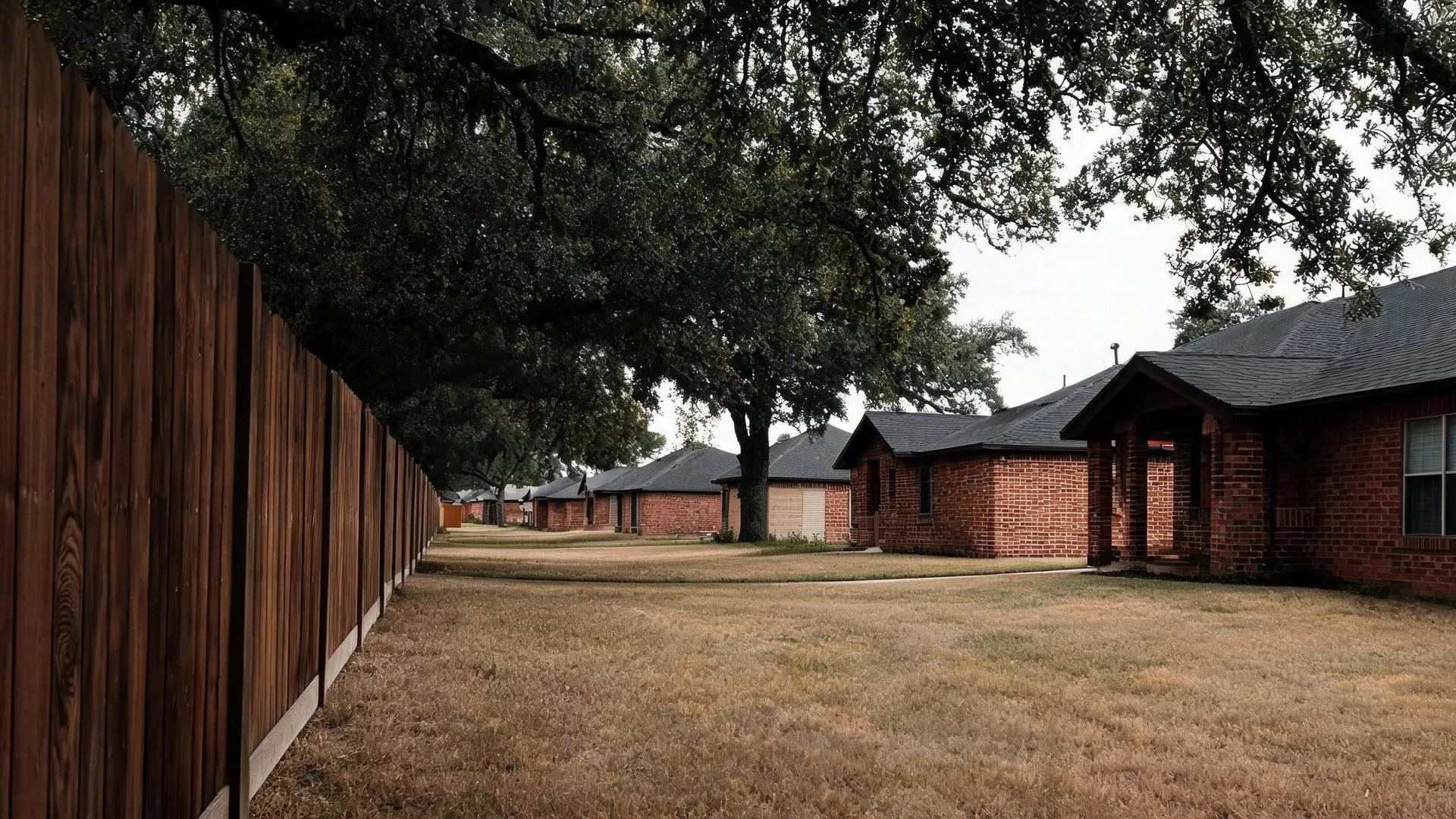
A tall wooden privacy fence runs along the left side of a dry grass lawn, with a row of single-story brick houses with dark shingle roofs on the right beneath large spreading oak trees.

Heat Pump Repair in Cleveland, OK

Tell us about the job

Takes about a minute. No obligation.

RepairHeat PumpPawnee County, OK
Step 1 of 2

What ZIP code is the job in?

The air here works your heat pump hard

Summer dew points in Pawnee County average 67°F across June, July and August, higher than most of the country sees. A heat pump has to move more moisture out of that air to cool a house, and it runs longer doing it.


That strain shows up as a repair call

A heat pump that runs long hours season after season wears sooner than one with an easier job. The part failing now in your system may simply be the one that gave out first under that load.

7 months
October through April, your system heats
5 months
May through September, it cools
28°F
the average winter night it heats against
91°F
the average summer afternoon it cools against
Isometric grayscale illustration of a cutaway house showing interior rooms, ceiling ductwork connected to an indoor air handler, and an outdoor condenser unit beside the exterior wall.
Your system heats October through April and cools May through September.

NOAA nClimDiv, 1991–2020 normals

A heat pump outdoors has a breaker of its own, usually at a disconnect box right next to the unit

Flip the breaker inside and check that outdoor disconnect before paying for a service call on a system that just isn't getting power

Half the homes here were built by 1978, and that changes what a repair call means

Half the homes here were built by 1978
Climate zone 3A
Power here costs 11.85 cents per kilowatt-hour
Heat here starts in OctoberYour heat pump switches over in September, and a weak part usually shows itself in the first cold snap.

Ask the contractor how many years are left in the unit before agreeing to a big repair. A compressor replacement doesn't make sense if the whole system is close to done anyway. Get that answer before the work starts, not after. If the heat pump came with the house, that number matters even more. It's the kind of question worth asking out loud, not something to guess at from the driveway.

A heat pump working this hard needs a real diagnosis, not a guess

Get the actual part checked instead of just the symptom. A contractor who knows what this climate does to a heat pump can find the part that gave out first and fix that one, so the repair holds.

Find a contractor
A man in a dark shirt and tan work pants, seen from behind, climbs stone steps toward a navy front door while carrying a waxed canvas tool tote, with a potted lavender plant beside the entry.
A gray heat pump condenser unit mounted on a concrete pad against the gray lap-siding exterior wall of a house.

Running it longer doesn't buy you time

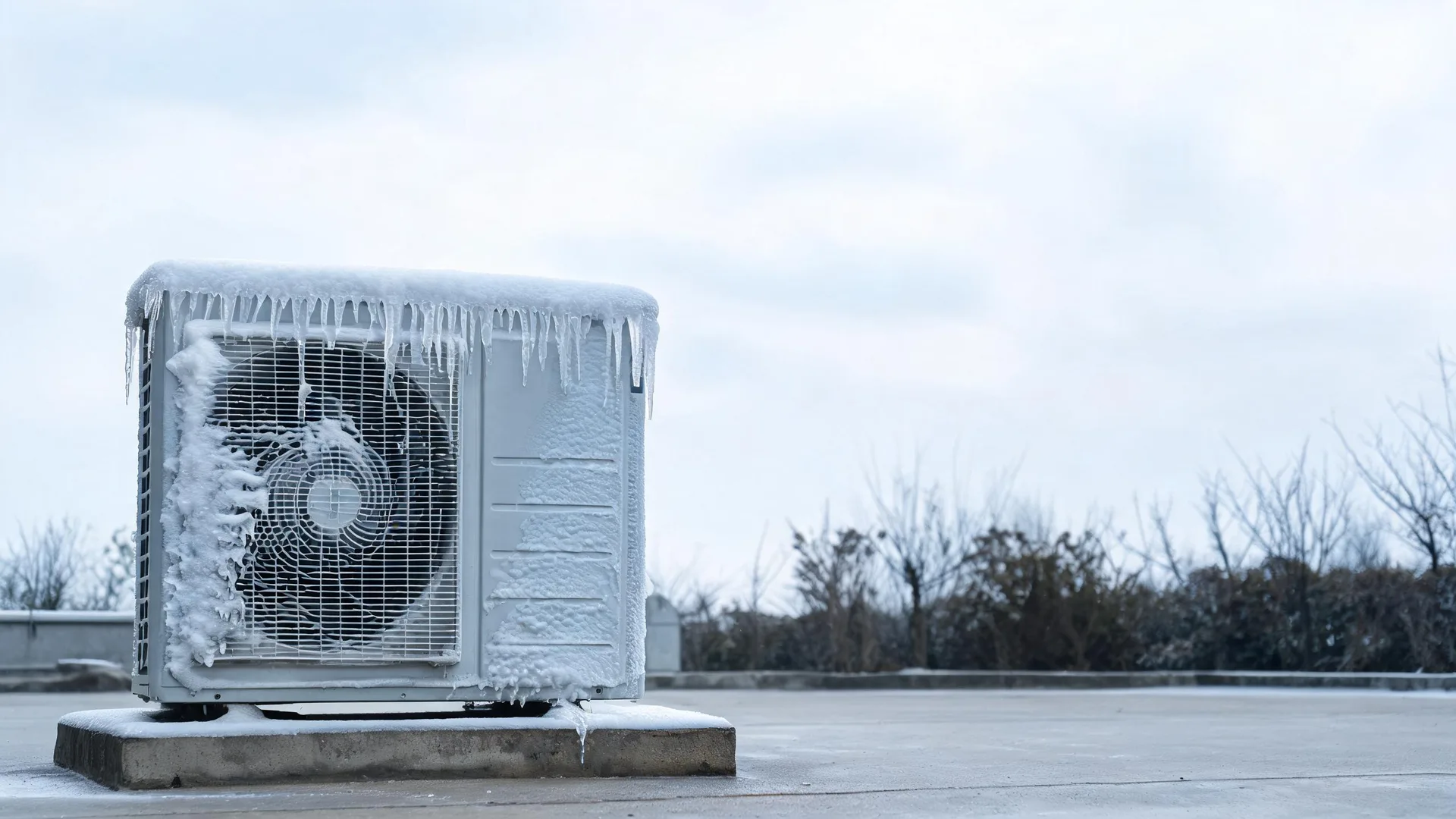
A heat pump that's struggling doesn't fix itself by staying on. If the system is low on refrigerant, the compressor keeps trying to pull its normal cycle anyway, and that's what burns it out. If a capacitor is weak, the motor it feeds draws more current trying to start, and that heat adds up each time it cycles. Ice on the outdoor coil is the clearest case: once ice forms, it blocks airflow across the coil, so the system works harder to move the same heat, and more ice builds. Left alone, that ends with a compressor that locks up instead of a part that gets swapped out. The same goes for a clogged filter restricting airflow, or a failing run capacitor making the fan motor labor. None of these get better with more hours on the clock. The right move when something sounds or feels off is to shut the system down and get it looked at, not to let it ride until it quits on its own.

Most failures start with the outdoor unit

A heat pump's compressor, fan motor and coil sit outside in the weather all year, and that's where trouble usually starts. Dirt and debris build up on the outdoor coil and block airflow. A capacitor weakens and the fan or compressor struggles to start. The reversing valve that lets the system switch between heating and cooling can stick, leaving it stuck in one mode. These parts fail from age and from the number of cycles they've run through, not from any one bad day.

A refrigerant leak is never just a refrigerant problem

Low refrigerant doesn't make a heat pump run weak and steady. It makes the compressor work to pull a cycle it can't complete, and that's what burns the compressor out. A system that's low usually has a leak somewhere in the line set or coil, so adding refrigerant without finding the leak only buys a little time before the same problem comes back.

Most heat pump problems announce themselves before the system quits outright. Warm air blowing when it should be hot, or the unit running constantly without the house catching up, usually means it's losing the fight against something, whether that's low refrigerant or a coil that can't move enough heat. A clicking or buzzing at startup, especially if the unit hesitates before it kicks on, points to a capacitor losing its strength. Short cycling, where the system shuts off and restarts every few minutes instead of running a full cycle, puts extra wear on the compressor every time it happens. Ice on the outdoor unit outside of a defrost cycle, or water pooling where it shouldn't, both mean airflow or drainage isn't doing what it should. Any of these is worth a call before the system tries to push through it and takes the compressor down with it.

A diagnostic visit starts outside, at the unit itself. A contractor checks refrigerant pressures, looks at the capacitor's readings against what it's rated for, and watches how the compressor and fan start up. Indoors, they check the temperature of the air coming off the coil against the air going in, which tells them whether the system is actually moving the heat it should. They'll pull the filter and look at the coil for ice or buildup, since either one changes every number they're reading. A gauge reading alone doesn't diagnose anything. What matters is whether those numbers match what that unit is supposed to do, and that's what points to the one part that's actually failed instead of the one making the most noise.