






A weathered wooden fence runs along the left side of a dry grass lawn beside a row of single-story brick buildings with gray shingle roofs, under overhanging oak branches.

Heat Pump Repair in Kingfisher, OK

Tell us about the job

Takes about a minute. No obligation.

RepairHeat PumpKingfisher County, OK
Step 1 of 2

What ZIP code is the job in?

Kingfisher County saw 124 severe weather events between 2015 and 2024. Hail accounted for 52 of those, with damaging wind close behind at 50, and the county had 13 tornadoes in that same stretch. A heat pump's outdoor unit sits outside through all of it, with coil fins and fan blades exposed to whatever comes through. Hail can bend those fins and still leave the unit running, just not running right. If a storm has come through your property, it's worth having the unit looked at even if you haven't noticed a problem yet.

7 months
October through April, your system heats
5 months
May through September, it cools
28°F
the average winter night it heats against
93°F
the average summer afternoon it cools against
Isometric line illustration of a cutaway house showing interior rooms with furniture, ceiling ductwork, and an outdoor condenser unit connected by lines along the exterior wall.
Your system heats October through April and cools May through September.

NOAA nClimDiv, 1991–2020 normals

A heat pump works year round, so its parts wear on both sides of the system.

The reversing valve, the contactor, and the outdoor fan motor all take the load, and any one of them can be what's failing now.

A heat pump here never gets a season off

52 hail events from 2015 to 2024
Power here costs 12.37 cents per kilowatt-hour
Climate zone 3A
October asks your heat pump to switch sides, and that's when a weak part shows itHeat here starts in October. Whatever the system is hiding tends to come out in those first cold nights.

Hail has already come up on this page, and it matters here for a different reason once your heat pump is actually acting up. A tech called out for a repair should check the outdoor coil and fan blades for bent fins or dents even if that's not why you called, because old hail damage can sit there for years before it turns into the problem you're noticing now. Don't just ask for the part replaced. Ask what caused the wear, especially if the unit is only a few years old. A fix that ignores the cause tends to come back.

Get the unit checked before storm damage turns into a breakdown

If your outdoor unit took a hit from hail or wind and kept running, that doesn't mean it came through clean. Bent fins and a damaged fan blade can sit there for a while before they turn into a breakdown. Worth a look now, while you can still ask for a diagnosis instead of a repair.

Find a contractor
A man in a dark cap, navy long-sleeve shirt and brown work pants, seen from behind, carries a worn canvas tool bag up steps toward a navy front door on a gray clapboard porch with a potted shrub.
A gray heat pump outdoor unit mounted on a concrete pad next to a residential house with lap siding and stone accents.

It runs every day of the year, and every part in it knows it

A heat pump doesn't get downtime the way an air conditioner does. It runs the furnace side all winter and the cooling side all summer, so every part in it logs hours year round. That shows up first in the things that move. A contactor that pits a little more each time it closes. A fan motor bearing that gets a little looser. The reversing valve, the part that switches the system between heat and cooling, can start sticking so the system blows cold air when you asked for heat, or won't defrost the outdoor coil when it should. None of that happens all at once. It shows up as a system that used to be quiet and now clicks when it kicks on, or short cycles where it used to run a full steady stretch. A unit that's been reliable for years can start acting up simply because it's never had a season to rest, and the part finally giving out happens to be the one carrying the most load.

A sound or a smell is the system telling you to shut it off

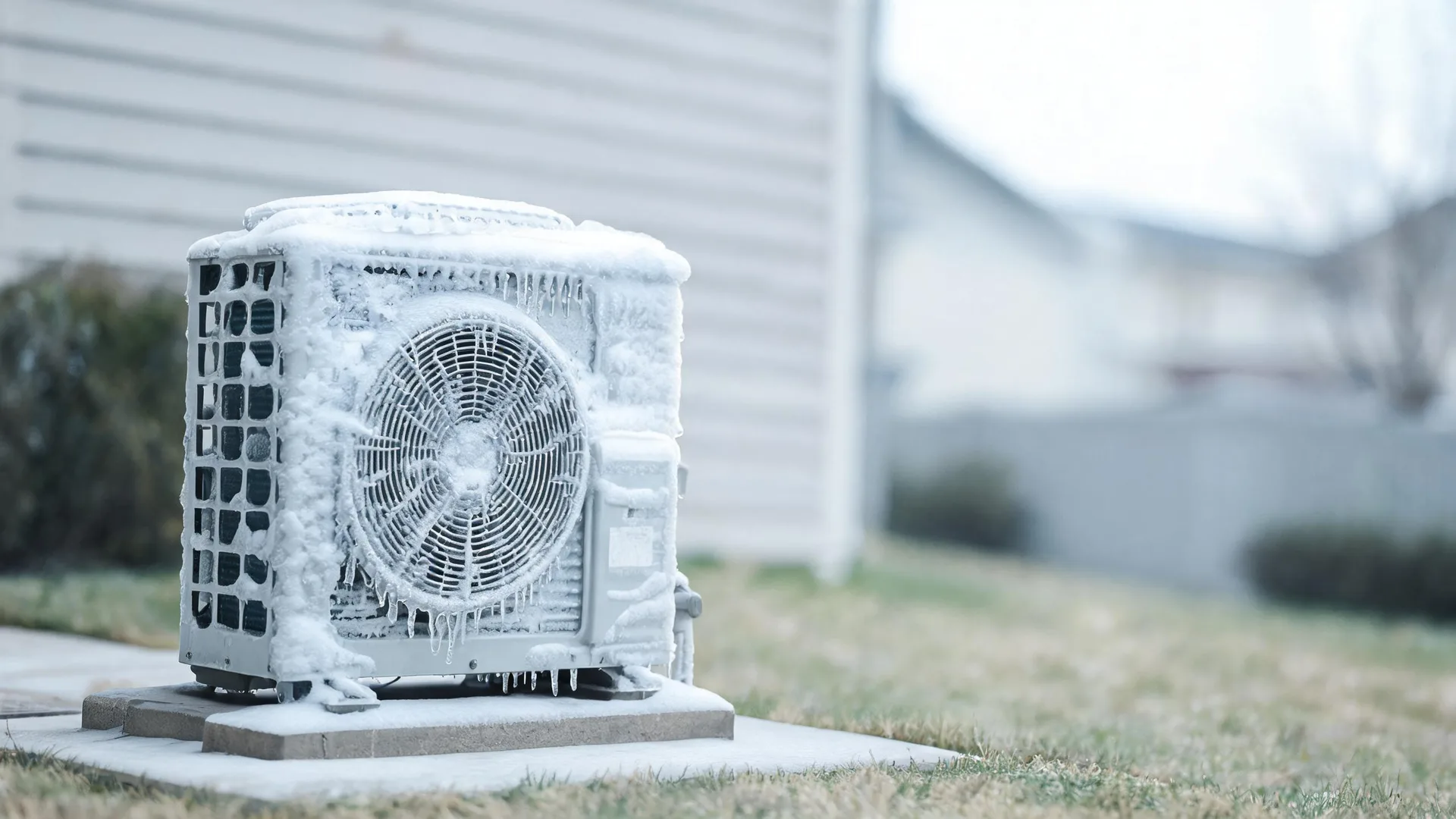
A grinding fan motor, a burning smell, a breaker that trips more than once. Those aren't signs to wait out. Running a heat pump through them turns a cheap fix into a bigger one, and in the worst case a motor seizes or a wire overheats enough to damage the board next to it.
A system that's just not keeping up can usually keep running

Weak airflow, a unit that's cycling more than it used to, rooms that aren't quite hitting the set temperature. Those point to a dirty coil or a low charge, not a reason to shut the system down. Get it looked at soon, but there's no part getting worse by the hour the way there is with a grinding motor or a tripped breaker.

Before anyone comes out, there are a few things worth checking yourself. Look at the thermostat first. Make sure it's set to heat or cool as you intend, and that the setting is actually past room temperature, since a bumped thermostat gets blamed on the equipment more often than people think. Check the breaker box for a tripped breaker on the unit's circuit, and if it's tripped, reset it once. If it trips again, stop and leave it off. Go outside and look at the unit itself. Clear away leaves, grass clippings, or anything stacked against it, since the outdoor coil needs open airflow on all sides to work. Check the filter inside too. A filter clogged with dust chokes airflow and can make the whole system struggle even when nothing else is wrong. None of this fixes a bad capacitor or a stuck reversing valve, but it rules out the simple stuff before anyone touches a tool.

Repair or replace comes down to what's failing and what else is close behind it. A single part failure in a system that's otherwise been sound is usually worth fixing. A blown capacitor, a bad contactor, a failed fan motor are normal wear and normal repairs. It's a different conversation when the compressor itself is going, since that's the most expensive part in the system and the labor to replace it isn't far off from a new unit. Age matters too, not as a hard cutoff but as a pattern. A heat pump nearing the end of its expected life that needs a major part is a different call than a younger one with the same failure, because the older unit is more likely to bring you back here again next year with something else. Ask what's actually wrong before deciding anything. A tech who can name the failed part and explain why it failed is giving you something to weigh. A tech who just quotes a number for a new system without explaining the old one isn't.