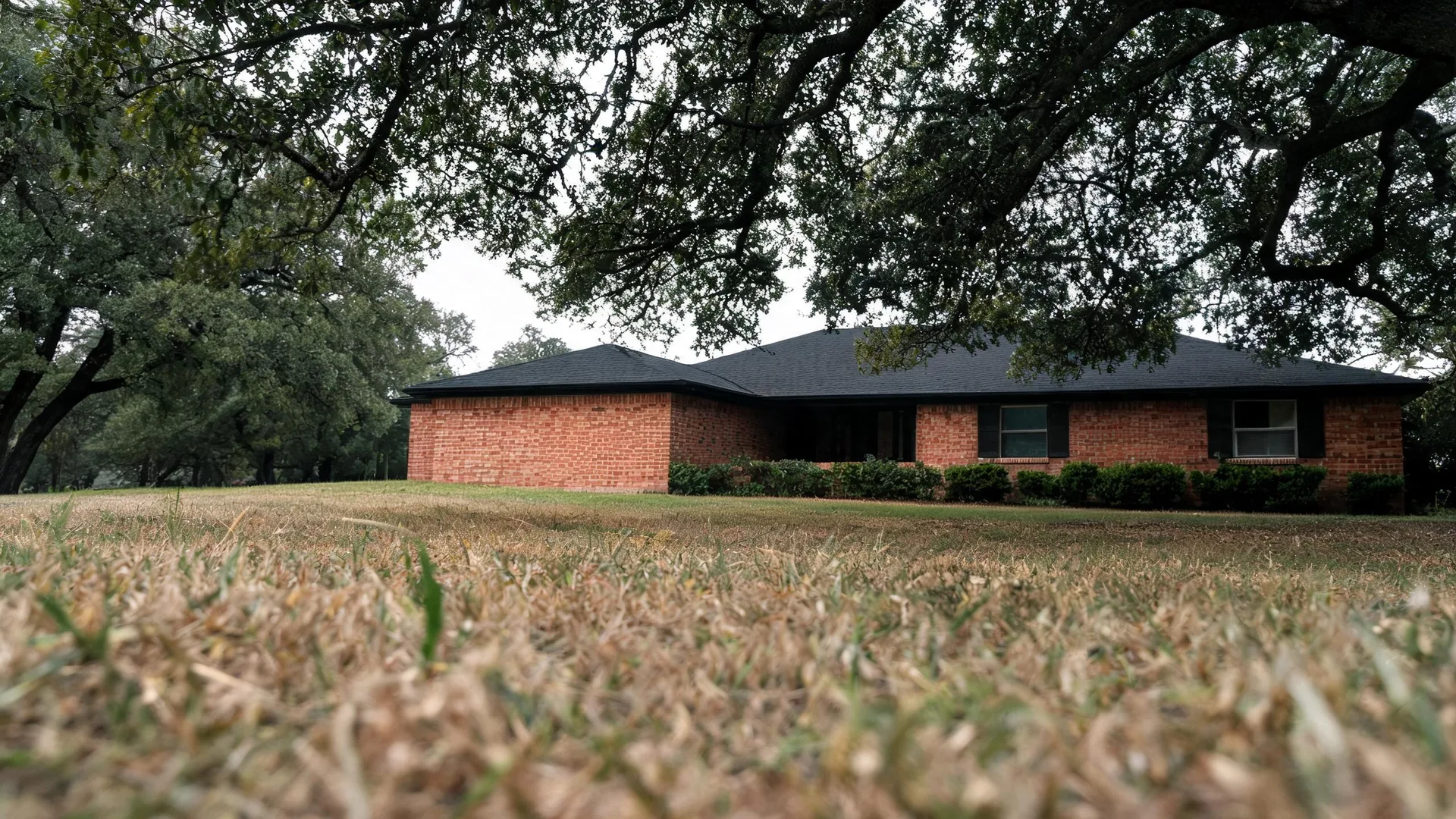






Low-angle view across a patchy brown and green lawn toward a single-story red brick house with a dark roof, framed by large overhanging oak branches under an overcast sky.

Heat Pump Repair in Muskogee, OK

Tell us about the job

Takes about a minute. No obligation.

RepairHeat PumpMuskogee County, OK
Step 1 of 2

What ZIP code is the job in?

Muskogee County logged 73 damaging wind events between 2015 and 2024, along with 36 hail events and 16 tornadoes. That outdoor unit sits outside through all of it, with nothing but a thin metal cabinet around the coil and fan. Hail dents the fins and bends them shut, and wind-blown debris can nick the coil or jam the fan blade without stopping the unit from running. A heat pump can keep moving air after a storm and still be losing capacity it had before. If a storm has come through your property, that's worth a look even if nothing seems wrong yet.

7 months
October through April, your system heats
5 months
May through September, it cools
31°F
the average winter night it heats against
91°F
the average summer afternoon it cools against
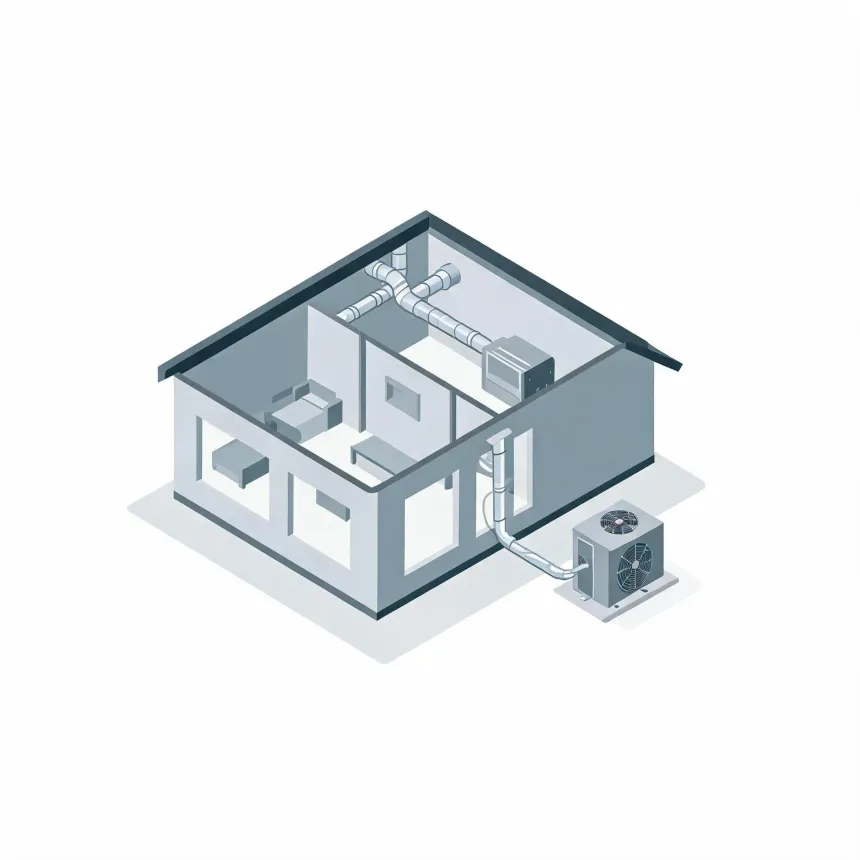
Isometric illustration of a cutaway house showing interior rooms, ceiling ductwork and an air handler, connected by lines to an outdoor condenser unit on a pad beside the building.
Your system heats October through April and cools May through September.

NOAA nClimDiv, 1991–2020 normals

A struggling compressor draws more current the longer it runs short on charge.

Letting it ride out the week can turn a seal repair into a compressor replacement.

Thick, muggy air from May through September means your heat pump runs long hours to keep up

Power here costs 13.41 cents per kilowatt-hour
Climate zone 3A
Cooling runs May through September
October starts the first cold snap your heat pump has to handleHomes here switch over to heat in October, and a part that was already weak tends to show itself in those first cold weeks.

When the power goes out here, it tends to stay out longer than a quick flicker. A heat pump that was already running on a weak capacitor or a low charge doesn't handle that kind of restart well. The compressor draws a hard pull of current the moment power comes back, and a part that was already struggling can fail right there instead of easing back into the cycle. If your system tripped a breaker during an outage, or hasn't run right since one, that's worth having checked before the next storm takes the power out again. A unit that gets diagnosed now is one that's ready for the outage it hasn't seen yet.

If a storm came through, get the outdoor unit checked before you trust it

A dented coil or a jammed fan blade won't always stop a heat pump from running. It'll just run worse. If hail or wind has come through your property, have someone look at the outdoor unit now, even if the house still feels fine.

Find a contractor
A man in a cap, dusty dark shirt and work pants walks up stone steps toward a dark navy front door, carrying a worn canvas tool bag, with a potted shrub beside the entry.
A gray outdoor HVAC unit mounted on a concrete pad beside a house with gray lap siding and a stone foundation.

The signs show up before the system quits

A heat pump rarely quits all at once. It gives you a string of smaller complaints first, and most people miss them because the system is still running. Air comes out warm but not as warm as it used to feel. The outdoor unit starts cycling on and off more than it used to, instead of running a steady stretch. You hear it click on, run a few minutes, shut off, then start again a little while later. That short cycling wears on the compressor every time it happens. Ice forming on the outdoor coil in weather that isn't even that cold is another one. So is a hissing or bubbling sound near the lines, which usually points to refrigerant escaping somewhere it shouldn't. If the system switches into emergency heat on its own, or you find yourself switching it there because the heat pump side isn't keeping up, that's the machine telling you something is wrong with the compressor or the reversing valve, not just a cold snap being hard on it. None of these mean the whole system is done. Most of them are a single part worn out or a seal that's leaking slow. Left alone, they tend to drag a second part down with them.

What's safe to check yourself

Look at the thermostat setting and the batteries in it before anything else. Check the breaker panel for a tripped switch. Walk outside and look at the outdoor unit. Clear away leaves, grass clippings or anything piled against the cabinet, since blocked airflow across the coil will make a heat pump struggle even when every part inside is fine. Check the indoor air filter and swap it if it's gray or clogged. A filter that's choked off cuts airflow the same way a blocked outdoor unit does.
What to leave alone

Don't take the cabinet off the outdoor unit or reach in near the fan blade. Don't add refrigerant or touch the lines, even if you can hear a hiss. That's a sealed system, and opening it without the right gauges lets moisture and air in where neither belongs. Don't keep resetting a breaker that keeps tripping. A breaker that trips twice is telling you the compressor is pulling current it shouldn't, and running it again on a hard reset is how a repair turns into a replacement.

A heat pump fails the same handful of ways no matter whose yard it sits in. The reversing valve is usually first, since it's what switches the system between heat and cooling, and a valve that sticks will leave you with heat when you wanted cooling or the other way around. The compressor itself wears from running low on charge, which is why a slow refrigerant leak left alone for months tends to end in a compressor that won't start at all. Capacitors weaken with age and heat, and a weak one makes the compressor or fan motor struggle to start even when everything else is sound. The defrost board and its sensor can fail too, and when they do the outdoor coil ices over and stays iced instead of clearing itself on schedule. Fan motors seize or their bearings go, and a motor that's straining sounds different before it quits outright.

Once a tech is out there, the question is whether the broken part is worth fixing on its own or whether it's a sign the system's winding down. A reversing valve or a capacitor is a contained job. Swap the part, the heat pump goes back to running the way it did before, and nothing about that repair says the rest of the system is in trouble. A compressor is different. It sits at the center of the refrigerant circuit, and when it's failing from age or from running low on charge for too long, replacing it usually costs enough that putting in a new system makes more sense than rebuilding the old one around a new compressor. Age matters here too, not because a number tells you to replace it, but because a system old enough to need a major part replaced once is a system where the next part is likely close behind. A tech who's honest with you will say which kind of repair this is before touching anything.