A grey heat pump outdoor unit mounted on a concrete pad against the exterior wall of a house with grey siding and stone veneer.

Heat Pump Repair in Norman, OK

Tell us about the job

Takes about a minute. No obligation.

RepairHeat PumpCleveland County, OK
Step 1 of 2

What ZIP code is the job in?

The reversing valve sticks

A heat pump switches between heating and cooling with a reversing valve, and that valve is the part most likely to give you trouble. When it sticks, the system keeps running in one mode no matter what the thermostat asks for, or it gets stuck halfway and blows air that feels wrong for the setting. Dirt, corrosion and just years of switching back and forth wear on it.


The outdoor coil takes the abuse

The outdoor coil sits outside year round, and it has to stay clean for the system to move heat properly. When it gets coated in dirt or the fins get bent closed, the unit struggles to pull heat from the air in winter or dump it in summer. A refrigerant leak at the coil shows up the same way, as weak heating or cooling that gets worse over time instead of all at once.

6 months
November through April, your system heats
5 months
May through September, it cools
30°F
the average winter night it heats against
92°F
the average summer afternoon it cools against
Isometric line illustration of a cutaway house showing interior rooms with furniture, a furnace or air handler with overhead ductwork, and an outdoor condenser unit connected by lines outside the wall.
Your system heats November through April and cools May through September.

NOAA nClimDiv, 1991–2020 normals

Heat pumps in Cleveland County run from November through April for heat, May through September for cooling.

October and April are when a weak reversing valve or a dirty coil gets found out, right as the system switches over.

Half the homes in Cleveland County were built in 1990 or later. If yours is one of them, your heat pump is probably not the original. A unit installed in the last several years that's suddenly acting up usually has one thing wrong with it, like the reversing valve or a dirty coil, not a system wearing out all at once. That kind of problem is almost always worth fixing rather than replacing. If your home came with the house, it's worth checking when the system itself went in, since that tells you more than the age of the house does.

Get it looked at early

Problems tend to show up in the first weeks of the season, when the load hits a part that was already weak.

Find a contractor
A man in a dark T-shirt, brown work pants, boots and a cap, seen from behind, climbs concrete steps toward a dark blue front door while carrying a worn canvas tool bag, with a potted shrub beside the entry.
A residential heat pump outdoor unit mounted on a concrete pad next to a house with gray vinyl siding.

What a tech actually checks

A tech starts outside, checking the reversing valve and the coil before touching anything inside. They'll run the system in both heating and cooling, listening for whether the valve actually shifts when it's told to. A clamp meter on the compressor and a gauge set on the refrigerant lines tell them whether the system is moving heat the way it should or straining to do it. If airflow feels weak, they'll check the coil for dirt and the fins for damage before assuming something electrical is wrong. Most of this is ruling things out in order, not guessing. A heat pump that's run for years on the same parts tends to fail at the weakest one first, so the visit is about finding that part, not replacing everything at once.

Check the thermostat first

Make sure it's set to the mode you want and the temperature is actually past where the room sits. A thermostat set to auto or stuck on a schedule can look like a broken heat pump when nothing outside is wrong. If it runs on batteries, swap them before anything else.

Look at the outdoor unit

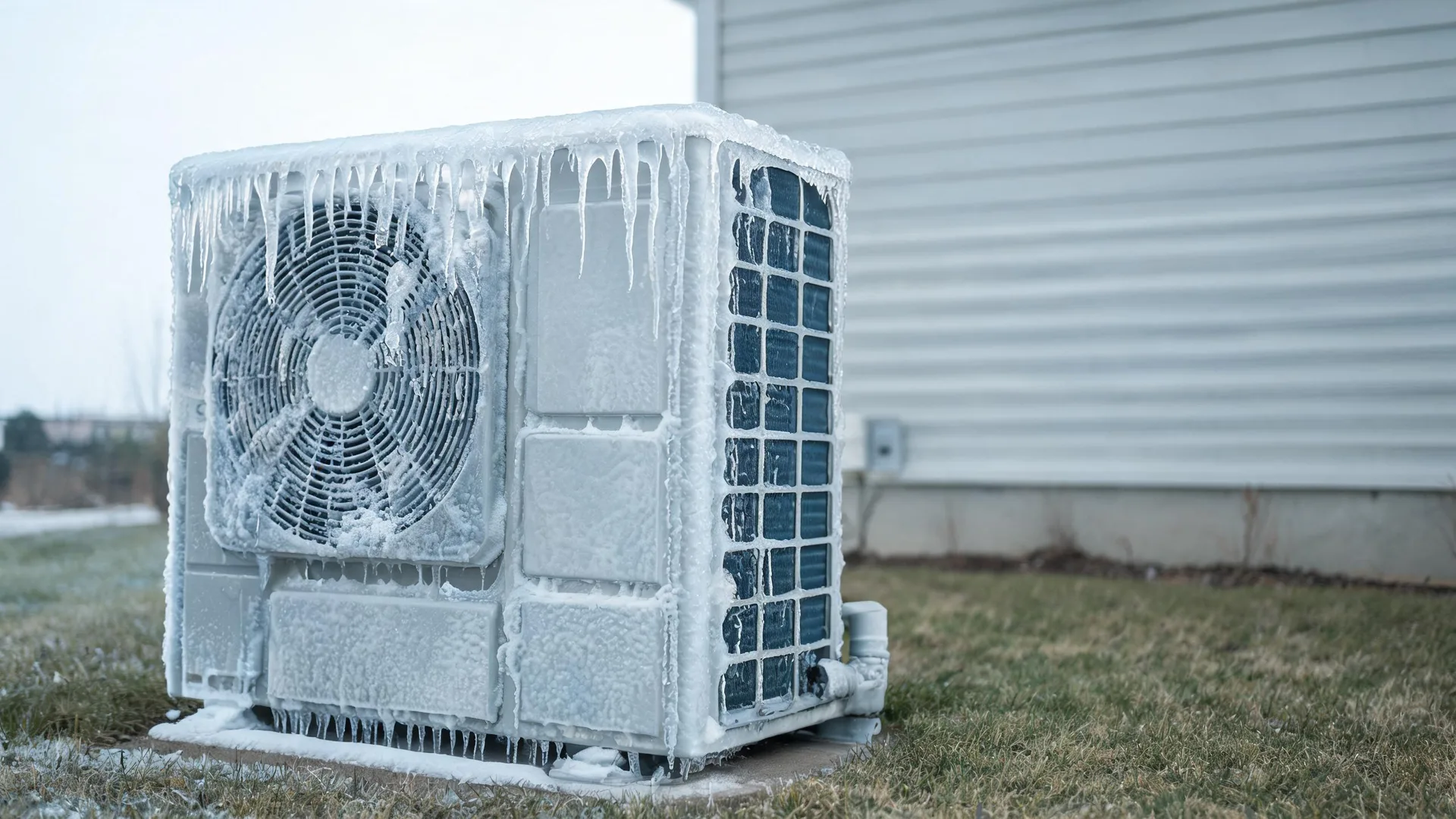
Walk outside and check that the unit isn't buried in leaves, snow or anything blocking the fins. Clear anything stacked against it and give it space on all sides. A frozen coil is worth noting but not worth touching, since the ice usually points to something a tech needs to diagnose, not something to chip away at.

Most heat pump trouble shows up as air that's the wrong temperature for what you asked it to do, not as the system quitting outright. You'll feel air moving but it's cool when you wanted heat, or the system runs and runs without catching up to the thermostat. Short cycling is another one, where it kicks on, runs a few minutes, and shuts off again before the room changes at all. Ice on the outdoor unit in weather that doesn't call for it is worth paying attention to as well. None of these mean the system is done. They mean something specific inside it is struggling, and that's usually a smaller fix than it feels like from the thermostat.

A heat pump that needs a repair now and then isn't telling you it's worn out. It's telling you one part failed, and parts fail on their own schedule regardless of how old the rest of the system is. What matters more is the pattern. One breakdown after years of no trouble is just a part reaching the end of its life. A system that needs a tech back every few months, even for different reasons each time, is a different situation, since that usually means the compressor or the coil is degrading and everything downstream of it is working harder to compensate. Age matters less than people think. A heat pump that's been maintained, with clean coils and refrigerant at the right charge, can keep earning its repairs for a long time. One that's been neglected can turn into a replacement conversation early, not because of how many years it's run but because of what those years were like.