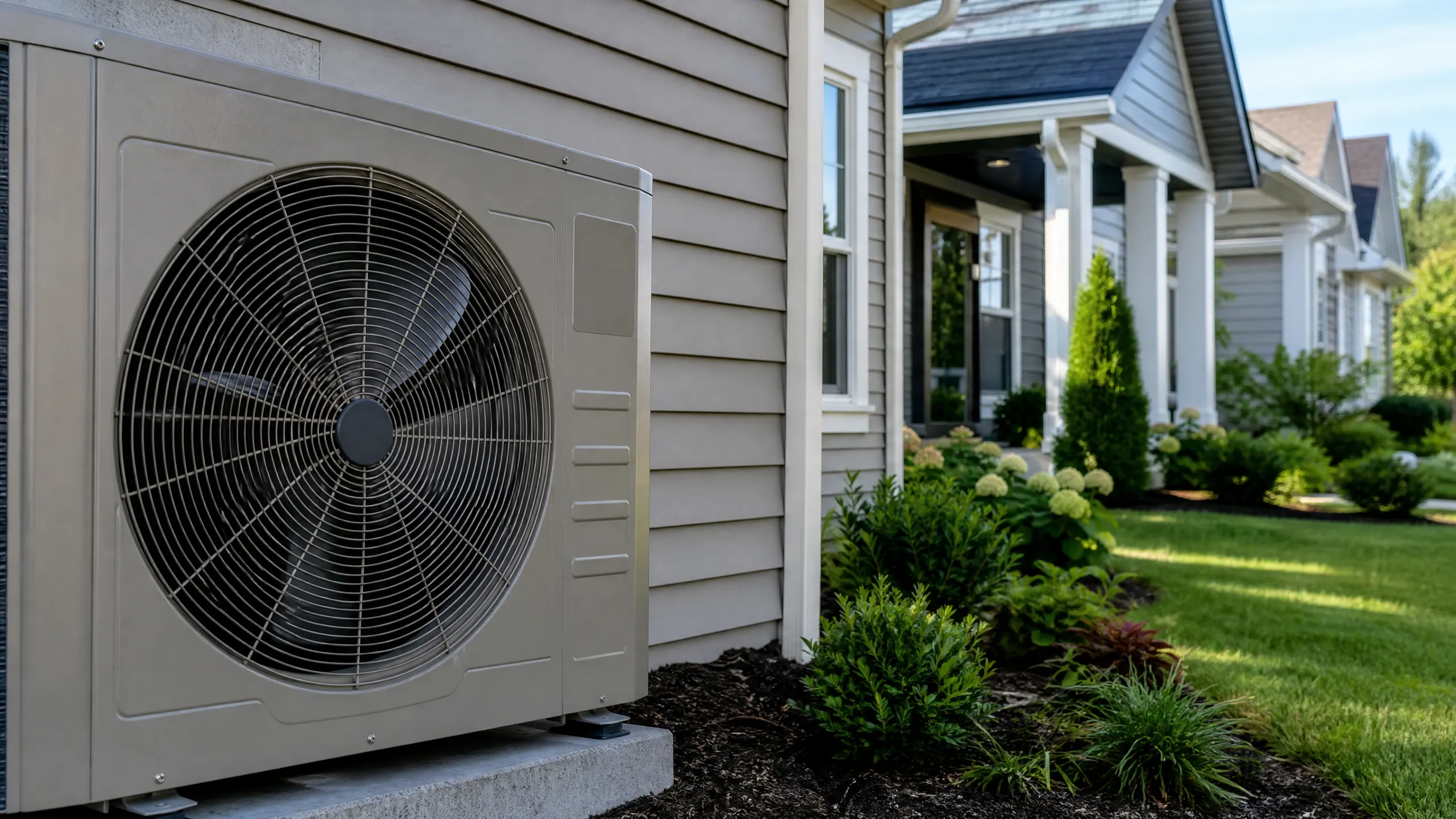





A large outdoor air-conditioning unit mounted beside a vinyl-sided house, surrounded by mulched garden beds and green shrubs.

Heat Pump Repair in Okmulgee, OK

Tell us about the job

Takes about a minute. No obligation.

RepairHeat PumpOkmulgee County, OK
Step 1 of 2

What ZIP code is the job in?

A heat pump in Okmulgee County runs in both directions most of the year, and summer is where it earns its keep against the kind of air that settles in here. The dew point averages 67°F through June, July and August, among the heaviest in the country. Pulling that much moisture out of the air keeps the compressor and coils under load for long stretches, not just on the worst afternoons. Then there's hail. The county logged 57 hail events between 2015 and 2024, and the outdoor unit sits out there taking that along with everything else the weather sends. Parts wear faster under that kind of load than they would somewhere milder, and that's usually the real story behind a heat pump that's started acting up.

7 months
October through April, your system heats
5 months
May through September, it cools
30°F
the average winter night it heats against
91°F
the average summer afternoon it cools against
Isometric cutaway illustration of a single-story house showing interior rooms, ceiling ductwork connected to an air handler, and an outdoor condenser unit linked by a line set.
Your system heats October through April and cools May through September.

NOAA nClimDiv, 1991–2020 normals

Heat in Okmulgee County switches on in October, after sitting idle since spring.

A part that was already weak gets found fast once the system has to run flat out.

Weather here is hard on an outdoor unit, not just the air

122 severe weather events from 2015 to 2024
25% of homes statewide lost power a day or more in 2024
44 damaging wind events from 2015 to 2024

If the outdoor unit took a direct hit from hail or flying debris in the last storm, get it looked at even if it's still running. A bent fin or a cracked fan blade doesn't always stop the system right away. It just makes the compressor work harder to move the same air, and that shortens what's left of its life. Okmulgee County saw 44 damaging wind events and 57 hail events over the past ten years, so a unit that took a hit is not a rare case here. Worth asking the contractor to check the coil and fan assembly for storm damage even if the complaint that brought them out was something else entirely.

Get the real cause fixed, not just the symptom

A heat pump under that kind of load wears from the inside before it ever shows up outside. Get the diagnosis right the first time and the repair holds.

Find a contractor
A dark gray heat pump unit mounted on a concrete pad next to a house with gray siding and a stone veneer wall.

What actually gives out first

A heat pump fails the same handful of ways in any climate, just on different schedules. The reversing valve is usually first, since it's the one part that only exists in a heat pump and it's shifting position every time the system switches between heating and cooling. A valve that sticks will leave the system stuck in one mode or blowing air that's not as warm or cool as it should be. The contactor and capacitor that start the compressor wear next, from the plain fact of cycling on and off thousands of times. A capacitor going weak shows up as a compressor or fan motor that hums and won't start, or one that shuts off on its own a few minutes in. The defrost board and sensor are the other common failure, because the outdoor coil has to shed frost all winter to keep running, and a bad sensor either skips that cycle or runs it too often. Low refrigerant charge from a slow leak shows up as a system that runs longer and longer to hit the same temperature, and it puts strain on the compressor itself, which is the expensive part to replace. None of these announce themselves clearly. A failing system usually just seems to work a little less well for a while before something stops outright.

Running it ragged speeds up the failure

A compressor that's starting hard or a reversing valve that's sticking is already under strain. Keep calling on it and that strain doesn't let up between cycles, it stacks up. Heat builds in a motor winding that isn't getting the current it needs, or a valve gets forced through a shift it was resisting. What breaks later this way is often a bigger part than the one that was struggling to start.
A low charge gets worse while it waits

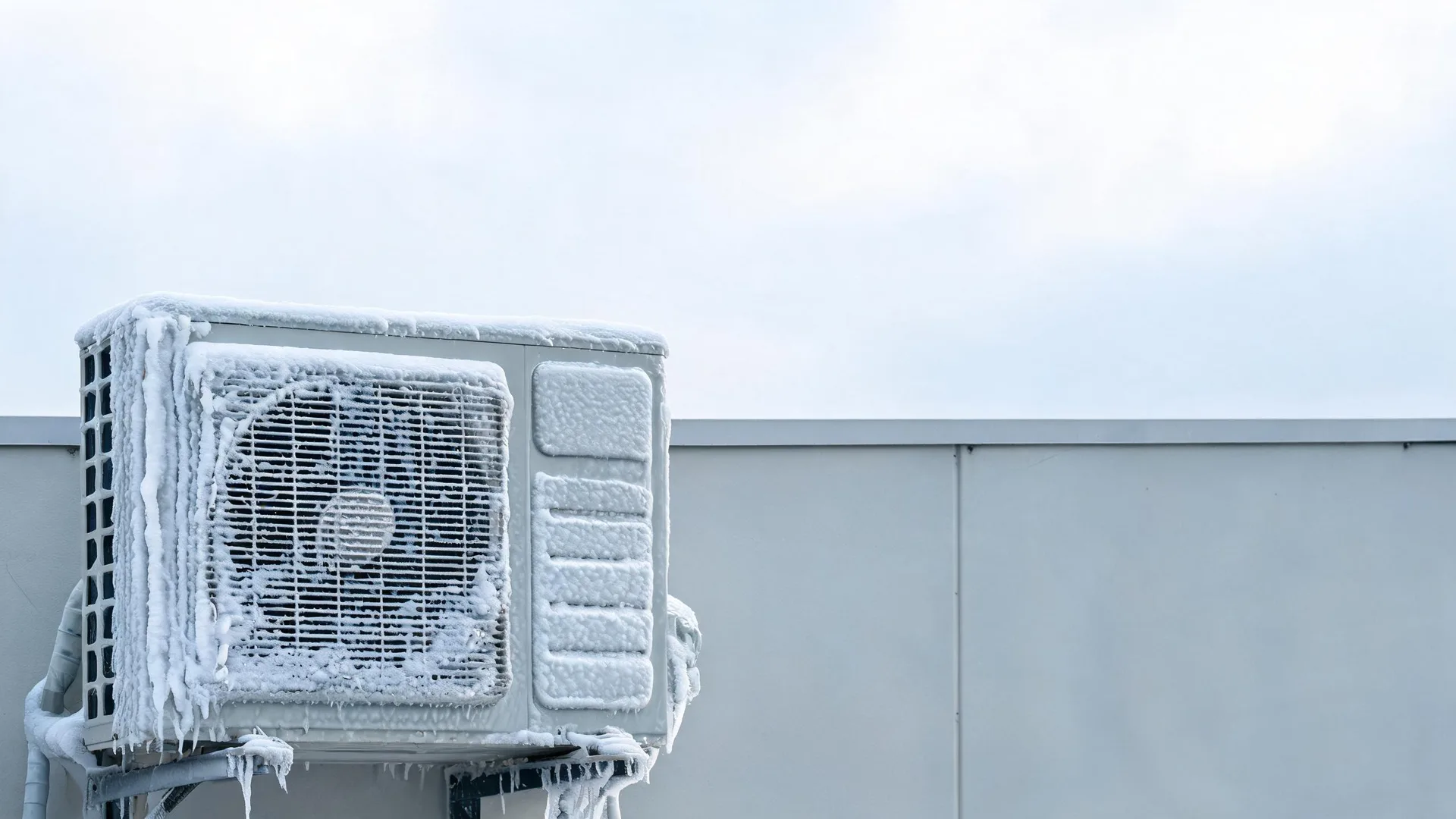
A slow refrigerant leak doesn't fix itself, and running the system doesn't flush it out. Every hour it runs low on charge, the compressor is pumping harder to move heat with less refrigerant to carry it, and it's running hotter than it was built to. That's the condition that turns a leak into a compressor replacement if it sits too long.

Before calling anyone, check the thermostat first. Make sure it's set to heat or cool as intended and the batteries aren't dying, since a thermostat acting erratically can look exactly like a failing system. Next, look at the air filter. A filter clogged with dust chokes off airflow, and a heat pump starved for airflow will ice up outside or struggle to hit temperature, which mimics a refrigerant or compressor problem. Walk outside and look at the unit itself. Clear away leaves, grass clippings or anything stacked against it, since the outdoor coil needs open air on all sides to do its job. If you see ice building on the outdoor coil, that's worth noting for the contractor, but don't chip at it or hose it off yourself. Check that both the indoor and outdoor breakers are on, since a tripped breaker will shut the whole system down and looks like a dead unit until you check the panel. None of this fixes a bad capacitor or a sticking reversing valve, but it rules out the simple stuff before someone drives out to look at the complicated stuff.

A diagnostic call starts outside, not in the living room. The contractor checks the outdoor unit first, reading pressures off the refrigerant lines and current draw off the compressor while it runs, because those numbers say more than how the air feels at a vent. Inside, they'll pull the filter and check airflow across the indoor coil, since weak airflow can mimic a dozen other problems. They'll cycle the system between heating and cooling to watch the reversing valve actually shift, and run a defrost cycle if the complaint points that way. Most of this is done with gauges and a meter, not guesswork, and a tech who's found the actual fault can usually show it to you on the unit itself before they explain what it costs to fix.