




Single-story brick ranch houses with lit garages and large oak trees along a residential street at dusk.

Heat Pump Repair in Pauls Valley, OK

Tell us about the job

Takes about a minute. No obligation.

RepairHeat PumpGarvin County, OK
Step 1 of 2

What ZIP code is the job in?

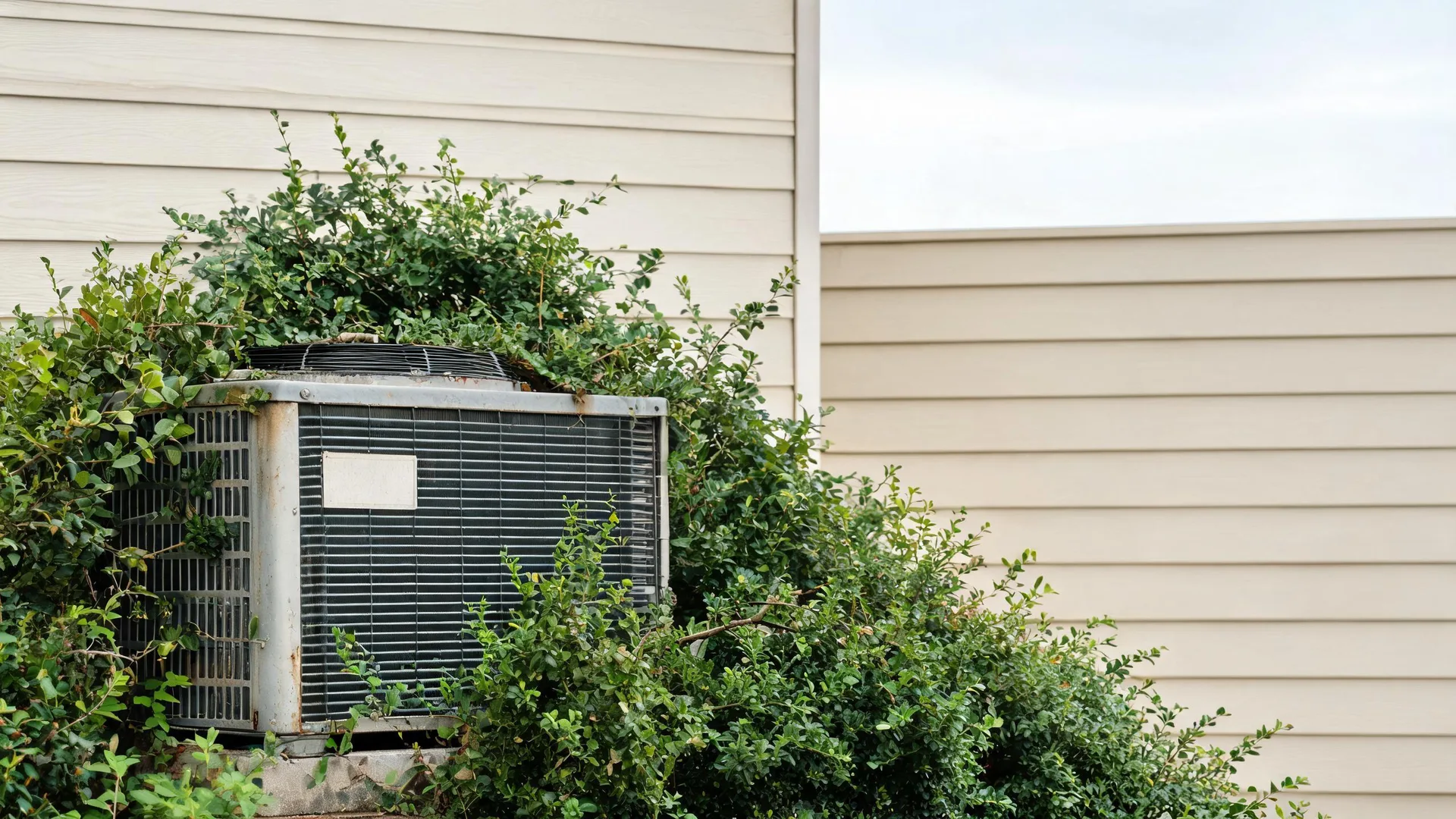
Garvin County has recorded 73 hail events between 2015 and 2024. A heat pump's outdoor unit sits right in the open for all of it, with thin aluminum fins wrapped around the coil. Hail bends those fins and dents the cabinet, and bent fins choke the airflow the system needs to move heat in or out. The unit will often keep running after a hard storm, just working harder to do the same job. That strain is what turns into a bigger repair if nobody looks at it.

6 months
November through April, your system heats
5 months
May through September, it cools
31°F
the average winter night it heats against
92°F
the average summer afternoon it cools against
Isometric line illustration of a cutaway single-story house showing interior rooms, ceiling ductwork, an indoor air handler unit, and an outdoor condenser connected by a line set.
Your system heats November through April and cools May through September.

NOAA nClimDiv, 1991–2020 normals

An outdoor unit that's been through hail damage can still run for years on bent fins alone.

The question is whether it's running on a dented coil or a failing compressor, and that's what the repair call sorts out.

October is the month to get it checkedHeat starts running in November here and stays on through April.

If your heat pump has been through a storm this year, don't wait for it to stop working before someone looks at it. A tech can comb the fins back out, check the charge, and see whether the coil is still moving air the way it should. Catching bent fins early is a straightforward fix. Catching them after the compressor has been straining against them for a season is not.

Get it diagnosed properly

Your heat pump works hard here, and that's usually what's behind the problem. Have it diagnosed properly so the fix lasts.

Find a contractor
A man seen from behind in a dark shirt and tan pants climbs concrete steps toward a navy blue front door, carrying a canvas tool tote in his right hand, with a large blue planter and shrub to the left.
A white mini-split heat pump outdoor unit mounted on a concrete pad beside a gray-sided house, surrounded by gravel and green shrubs.

How old is the system, not just the house

Half the homes in Garvin County were built in 1973 or earlier. A heat pump that came with a house that age has likely been replaced at least once, but if yours hasn't, it's old enough that a repair call should start with how much life is left in it, not just what's wrong today. A compressor near the end doesn't owe anyone a clean failure. It can limp along for another season or quit mid-repair. Worth asking the tech straight out before paying for parts.

A weak compressor doesn't rest, it labors

A heat pump with low charge or a restricted coil still tries to hit the temperature you set. It just takes longer and runs harder to get there. The compressor is the part doing that extra work, and it's the hardest part in the system to replace.
Ice is a symptom that feeds itself

Low airflow or low refrigerant charge can let frost build on the outdoor coil. Once ice forms, it blocks airflow further, so more ice forms. Left running long enough, a frost problem that started small can end with the system unable to defrost itself at all.

A heat pump in trouble usually tells on itself before it quits outright. The air coming out doesn't feel right, not warm enough in heating mode or not cold enough in cooling mode, even though the system is running. It short cycles, kicking on and off before it finishes a full run, which usually means something is making it struggle to keep up. Or it just stops responding to the thermostat altogether. A new noise from the outdoor unit, grinding, buzzing, a hard click that wasn't there before, is also worth paying attention to. None of these point to one single problem. A reversing valve that's not switching all the way can feel a lot like low charge from the inside of the house, and both need a tech with gauges and a few minutes to tell apart.

A diagnostic visit starts outside at the unit itself. The tech checks the fins for the kind of damage that chokes airflow, then hooks up gauges to read the refrigerant charge and see how the system is actually moving heat, not just whether it turns on. Static pressure gets checked too, since a coil that's partly blocked makes the whole system work against itself. Electrical readings on the compressor come next, because a compressor pulling the wrong amp draw is telling you it's struggling before it ever fails outright. The reversing valve gets tested by switching the system between heating and cooling to confirm it's actually moving all the way each time. None of this takes guesswork. It takes the readings, compared against what they should be, to say what's actually wrong instead of guessing from a noise or a feeling.