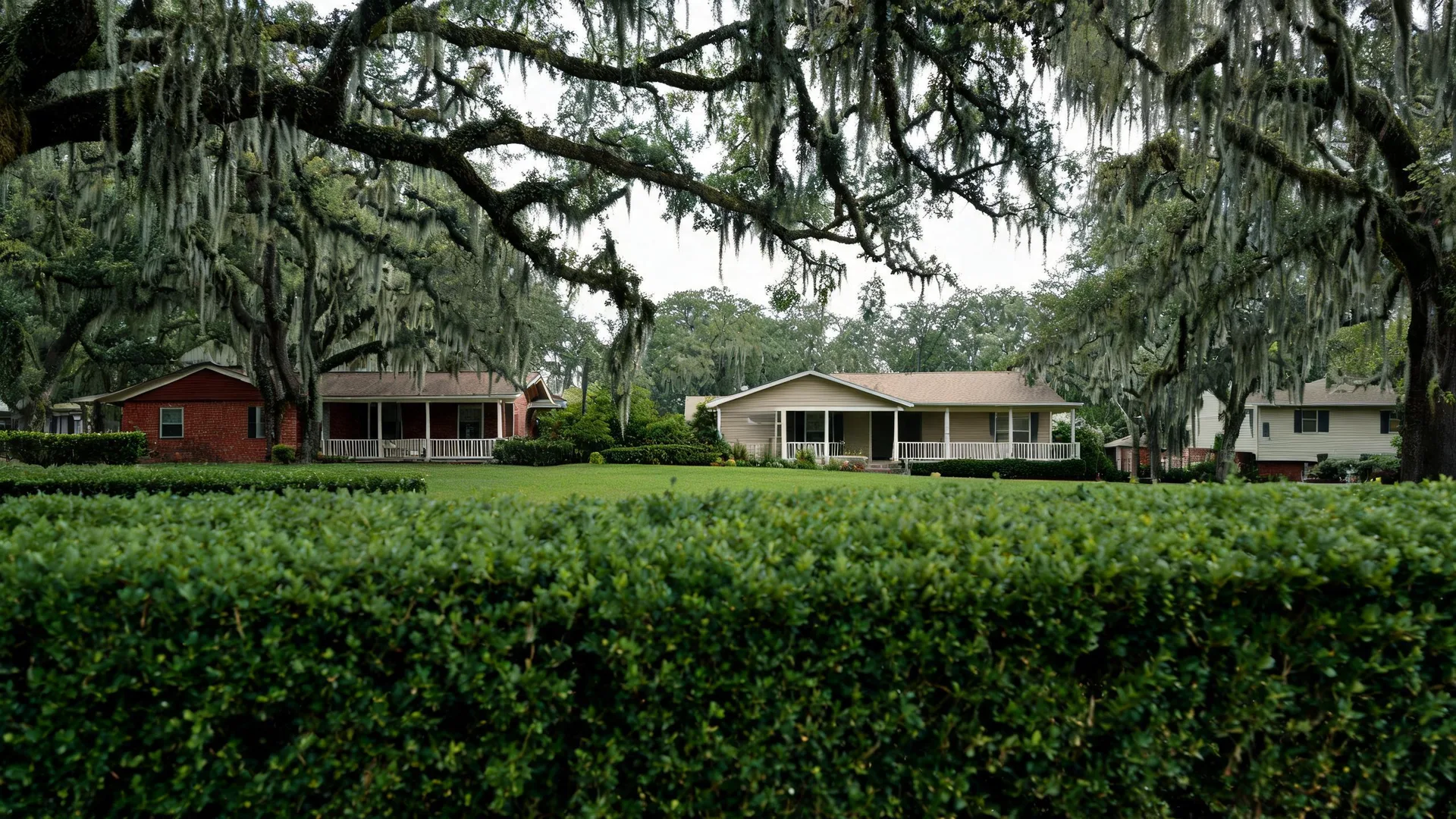





Single-story houses with covered porches sit behind a mowed lawn and a long trimmed hedge, framed by oak branches draped with Spanish moss.

Heat Pump Repair in Pryor Creek, OK

Tell us about the job

Takes about a minute. No obligation.

RepairHeat PumpMayes County, OK
Step 1 of 2

What ZIP code is the job in?

Mayes County saw 200 severe weather events between 2015 and 2024. That includes 99 damaging wind events and 65 hail storms, plus 27 tornadoes touching down somewhere in the county. The outdoor unit sits outside through all of it, taking whatever the wind throws at it. Hail can dent the cabinet and bend the fins that let it shed heat. A heat pump can keep running after that kind of hit and still be working harder than it should. If a storm has come through, it's worth having the unit looked at even if nothing seems wrong yet.

7 months
October through April, your system heats
5 months
May through September, it cools
29°F
the average winter night it heats against
90°F
the average summer afternoon it cools against
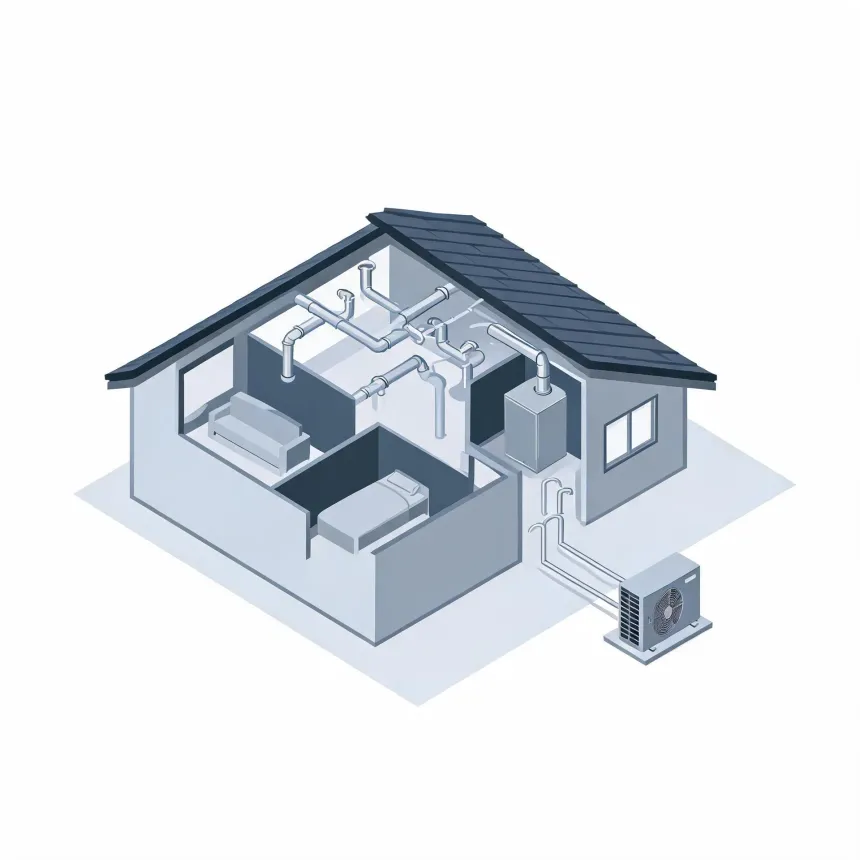
Isometric cutaway illustration of a small house showing ducted air distribution, an indoor air handler, and an outdoor condenser unit connected by lines, with a sofa and bed in the rooms.
Your system heats October through April and cools May through September.

NOAA nClimDiv, 1991–2020 normals

A heat pump that's struggling still moves refrigerant, still turns the fan, so nothing shuts it down on its own.

Left running, a weak compressor or a dirty coil works harder to do less, and that strain is what turns a repair into a replacement.

This much wind and hail puts a heat pump through more than it was built to shrug off

99 damaging wind events from 2015 to 2024
65 hail events from 2015 to 2024
Power here costs 12.96 cents per kilowatt-hour
Ready before October, not afterHeat here starts in October. A weak part usually gives out in the first cold snap, not before.

If the unit has been through a storm, don't wait for it to act up before calling someone out. A tech can check the fins for damage and make sure the cabinet seal is still tight, and catch a slow refrigerant leak before it turns into a compressor replacement. A unit that took a hit from wind or hail doesn't always show it right away. Have it looked at while the fix is still small.

If a storm came through, have it looked at now

If the outdoor unit took a hit this year, get it checked before it has to carry a full summer or winter on a bad coil or a slow leak.

Find a contractor
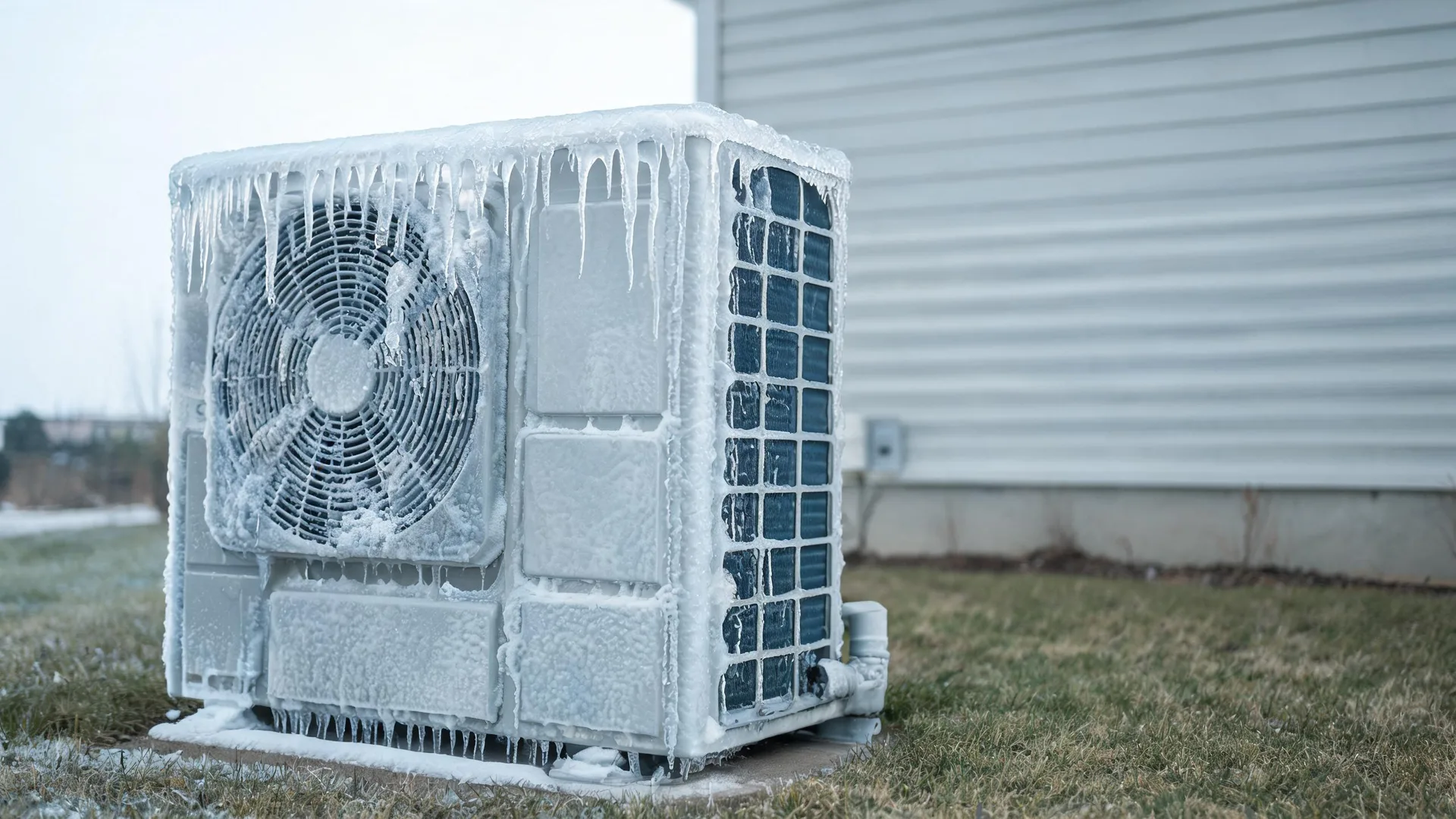
A residential heat pump outdoor unit mounted on a concrete pad next to a house with gray vinyl siding.

What tends to go first, and what it leads to

A heat pump runs in both directions, all year, and that doubles the wear a straight air conditioner never sees. The reversing valve is usually the first thing to go. It switches the refrigerant flow between heating and cooling, and after enough cycles the valve can stick or leak, so the unit blows the wrong temperature or gets stuck in one mode. The outdoor coil is next. It carries frost in heating mode, and the defrost cycle that clears it puts real strain on the system every time it runs. A coil that stays dirty holds more frost longer and defrosts more often than it should. The compressor is what all of that leads to. It's the most expensive part to replace and the last one to fail, because it's usually a weak capacitor, a low charge, or a coil that's been struggling for a while that finally pushes it past what it can handle. Caught early, most of this is a part swap. Caught late, it's a compressor.

What's safe to check yourself

Look at the outdoor unit first. Make sure nothing is stacked against it or growing into the cabinet, and clear away leaves or debris so air can move through the fins. Check the air filter inside and swap it if it's dirty, since a clogged filter chokes airflow in both heating and cooling. Walk around the outdoor unit and look for bent fins, a dented cabinet, or ice building up on the coil when it shouldn't be there. Inside, check that the thermostat has power and is set to the right mode, and look for a tripped breaker if nothing is running at all.
What to leave alone

Don't open the outdoor unit's cabinet or touch anything inside it. Refrigerant lines and electrical components in there need the power locked out first, and a low charge or a stuck valve isn't something you can see from outside. If the outdoor coil is coated in ice beyond what a normal defrost cycle clears, don't chip at it or hose it down. That's a sign the defrost cycle itself isn't working, and forcing the ice off can bend the fins or damage the coil underneath.

A heat pump in trouble usually says so in small ways before it quits outright. It might run long cycles that never quite bring the house to temperature, or short-cycle on and off without settling in. Air coming from the vents that feels lukewarm instead of properly hot or cold is a common early sign, especially if that's new. Listen for noises that weren't there before: a hard clunk when it switches between heating and cooling, a grinding or squealing from the outdoor unit, a hiss that suggests refrigerant escaping somewhere it shouldn't. Ice on the outdoor coil that doesn't clear on its own, or that keeps coming back, points to the defrost cycle not doing its job. None of these mean the unit is done. They mean something inside it is working harder than it should to cover for a part that's failing, and that's worth a look before it stops working altogether.

A tech weighing repair against replacement is really asking how much of the unit is still good. A reversing valve or a capacitor is a contained fix. The rest of the system isn't involved, and once it's swapped the unit runs like it did before. A compressor is a different question, because by the time it fails it's usually not the only thing wrong, and putting a new compressor on a coil or a blower that's already worn doesn't buy back much. Age matters less than what's already been replaced. A unit that's needed two or three repairs in close succession is telling you the parts around the failure point are wearing out together, not one at a time. That pattern is worth more than any single part's condition.