





A nighttime street view of a row of illuminated single-story brick houses with large trees along the sidewalk.

Heat Pump Repair in Sapulpa, OK

Tell us about the job

Takes about a minute. No obligation.

RepairHeat PumpCreek County, OK
Step 1 of 2

What ZIP code is the job in?

Creek County sees more severe weather than most places, 144 events counted between 2015 and 2024. Damaging wind came through 65 times in that span, and hail hit 58 times. Both land on the part of a heat pump that sits outside, exposed, with thin metal fins around the coil. A dent or a bent fin does not always stop the unit from running, so it can keep working while it is damaged. If a storm has come through and you have not had the outdoor unit looked at, that is worth doing even if the heat pump still seems fine.

7 months
October through April, your system heats
5 months
May through September, it cools
29°F
the average winter night it heats against
91°F
the average summer afternoon it cools against
Isometric cutaway illustration of a house showing interior ductwork, an indoor air handler, and beds, with an outdoor condenser unit connected by lines outside the wall.
Your system heats October through April and cools May through September.

NOAA nClimDiv, 1991–2020 normals

Heat here starts in October, and it runs through April.

A part that was already weak from last season usually fails in the first cold snap, not mid-winter.

A heat pump here runs through sticky summers and cold winters both, with no real break between

58 hail events from 2015 to 2024
Power here costs 13.23 cents per kilowatt-hour
Climate zone 3A

A heat pump that is struggling will often keep going anyway, and that is worse than it sounds. If the compressor is low on refrigerant, it still runs, just harder, drawing more current to do the same job. If the reversing valve is starting to stick, the system still moves air, just not consistently at the right temperature. The motor or compressor does not know the difference between normal work and strained work, so it keeps pushing until something gives out completely. A refrigerant leak gets worse under the extra heat and pressure of continued operation, not better. A compressor running low on oil or lubricant wears its internal parts faster every hour it stays on. What starts as a repair to one part can end as a replacement of the whole unit, simply because the weak part was never given a chance to fail on its own before it took something else down with it.

After a storm, get the outdoor unit checked before you need it

If the outdoor unit took a hit from wind or hail this year, have it looked at before it has to run through a cold snap. A bent fin or a dented cabinet does not always stop a heat pump from running, which is exactly why it is easy to miss.

Find a contractor
A gray heat pump condenser unit mounted on a concrete pad against the gray lap-siding exterior wall of a house.

What you can check yourself before calling someone

Before you pick up the phone, there are a few things worth checking yourself. Look at the thermostat first. Make sure it is set to heat or cool as needed, and that the setpoint is actually past room temperature, not sitting right at it. Check the batteries if it uses them. Next, go to the breaker panel. A heat pump runs off more than one breaker, one for the outdoor unit and one for the air handler, and it is common for only one to trip. Reset any that are off, but if one trips again right away, stop and leave it alone. Walk outside and look at the unit itself. Leaves, grass clippings or ice can block airflow around the coil, and clearing debris away from the sides is safe to do. If you see solid ice built up on the coil or refrigerant lines, do not chip at it or run the system to try to melt it faster. Inside, pull the air filter and hold it up to a light. If you cannot see light through it, it is restricting airflow badly enough to cause real problems, and swapping it for a clean one is something any homeowner can do safely. Check that every supply vent in the house is open and unblocked by furniture or rugs. None of this involves opening the unit's cabinet or touching electrical or refrigerant components, and none of it should.

Most failures start small, not sudden

A heat pump rarely just quits. A contactor pits a little more every time it closes, a capacitor loses capacitance over time, a blower motor bearing wears until it drags. Each of these gives you warning if you catch it: a hum with no start, a struggle to come up to speed, a grinding sound that was not there before. The failure that looks sudden was usually building for a while.
The signs tell you where to look

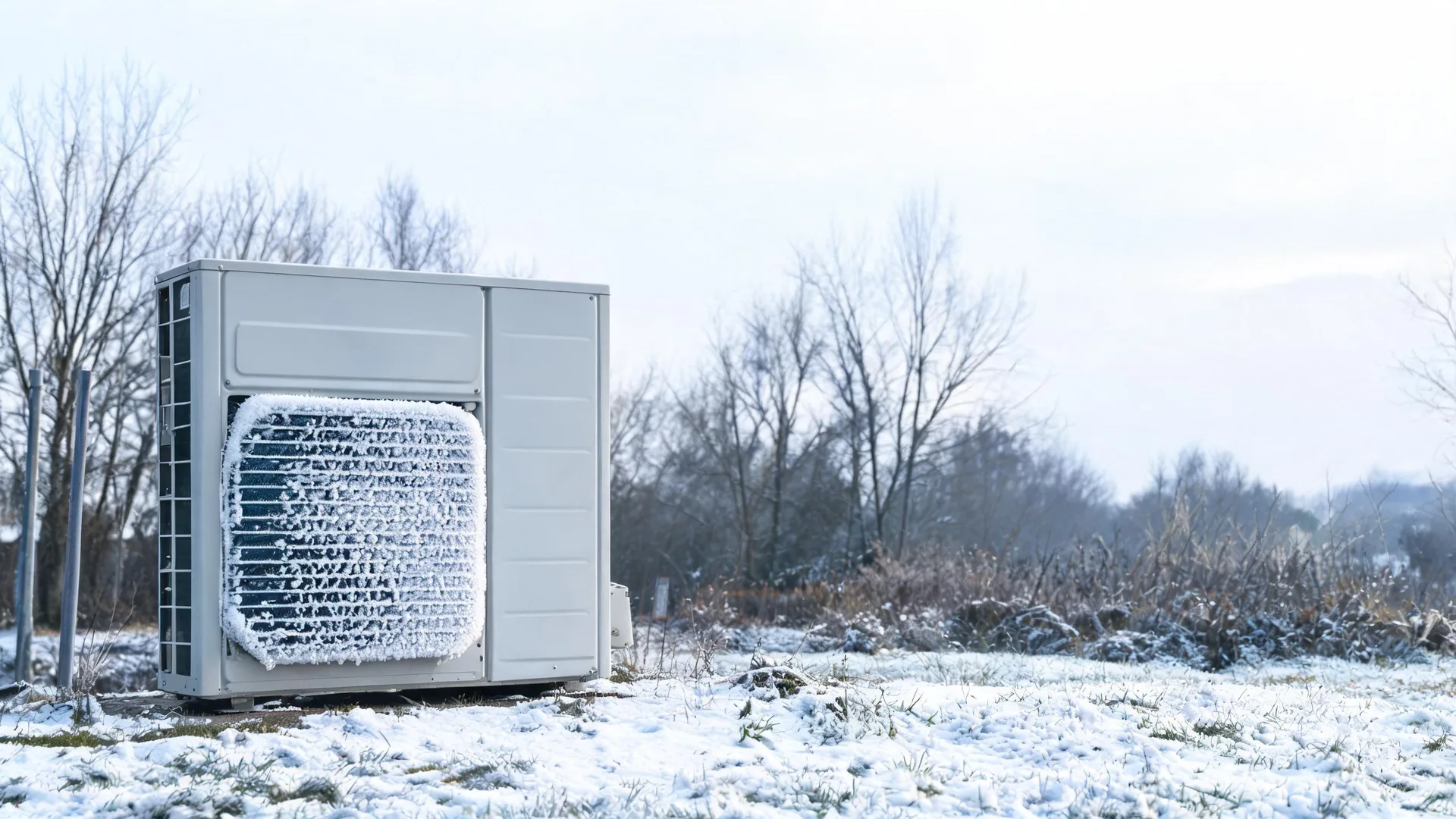
Ice on the outdoor coil points to a stuck reversing valve or a fan that has stopped turning, not a dirty filter. Warm air coming out of the vents in heat mode points to the reversing valve itself, or to a refrigerant charge that has dropped. Short cycling, where the unit starts and stops over and over, usually means a sensor or control board problem rather than anything mechanical. Matching the sign to the part saves a technician time, and saves you a repair aimed at the wrong thing.

A heat pump usually tells you something is wrong before it stops working. Listen for sound. A clicking that repeats without the unit starting points to a failed capacitor or a bad contactor. A grinding or squealing from the outdoor unit or the air handler points to a motor bearing giving out. Watch the air too. If it is blowing but not warm or not cool enough, something is off with the reversing valve or the refrigerant charge, not the blower. A system that short cycles, turning on and off in quick bursts instead of running a full cycle, is usually a control or sensor problem working against itself. Any of these is worth a call before the part it is wearing on takes something else down with it.

A diagnostic visit starts outside, at the unit itself, before any panel comes off. A technician checks refrigerant pressure on both the high and low side, because that number alone points toward a leak, a bad metering device, or a compressor that is wearing out. Electrical readings come next: amp draw on the compressor and fan motor, voltage at the contactor, resistance across the capacitor. A capacitor can read fine sitting still and fail the moment it has to push a hard start, so a tech often tests it under load, not just with a meter at rest. Indoors, the check moves to airflow and controls, the blower's static pressure, the condition of the sensors that tell the reversing valve when to switch. The goal is to find the one part that is actually failing, not to start swapping parts and see what helps.