




Two single-story brick suburban houses with attached garages and mature trees, photographed at night under a dark blue sky.

Heat Pump Repair in Seminole, OK

Tell us about the job

Takes about a minute. No obligation.

RepairHeat PumpSeminole County, OK
Step 1 of 2

What ZIP code is the job in?

6 months
November through April, your system heats
5 months
May through September, it cools
30°F
the average winter night it heats against
92°F
the average summer afternoon it cools against
Isometric cutaway illustration of a gray house showing interior rooms, a central air handler with ducts in the attic, and refrigerant lines running to an outdoor condenser unit beside the building.
Your system heats November through April and cools May through September.

NOAA nClimDiv, 1991–2020 normals

A heat pump that won't turn on sometimes just needs a breaker reset or a thermostat with dead batteries.

Check those two before you pay someone to find the same thing.

A heat pump here switches jobs twice a year, and that's when it quits

Cooling runs May through September
Heat runs November through April
44 hail events from 2015 to 2024

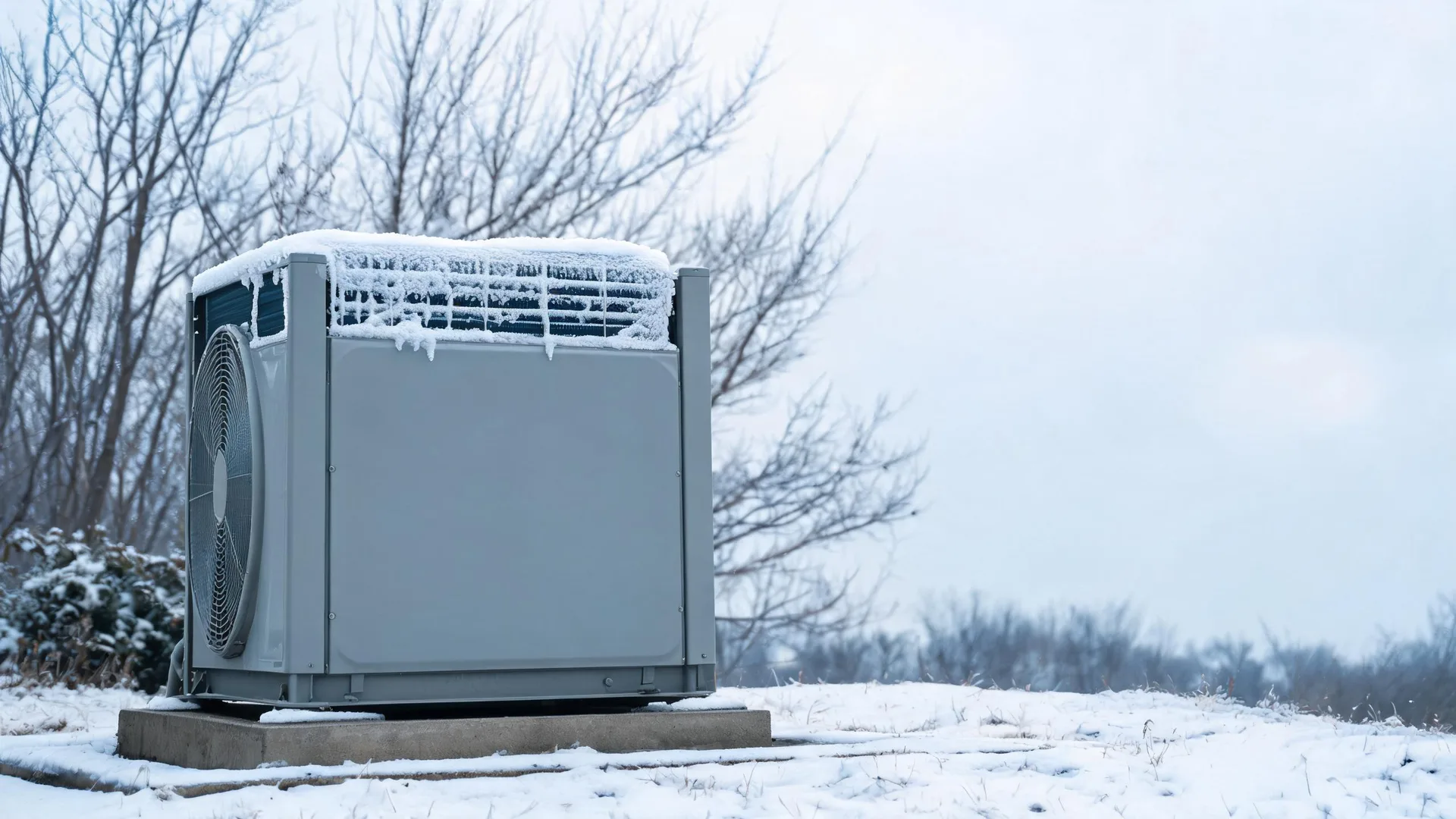
A heat pump that's struggling doesn't fail all at once. If the compressor is drawing hard to keep up, running it longer just adds heat and wear to a part that's already stressed. A refrigerant leak behaves the same way. The system keeps trying to hit the temperature you set, running longer cycles to make up for the charge it's lost, and that extra runtime can damage the compressor beyond what the leak itself would have done. Ice on the outdoor coil is another one. A little frost during a defrost cycle is normal, but if the unit keeps running while ice builds up, airflow gets blocked and the compressor can take damage trying to push through it. In most of these cases, shutting the system off and calling someone costs you nothing but a little comfort. Letting it run costs you the part.

Get it looked at early

Problems tend to show up in the first weeks of the season, when the load hits a part that was already weak.

Find a contractor
A white mini-split heat pump outdoor unit mounted on a concrete pad beside a gray-sided house, surrounded by gravel and green shrubs.

What tells you it's time to call, not wait

Pay attention to what the air feels like coming out of the vents. If it's lukewarm during a cold snap, or barely cool in hot weather, the system is running but not doing its job. That's different from short cycling, where the unit kicks on and off every few minutes without finishing a full run. Short cycling points to a thermostat problem, a refrigerant issue, or a compressor that's struggling to start. Strange sounds matter too. A clicking at startup that never resolves into a steady hum usually means a failing capacitor or relay. A hard metallic grinding or screeching from the outdoor unit points to the fan motor or the compressor itself, and that one shouldn't wait. If you notice the outdoor unit icing over and staying iced even after it should have defrosted, or the indoor coil frosting up, airflow is restricted somewhere and the system needs to come off before it pushes the compressor too hard. Water pooling around the indoor unit is worth checking too. It can be a clogged condensate line, but it can also mean the coil is freezing and thawing repeatedly, which is a sign something upstream isn't right. None of these mean the whole system is done. Most of them are a single part that's failed or is about to, and the sooner it's looked at, the less chance it takes other parts down with it.

The reversing valve is the part other air conditioners don't have

A reversing valve is what lets a heat pump switch between heating and cooling, and it's a common point of failure. The valve can stick partway or fail to shift, so the system ends up blowing the wrong temperature air or stuck in one mode no matter what the thermostat asks for. It's worth mentioning to a tech whether the system was trying to heat or cool when it quit, since that points straight at the valve or rules it out.
Everything else wears the way it would in any AC system

The contactor and capacitor that start the compressor and fans don't care whether the system is heating or cooling. They wear from the same daily cycling a straight air conditioner sees, and they tend to fail after years of that work rather than all at once. A failing capacitor often shows up as clicking at startup that never settles into a steady hum. A bad contactor can leave the outdoor unit silent even though the thermostat is calling for it.

A diagnostic visit starts with questions, not tools. A tech wants to know what the system was doing right before it failed, whether it was heating or cooling, and whether the problem came on suddenly or got worse over days. Then they check pressures and electrical readings before touching anything mechanical, because those numbers point to which part is actually at fault instead of guessing from symptoms alone. They'll run the system in the mode it failed in and watch how it responds, since a reversing valve problem looks different from a capacitor problem once it's actually running. Outside, they check the coil for frost or dirt and make sure the fan is moving the air it should. Inside, they check the air handler and the coil there too, since a problem on one end often shows up as a symptom on the other. By the time the panel comes off, the tech usually already has a good idea what they're looking for.

Age matters more than any single part failing. A capacitor or contactor is a small fix regardless of how old the system is, and replacing one doesn't say anything about the rest of the unit. The compressor and the reversing valve are different. Both sit in the refrigerant circuit, and when one of them fails, it's often because the system has been running hard for years and something finally gave out. A compressor replacement on an older unit is a real cost against a system that's already most of the way through its working life. That's the math worth doing before you commit to the repair: not what this fix costs, but what it buys you if the next part goes a year later.