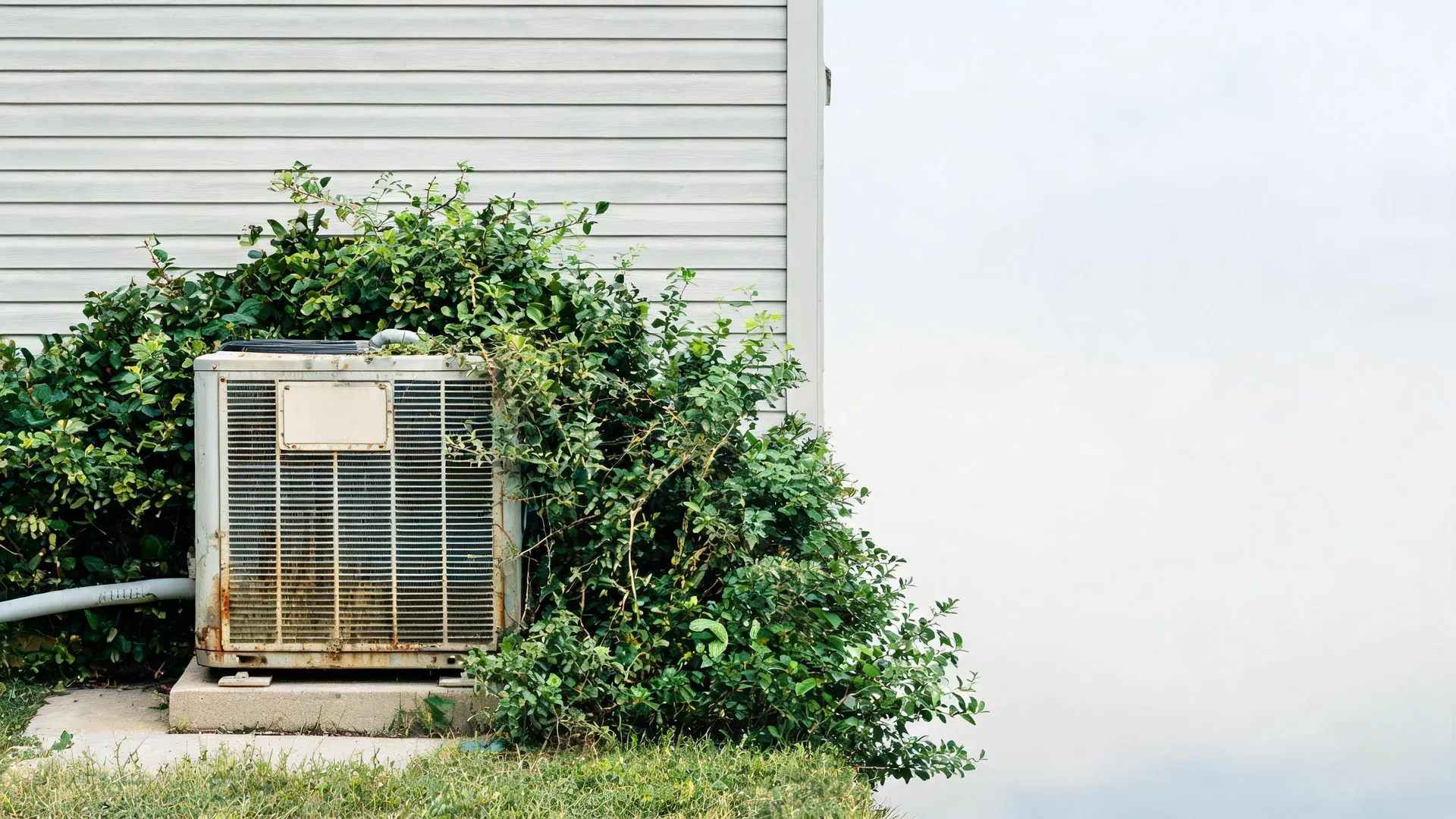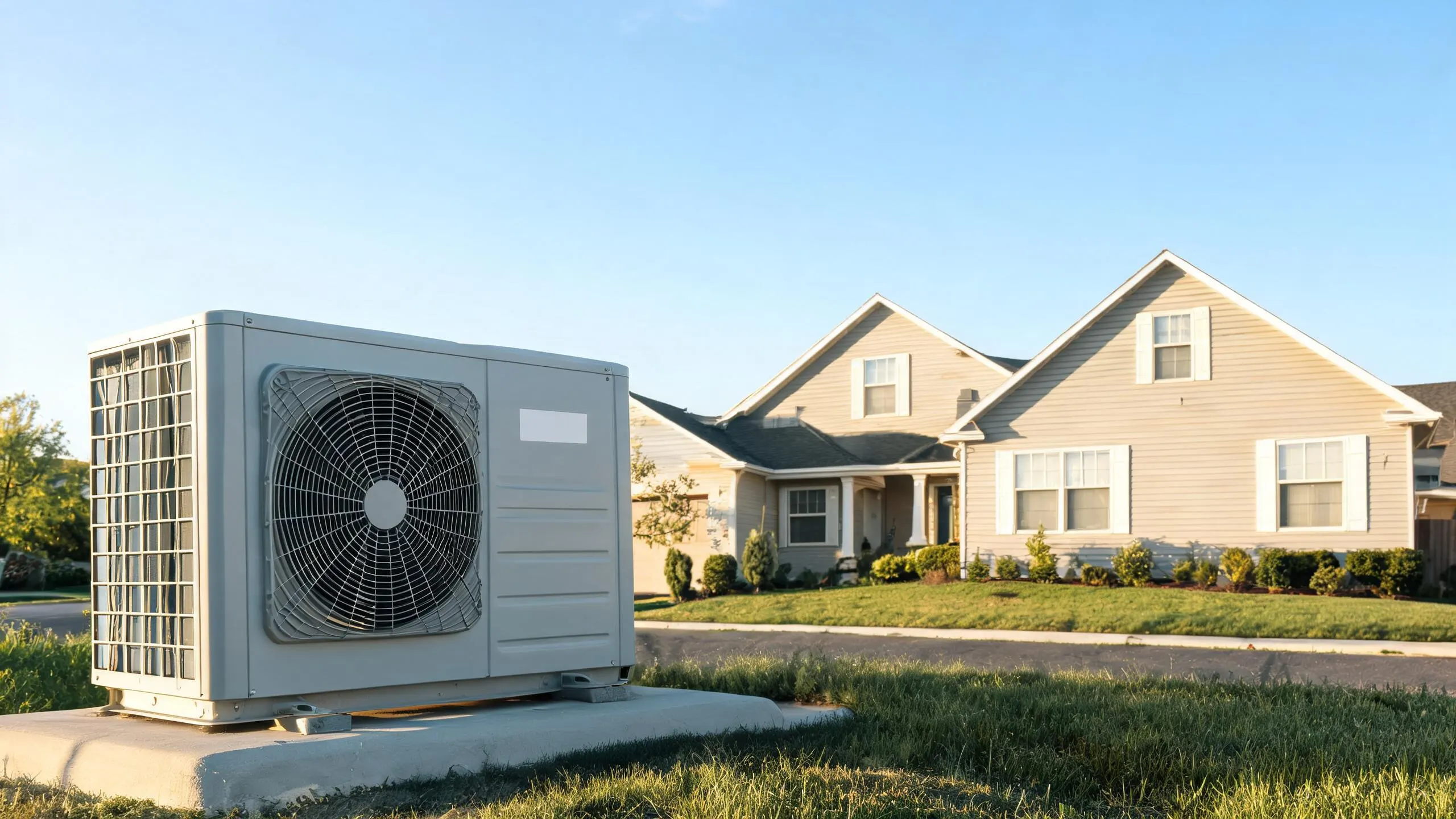
An outdoor heat pump unit mounted on a concrete pad in front of a two-story suburban house.

Heat Pump Repair in Tahlequah, OK

Tell us about the job

Takes about a minute. No obligation.

RepairHeat PumpCherokee County, OK
Step 1 of 2

What ZIP code is the job in?

Cherokee County sees real storm damage

Cherokee County logged 117 severe weather events between 2015 and 2024, including 58 with damaging wind and 38 with hail. A dozen tornadoes touched down in that same stretch. An outdoor heat pump unit sits outside through all of it, exposed to wind-driven debris and hail.


A unit that still runs can still be hurt

Hail can dent the fins on the outdoor coil, and wind can throw branches or gravel into the cabinet. A heat pump with a bent coil or a cracked fan blade may keep running for a while before it fails. If a storm has come through, that's worth checking even if the system seems fine right now.

7 months
October through April, your system heats
5 months
May through September, it cools
30°F
the average winter night it heats against
90°F
the average summer afternoon it cools against
Isometric cutaway illustration of a small house showing ducted air distribution, an indoor air handler, and an outdoor condenser unit connected by lines, with a sofa and bed in the rooms.
Your system heats October through April and cools May through September.

NOAA nClimDiv, 1991–2020 normals

October is the month heat here switches on for good.

A weak part that made it through last winter is the one that gives out in the first cold snap.

38 hail events and air this heavy, your heat pump never gets an easy season

38 hail events from 2015 to 2024
Climate zone 3A
Power here costs 12.40 cents per kilowatt-hour
Cherokee County homes skew newerHalf the homes in Cherokee County were built in 1989 or later. A heat pump that came with a newer house usually has years left in it.

If your heat pump is acting up after years of running hard here, don't just reset it and hope. A contractor can check the outdoor coil for hail damage, test the refrigerant charge, and look at parts that take the brunt of long summers and cold winters. A system that's been through 38 hail events in a decade might have a dented coil or a cracked fan blade behind the noise or the weak airflow you're noticing. Get the actual cause found before paying for a repair that doesn't hold.

After a storm, get the unit checked before it fails on its own

If a storm has come through recently, get the outdoor unit looked at before assuming it's fine. A quarter of Oklahoma households lost power for a day or more last year, so a heat pump that's struggling now is also one you don't want failing on you when the power's already out.

Find a contractor
A man in a cap, gray long-sleeved shirt and brown work pants walks up concrete steps toward a dark blue front door, carrying a worn canvas tool bag beside a potted shrub.
A dark gray heat pump unit mounted on a concrete pad next to a house with gray siding and a stone veneer wall.

A heat pump works every month, not just the hard ones

A heat pump runs every day of the year, not just in the hardest weather. It switches between heating and cooling as the temperature calls for it, which means the compressor and the reversing valve both see more hours of work over a year than they would in a system that only runs half the year. Age on a heat pump isn't just a number on a sticker. A unit nearing the end of its life tends to show it in more than one way at once: it runs longer to hit the same temperature, the compressor sounds different than it used to, and small problems start showing up closer together instead of years apart. A single failure on a unit that's otherwise been solid is usually a repair. A string of different failures within the same year or two is the unit telling you it's wearing out overall, not just in one part.

The reversing valve is the part unique to this machine

A heat pump has one part a straight air conditioner doesn't: the reversing valve that switches it between heating and cooling. When that valve sticks, the system can get stuck blowing cold air in winter or warm air in summer. It's a common failure point just because it works every single heating and cooling cycle, year round, with no season off.

The outdoor coil fails the same way an AC's does

Past the reversing valve, a heat pump breaks down like any air conditioner does. The capacitor that starts the compressor and fan motor weakens with age and eventually won't kick them on. The outdoor coil gets dented or caked with dirt and can't shed heat properly. Low refrigerant charge from a slow leak shows up as weak heating and weak cooling both, since it's the same refrigerant loop doing both jobs.

Before anything else, check the thermostat batteries and the setting. A heat pump that won't respond to a thermostat with dead batteries looks broken and isn't. Next, go look at the outdoor unit. If ice is covering the coil or the whole cabinet, don't chip at it and don't run the fan to melt it faster. Most heat pumps defrost themselves on a timer, so some frost in cold weather is normal, but a solid block of ice is not. Check that nothing is blocking airflow around the outdoor unit, no leaves packed against the fins, no shrubs grown in close, no snow piled against the side. Inside, pull the air filter and hold it up to a light. If you can't see through it, swap it or clean it before calling anyone. Last, check your breaker panel for a tripped breaker, but only flip it back once. If it trips again, that's a sign of a real problem and the panel isn't the place to keep testing it.

A diagnostic visit starts outside, not inside. A tech will check the outdoor unit first, looking at the coil for dents or buildup, checking that the fan spins freely, and watching how the system behaves through a full cycle. Gauges go on the refrigerant lines to check the charge, since too little or too much both cause problems. The reversing valve gets tested by forcing the system to switch between heating and cooling, because a valve that's starting to stick won't always show it right away. Electrical parts like the capacitor and the control board get checked under load, not just looked at, since a part can look fine and still be failing. The goal of the visit isn't to replace parts until something works. It's to find the one thing actually causing what you're seeing, so the repair matches the problem.