A row of single-story houses with porches behind a manicured lawn and trimmed hedges, framed by large oak trees draped with Spanish moss.

Heat Pump Repair in Vinita, OK

Tell us about the job

Takes about a minute. No obligation.

RepairHeat PumpCraig County, OK
Step 1 of 2

What ZIP code is the job in?

April is when it gets tested

Your heat pump sits idle most of the spring, then switches over to cooling in May. Whatever was already weak, a low charge, a tired capacitor, a stuck reversing valve, shows up in those first warm weeks when the system finally has to work.


September does the same in reverse

Heat runs here from October through April, seven months of the year. When your heat pump switches back to heating in September and October, a part that barely got by last winter is the one that quits first.

7 months
October through April, your system heats
5 months
May through September, it cools
28°F
the average winter night it heats against
90°F
the average summer afternoon it cools against
Isometric cutaway illustration of a small house showing interior rooms with furniture, an indoor air handler with ductwork, and lines running to an outdoor condenser unit beside the building.
Your system heats October through April and cools May through September.

NOAA nClimDiv, 1991–2020 normals

A heat pump low on refrigerant will keep running, just worse every week.

The compressor is built to pump refrigerant, not air, and running it low wears the compressor down.

Your outdoor unit takes the weather here same as any otherCraig County recorded 81 severe weather events between 2015 and 2024, nothing unusual for this part of Oklahoma.

Half the homes in Craig County were built in 1974 or earlier, half in 1974 or later. That split doesn't change what's likely wrong with your heat pump. An older unit and a newer one fail the same ways, a reversing valve that sticks, a contactor that's pitted, a capacitor that's weak. What matters more is how old your system is, not your house. If the heat pump came with the house, that's worth knowing before a contractor shows up. Either way, the fix is usually a known part with a known repair, not something this county does differently.

Get it looked at early

Problems tend to show up in the first weeks of the season, when the load hits a part that was already weak.

Find a contractor
A man in a cap, dark jacket and tan work pants carries a canvas tool bag up concrete steps toward a dark blue front door, with a potted shrub beside the entry.
A dark gray heat pump unit mounted on a concrete pad next to a house with gray siding and a stone veneer wall.

What a struggling heat pump sounds and looks like

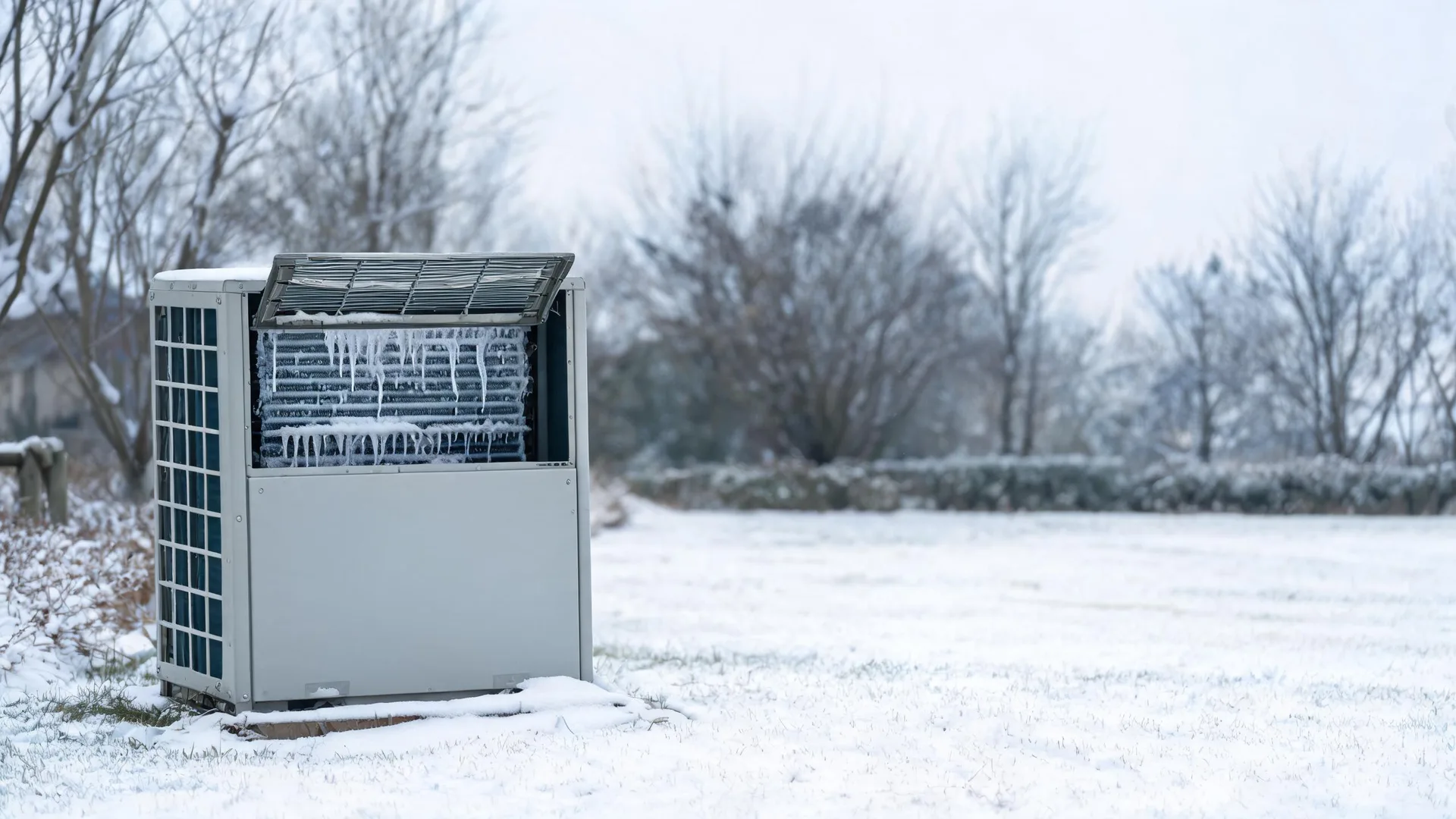
A heat pump runs longer than a straight air conditioner, since it's working in both seasons instead of one. That extra runtime means more hours for a weak part to show itself. Short cycling is usually the first thing an owner notices, the unit kicking on and off in a few minutes instead of running a normal cycle. Ice on the outdoor coil in weather that isn't that cold points at a reversing valve that isn't shifting right, or a low charge. Warm air out of the vents when it's set to heat means the system is stuck in the wrong mode, or it's actually in defrost and taking too long to switch back. A unit that hums but doesn't start is usually the capacitor or the contactor, not the compressor itself. None of these get better by waiting. A part that's struggling in mild weather is the one that quits outright when the temperature swings hard.

Check the thermostat before anything else

Make sure it's set to heat and the temperature is set above room temperature, not just holding. Check the batteries if it uses them. Switch it to emergency heat for a minute and see if the system responds at all. If the thermostat screen is blank, the problem might be a tripped breaker rather than the heat pump itself.

Look at the outdoor unit with your own eyes

Walk outside and see if the fan is spinning and if air is coming off the coil. Clear away leaves, mulch or anything stacked against the cabinet, since blocked airflow can mimic a real failure. A heavy coat of ice beyond what a normal defrost cycle would leave is worth noting and mentioning when you call, since it points a contractor toward the right part before they arrive.

A diagnostic starts outside, not with a screwdriver. The tech checks the pressures first, since a low charge or a restriction shows up right there on the gauges. From that reading alone, a lot of the guesswork is already gone. Next comes the electrical side, the capacitor, the contactor, the wiring to the reversing valve, checked against what they should read, not just whether the fan spins. If the system runs, they'll watch it cycle through defrost and back to heat, since that switch is where a lot of heat pump problems hide. By the time they're done, they're not guessing at the part. They're telling you which one it is and why.