A brick single-story house with warm landscape and window lighting photographed at dusk on a residential street lined with mature trees.

Heat Pump Repair in Yukon, OK

Tell us about the job

Takes about a minute. No obligation.

RepairHeat PumpCanadian County, OK
Step 1 of 2

What ZIP code is the job in?

What the compressor tells you

A failed compressor is the one repair that usually makes replacement the better call. It's the most expensive part in the system, and if it's gone the rest of the unit has likely put in the same years of work right alongside it. A bad capacitor, a stuck reversing valve, a low charge from a slow leak, those are normal repairs on a unit that still has good life left.


What the pattern of calls tells you

One repair in several years doesn't mean much on its own. A heat pump that needs a service call every season is telling you something different, even if each visit fixes the immediate problem. The cost of keeping it limping along adds up in ways a single repair bill doesn't show.

7 months
October through April, your system heats
5 months
May through September, it cools
29°F
the average winter night it heats against
92°F
the average summer afternoon it cools against
Isometric cutaway illustration of a two-room house showing an indoor air handler with ductwork connected by lines to an outdoor condenser unit on a pad.
Your system heats October through April and cools May through September.

NOAA nClimDiv, 1991–2020 normals

Canadian County logged 110 hail events between 2015 and 2024.

Outdoor coils and fan blades take that beating year after year, so a heat pump acting up here needs a real diagnosis, not a guess.

October and May are when a weak part finally gives out

Cooling runs May through September
Heat runs October through April
110 hail events from 2015 to 2024

Half the homes in Canadian County were built in 1999 or later. If yours is one of them, the heat pump may still be within its working life, or even the original unit the house came with. That changes how a repair should be judged. A compressor failure is still a compressor failure no matter the age of the house. But anything short of that, on a system this age, is usually worth fixing rather than second-guessing.

Get it diagnosed properly

Your heat pump works hard here, and that's usually what's behind the problem. Have it diagnosed properly so the fix lasts.

Find a contractor
A white mini-split heat pump outdoor unit mounted on a concrete pad beside a gray-sided house, surrounded by gravel and green shrubs.

A heat pump runs in both directions, all year

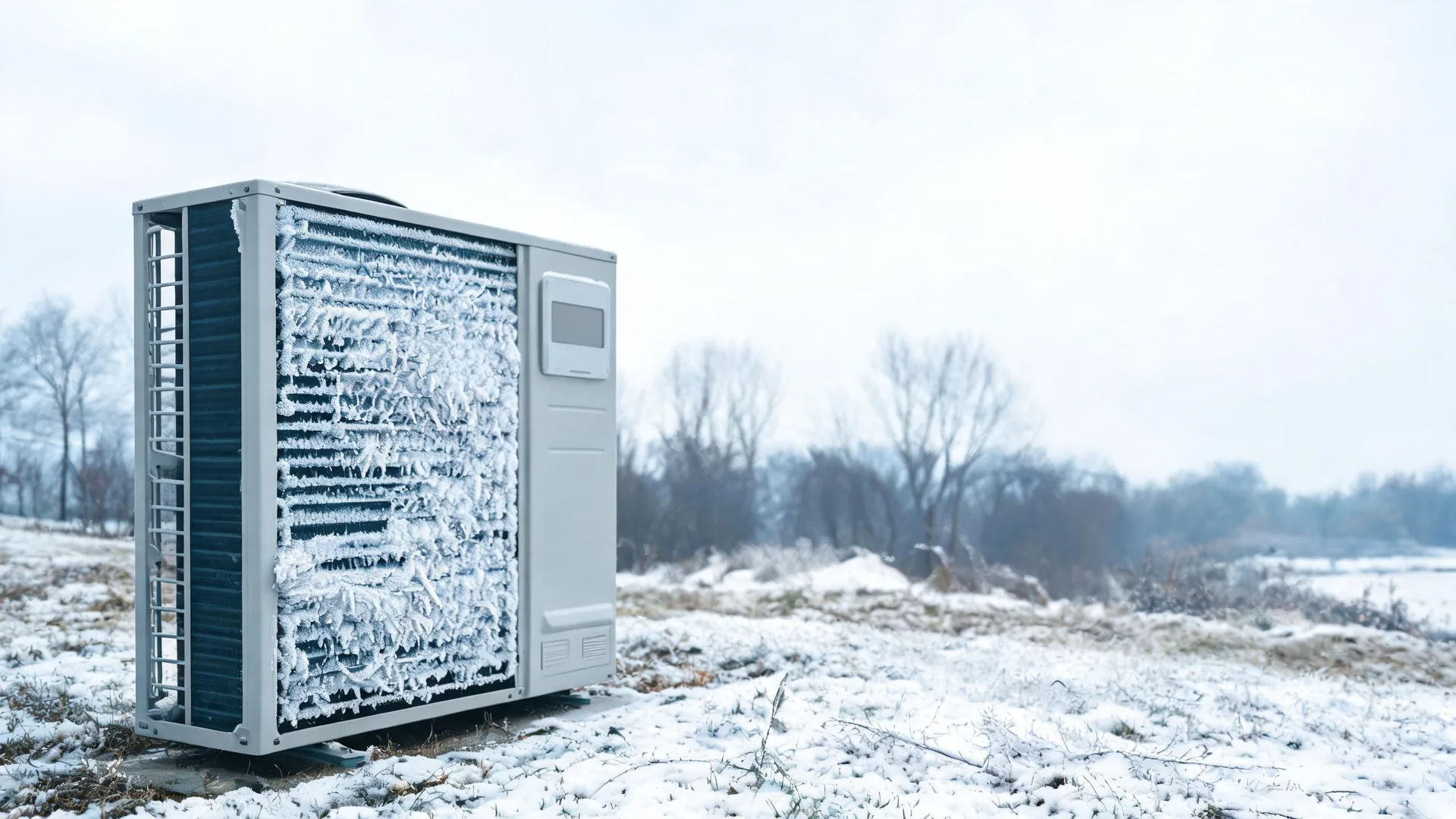
A heat pump doesn't get an off season. It heats all winter and cools all summer, then sits ready to defrost itself on cold, damp days when frost builds on the outdoor coil. That defrost cycle is extra wear a standard AC never sees, and it runs on the reversing valve and a set of sensors that only a heat pump has. All that switching back and forth is hard on contactors and capacitors too. A contactor's points wear down from the arcing every time it closes, and a capacitor loses its charge-holding ability a little at a time. Both tend to fail quietly, not all at once, so a unit that's been running a long time without a single service call is less common than one that's needed a part replaced here and there along the way.

The reversing valve sticks before it fails outright

The reversing valve is the part that switches a heat pump between heating and cooling, and it's not something a furnace or a standard AC has at all. When it starts sticking, the system blows air that isn't the temperature you asked for, or it gets stuck in one mode. Sometimes it frees up and runs fine for a while before it sticks again. That on-and-off pattern points to the valve, not the thermostat.

Outdoor coil damage shows up as a slow charge problem

Bent fins or a dinged coil don't always cause a leak right away. Damage like that restricts airflow first, so the system works harder and runs longer to hit the same temperature. When a leak does start at a damaged spot, the refrigerant charge drops slowly. The unit keeps running, just a little worse every week, instead of quitting all at once.

Before anyone comes out, there are a few things worth looking at yourself. Check the thermostat is set to the mode and temperature you expect, and swap the batteries if it's gone blank or unresponsive. Look at the outdoor unit and clear away leaves, mulch or anything blocking airflow around it. Check the air filter, a clogged one chokes airflow and can make a perfectly good system seem like it's failing. Go around the house and see if the breaker for the unit has tripped, and reset it once if it has. If it trips again right away, stop and leave that for the tech, something is pulling too much current and resetting it again won't help.

A diagnostic visit starts outside at the unit itself, not with questions. The tech checks refrigerant pressures on both the high and low side, because that tells him whether the charge is right and whether the compressor and reversing valve are doing their job. He'll check the temperature split between the air going into the system and the air coming out, in both heating and cooling, since a heat pump has to be checked both ways to find a problem that only shows up in one mode. Electrical readings on the compressor and fan motor come next, checking the windings draw the current they're supposed to and nothing more. He'll also run the reversing valve through a cycle and listen for it, a healthy valve shifts with a clean thunk, a failing one hesitates or doesn't move at all. All of this points to one failing part rather than a guess at several, so the repair that gets recommended is the one the readings actually back up.