

Cheap power, most nights
Oklahoma power rates stay low, so the heat pump handles most of the winter on its own. Gas backup only kicks in on the handful of nights it gets genuinely cold.

You're planning a heat pump install and want to know if you'll be left without heat on the coldest nights, or if you're paying for a furnace you don't need. Most homes in Oklahoma already heat with gas, so the question is really whether that furnace stays in the picture alongside the new heat pump, or whether the heat pump can carry the house on its own through January.
A heat pump loses heating capacity as the outdoor temperature drops, and on Oklahoma's coldest winter nights it will struggle to keep up on its own. That's why most installs here pair the heat pump with the gas furnace already in the house, set up to take over once temperatures fall below where the heat pump runs efficiently. The heat pump handles the mild stretches of winter, which is most of the season, and the furnace only kicks in for the hard freezes. You get the lower operating cost of the heat pump most of the time, and the furnace as insurance for the nights it can't keep up. If your house already has a furnace, this setup uses equipment that's already there.
A heat pump pulls heat from outside air, even when it's cold.
Below a certain outdoor temperature, it can't pull enough heat.
The system switches over to backup heat automatically.
Backup heat, often a gas furnace, takes over and keeps the house warm.
On a mild day the heat pump keeps the house even, no cold spots, no long runs. Once the temperature drops hard, you might notice the air coming from the vents feels cooler than usual, or the system runs longer to hold the thermostat setting. If there's no backup heat to take over, the house can lose ground on the coldest nights, the kind where pipes are also at risk if the heat can't keep up. If you already heat with gas, that furnace is likely the backup, and the switch happens on its own. The question worth answering before install is whether that backup is sized to carry the house when the heat pump alone can't.

Summer air here holds a lot of moisture. The dew point averages 66°F across June, July and August, a measure of how much water is in the air, from NOAA climate data. That kind of humidity makes a heat pump work longer in cooling mode, since it has to pull moisture out of the air as well as cool it. You might notice the system running more than you'd expect for the temperature on the thermostat, or the house feeling cool but still a bit damp. None of that touches backup heat, which only matters in winter, but it does mean the same system is working through two different kinds of weather each year.
NASA POWER T2MDEW county cells weighted by homes

If your house already has a gas furnace, that furnace can likely serve as the backup heat when the heat pump is installed. That keeps the install simpler and means you're not paying to add a second heating source from scratch. If your house doesn't have gas, the backup comes as electric strips built into the air handler, and power here is cheap enough that running them on the handful of coldest nights a winter won't stand out on the bill.
What you don't want is to find out which setup you have after the first hard freeze. Sizing the backup heat to your house, and matching it to the furnace or air handler already there, is part of the install, not something to sort out later. Skip the round of calling contractors, explaining your setup, and waiting on quotes. Send the details once and let someone qualified work out what your house needs.

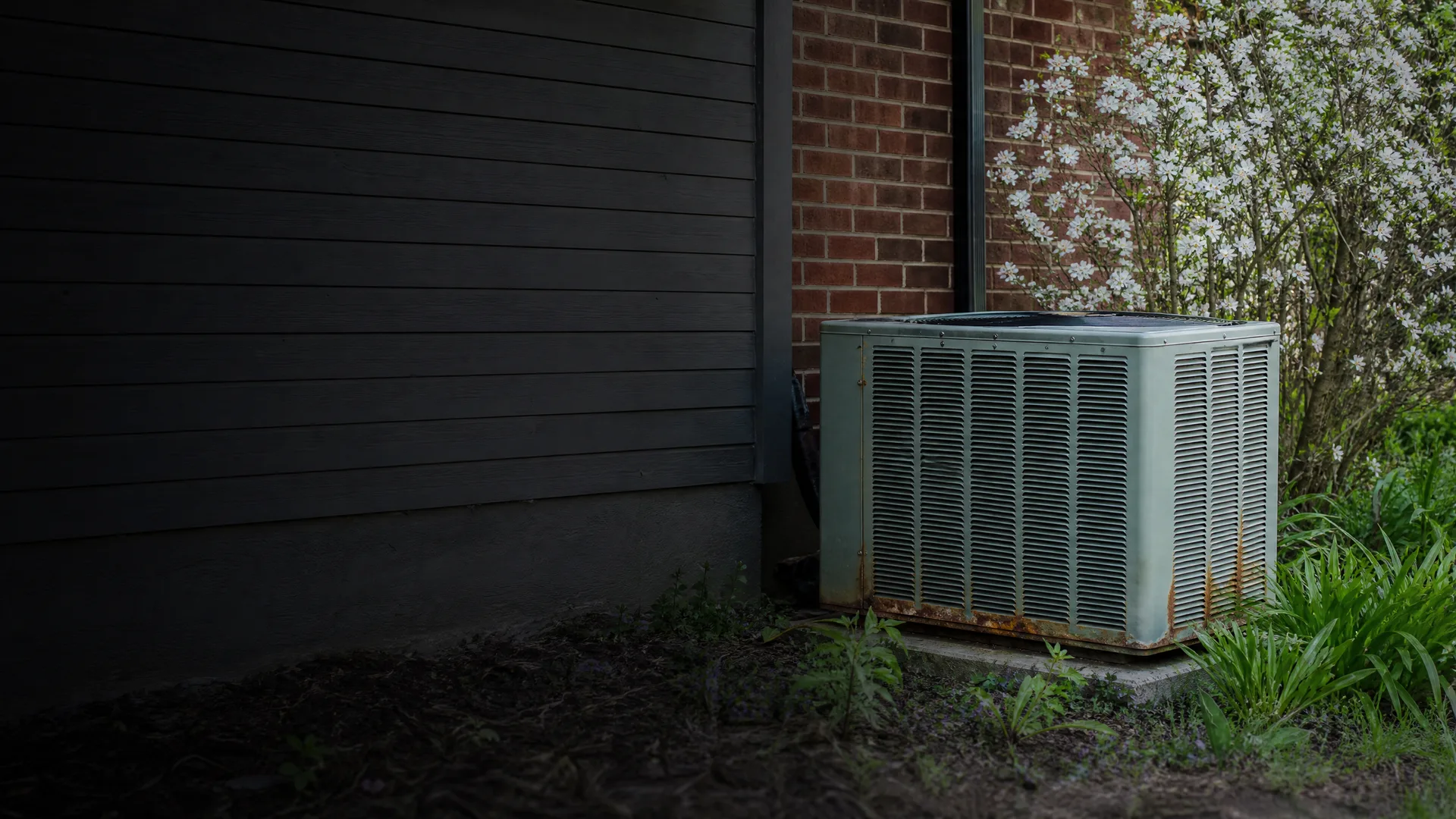
You're out back on a mild March afternoon, checking on the old unit before you call anyone. Rust has crept along the base, and one of the fan guards has gone soft at the corner. It still runs, but it labors a little when it kicks on, a rattle before it settles into its hum. You crouch down and look at the lines, the wiring, the age sticker half peeled off. You're thinking about next January, not today, about the morning it won't come on at all. The yard is quiet except for the fan. You straighten up, wipe your hands on your jeans, and head back inside to fill out the form, glad you won't have to track down who to call.
Skip collecting and comparing quotes for the new heat pump.
Asking costs nothing, and the choice to hire stays yours.
If your house heats with gas now, that furnace usually becomes the backup for the new heat pump. On a cold night, the heat pump covers what it can and the furnace takes over below the point where the heat pump runs out of pull. You get even heat down to the coldest night of the year, and the furnace only runs the hours it's actually needed instead of carrying the whole winter. The tradeoff is the install has two systems to tie together instead of one, which is more to wire and set up correctly. Most homes in Oklahoma are already set up this way, so this is the path most readers here are on.
Some homes run a heat pump with no gas furnace behind it, usually paired with electric strip heat instead. Power here is cheap, so that backup costs less to run than it would somewhere with higher rates. The install is simpler since there's only the one system plus the strips, nothing to coordinate between two fuel sources. The strips are there for the same reason a furnace would be, to carry the house once the outdoor air gets too cold for the heat pump alone. If your house has no gas line to begin with, this is usually the more straightforward route, not a compromise.




Oklahoma power rates stay low, so the heat pump handles most of the winter on its own. Gas backup only kicks in on the handful of nights it gets genuinely cold.
If gas heat is already running your house, that furnace steps in as backup. No new heating source to buy or find room for.

The heat pump runs on its own down to whatever temperature it can still pull heat from the air. Below that point, the house loses ground. On most winter nights here that's not an issue, since the real cold only shows up a handful of times a season. But without a furnace or strip heat behind it, those nights are when the system falls short, and there's nothing left to take over.

On the same cold night, the furnace picks up where the heat pump leaves off, and the house holds its temperature without a dip. You're not watching the forecast to see how low it goes. If gas already heats your home, that furnace does this job instead of sitting unused, so the heat pump covers the mild stretch and the furnace covers the rest.
At 13.21 cents a kilowatt-hour, running the heat pump through those single-digit nights costs you less than switching everything over to a furnace would. That's part of why gas backup only needs to handle a handful of nights, not the whole winter.
EIA-861 2025 statewide residential average
Yes, you need backup heat. A heat pump alone can't keep up on the coldest nights Oklahoma gets, and the gas furnace most homes already have is what steps in when that happens. The rest of the winter, the heat pump does the job on its own, and cheap power here means that's the cheaper way to run things most nights anyway. If your house already has a gas furnace, this isn't an extra system to buy and maintain, it's the one you have, working alongside the heat pump instead of carrying the whole winter by itself. That's the shape of it: one system for most nights, the other for the handful that get genuinely cold, switching between them without you having to do anything. Whether that setup fits your house depends on what's already installed and what the new system needs to work with, which is worth having someone look at before the install goes in.


A heat pump with backup heat covers Oklahoma winters end to end: the heat pump handles the mild nights on cheap power, and the furnace carries the handful of nights that get genuinely cold. Getting that setup right means matching the install to the furnace you already have, not just picking equipment off a list. Send the form and skip the part where you call around, explain your situation to three different companies, and sort through quotes trying to guess who actually knows heat pump and gas backup pairings. A licensed contractor takes it from here.
Skip searching for a heat pump pro and answer a few questions instead.
Sending the form costs nothing.