Profile view of a bearded man wearing a dark green baseball cap and a dark gray T-shirt against a plain light background.

Is a dual fuel heat pump worth it in Oklahoma

New system or replacementHeat PumpOklahoma
Step 1 of 2

What ZIP code is the job in?

In most of Oklahoma, a dual fuel heat pump is not worth the extra cost, because gas is how most homes here heat already and power is cheap. Dual fuel earns its keep where electricity is expensive and gas is the backup you need on the coldest nights. Here it is closer to the reverse. Your heat pump can carry the mild stretches of winter on its own, and when it gets cold enough that it struggles, a straight electric backup or your existing gas furnace running on its own schedule costs about the same to operate as switching between the two automatically. Where dual fuel does make sense is a home with an old, inefficient furnace that would otherwise run most of the winter, or a heat pump that is undersized for the house. Summers here get sticky, so the cooling side of the system matters as much as the heating side, and that part is identical whether you add dual fuel or not.

An outdoor condenser unit on a concrete pad beside a horizontal-sided house, with insulated refrigerant lines running to a wall-mounted box, surrounded by bare dirt.
Before you get your heat pump installation
A gray outdoor condenser unit on a concrete pad beside a light-green sided house, surrounded by mulch, ornamental grasses and a shrub, with mowed lawn in the foreground.
After you get your heat pump installation

Where the switch happens

A dual fuel system switches over to the gas furnace once outdoor temperatures drop low enough that the heat pump can't keep up efficiently, usually somewhere in the 30s or low 40s depending on how it's set. In Oklahoma, that means the furnace is doing a good share of the winter's work anyway, on a normal cold snap, not just the rare hard freeze. A straight heat pump with a gas backup set up the same way does the same job without the extra equipment cost built into a dual fuel unit.


What drives the payback

Dual fuel pays off where the gap between electric rates and gas rates is wide enough that running the heat pump as long as possible actually saves money over burning gas. Oklahoma's electric rates run low compared to a lot of the country, so that gap is narrow here. A heat pump still cools your home all summer and handles mild winter days fine. It just doesn't need the dual fuel label to do it, since gas is already the backup most furnaces here are built around.

A gray-haired man in a dark sweater sits on a light gray sofa in a living room, looking toward a sunlit window with trees outside.
A gray-haired man in a dark blue sweater sits on a light gray sofa in a sunlit living room, looking off to the side, with a potted plant, shelving unit, and large glass doors behind him.
A bearded man with graying hair in a dark green sweater sits on a sofa in a living room, looking off to the side, with a sliding glass door and a dim kitchen doorway behind him.
A gray-haired man in a dark knit sweater sits on a light gray sofa in a living room, looking toward a sunlit window, with houseplants, a lamp, and framed art in the background.

A dual fuel system runs off a balance point, a temperature setting on the thermostat that decides which fuel is doing the work. Above it, the heat pump runs the way it does all summer, moving heat instead of making it. As the outdoor temperature drops toward that setting, the compressor has to work harder to pull the same warmth out of the air, so it runs longer to keep up. Once the thermostat crosses the balance point, it hands off to the gas furnace, and the burner lights and brings the air up to temperature much quicker than the heat pump could at that point. Both run through the same ductwork and the same blower, so nothing changes on your end when it switches. The setting matters. Too low, and the heat pump keeps grinding away past where it's doing any good. Too high, and the furnace ends up carrying more of the winter than it should. Through summer, none of this applies. The outdoor unit is just your air conditioner, working the same as any other system in an Oklahoma summer.

How the switchover actually works

  • A dual fuel system still runs on a thermostat with a balance point setting, which tells it when to stop using the heat pump and fire the furnace instead.
  • The heat pump and the gas furnace share the same ductwork and the same indoor blower, so the switch between them happens without you touching anything.
  • Below the balance point, a heat pump pulls less warmth from the outside air, so the compressor runs longer to produce the same heat.
  • Once the system hands off to gas, the furnace burner lights and heats the air far faster than the heat pump could at that temperature.
  • The outdoor unit still handles air conditioning all summer, so in Oklahoma it earns its keep on the cooling side even on days the furnace never runs.
  • Setting the balance point too low means the heat pump keeps working past the point where it's efficient, and setting it too high means the furnace lights more than it needs to.
A middle-aged woman with shoulder-length dark hair, wearing a gray cardigan over a cream top, sits in an upholstered armchair and looks toward a sunlit window, with a shelf holding framed pictures and a plant behind her.
A woman and a child wrapped together in a thick knitted blanket on a sofa, both with eyes closed, with a lit table lamp and houseplant in the dim background.
A dark gray outdoor condenser unit on a concrete pad beside a house with horizontal lap siding, with mulch beds, shrubs, and lawn nearby and conduit running to a wall-mounted box.

Matched to your heat pump job

One installer gets your project, so there's no bidding war over it.

Get in touch with a local installer about a new heat pump.

Find a licensed heat pump pro

There's no charge for the request.

Simple Backup or Automatic Switchover

Straight heat pump with gas backup only for emergencies

  • A straight heat pump paired with your existing gas furnace as a simple backup costs less to install than a dual fuel setup with its own control logic.
  • The furnace only kicks in if the heat pump fails outright, so most of the heating load still runs on power, and power here is cheap.
  • You lose the automatic handoff at a set outdoor temperature, so the system doesn't shift to gas on its own when it gets cold.
  • On the coldest nights the heat pump keeps trying to carry the load even as its output drops off, which is where dual fuel would have stepped in instead.
  • This setup is simpler for a contractor to install and service since there's no balance point to program or adjust.

Dual fuel heat pump with automatic switchover

  • The system switches to the gas furnace on its own once it gets too cold for the heat pump to work efficiently, no thermostat adjustment needed from you.
  • Installation costs more upfront because it requires a thermostat and control board that can manage two fuel sources and a programmed balance point.
  • Most Oklahoma homes already have a gas furnace and gas line in place, so the backup side of a dual fuel setup isn't new equipment to add.
  • Since power is cheap here, the gas side rarely gets called on enough to offset what you paid extra for the dual fuel controls.
  • A contractor who installs these regularly can set the balance point to match your house and your furnace, rather than leaving it at a factory default.
A two-story gray horizontal-siding house with multiple gables, a covered front porch with white columns and railing, and a dark front door, fronted by a patchy green and brown lawn under a clear blue sky.

Summers here run humid, with a dew point averaging 66°F across June, July and August according to NOAA climate data. That's the kind of air that feels heavy even when the temperature itself isn't extreme. Your heat pump has to pull more moisture out of the air to keep the house comfortable, which means longer run times in July and August than a dry climate would ever need. None of that changes the gas-versus-electric math that decides whether dual fuel pays off here, since that comes down to winter heating, not summer cooling. But it does mean the cooling side of your system is doing real work most of the summer, worth keeping in mind whoever installs it.

NASA POWER T2MDEW county cells weighted by homes

A gray outdoor heat pump unit on a concrete pad beside a house with horizontal lap siding, connected by conduit and a flexible line to a wall-mounted disconnect box, with low shrubs and mulch nearby.
Running clean, the heat pump handles your cooling all summer and takes the heating load too, down to the point it's set to hand off.
An outdoor air conditioner condenser unit on a concrete pad beside a house with horizontal siding above a concrete block foundation, with insulated refrigerant lines and a vertical white pipe on the wall.
Left to run down, an aging unit starts costing you in gas backup more often, long before it actually fails outright.
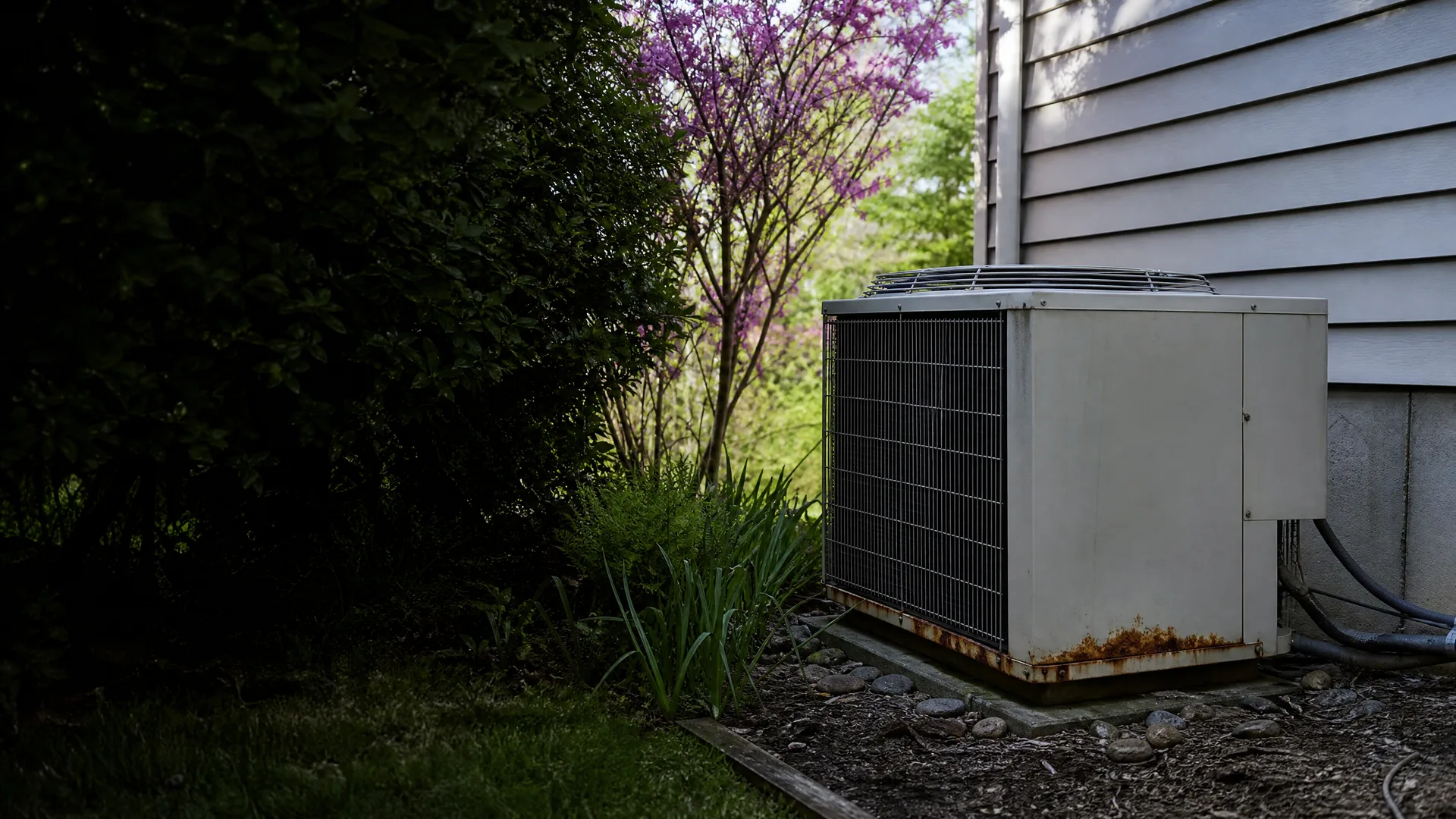
An outdoor air conditioning condenser unit with rust streaks sits on a concrete pad beside a light-colored lap-sided house, surrounded by shrubs, gravel and a flowering tree.

The rust catches your eye first, a reddish line along the base of the unit where the metal meets the pad. It's one of those mild spring afternoons, warm enough that you've been out in the yard without a jacket, and the heat pump has been sitting quiet since the last cool morning. You crouch down to look closer. The cabinet seams have gone soft in a couple of spots. It ran you through another Oklahoma winter alongside the furnace, and it'll start pulling cooling duty again before long once the humidity rolls back in. You straighten up, brush the rust flakes off your fingers, and head back inside, the unit still humming faintly as it cycles on.

Power costs 13.21 cents per kilowatt-hour statewide

At 13.21 cents per kilowatt-hour, running your heat pump on electricity alone isn't expensive here. That's exactly why dual fuel struggles to pay for itself in Oklahoma. Your gas furnace backup is doing the same job for less setup cost.

EIA-861 2025 statewide residential average

A gray outdoor heat pump unit on a concrete pad beside a house with horizontal lap siding, with a conduit running to a wall-mounted disconnect box and a green shrub to the left.

Properly matched system

This is what a heat pump looks like when the install was done right, set on its pad with a clean line to the disconnect box. The refrigerant charge is correct and the thermostat's balance point is set to match your furnace, so the handoff between the two happens exactly when it should.

An outdoor air conditioning condenser unit with dusty coils sits on a concrete pad against light horizontal siding, with an electrical disconnect box and refrigerant lines on the wall and a shrub and mulch at left.

Neglected or mismatched setup

Grime like this builds up over years when a unit doesn't get looked at, and it costs you either way. A dirty coil makes the heat pump work harder to do its job, and a balance point that was never set right means the furnace is picking up load the heat pump could still handle.

A man in a dark blue shirt stands in an open front doorway of a stucco and wood-clad house, facing a blond woman seen from behind in the foreground on a stone walkway.

Where that leaves you

For most homes in Oklahoma, the straight heat pump with your gas furnace as backup is the better bet. Power here runs 13.21 cents per kilowatt-hour, cheap enough that dual fuel's added control logic rarely earns back what it costs to install. Your furnace is already there to carry the coldest nights. That's the system most homes in this state are already set up for, and it's the one that makes sense to keep.

What matters more than which setup you pick is who puts it in. A heat pump installed with the charge right and the balance point set to match your furnace will run the way it's supposed to for years. Get matched with a licensed Oklahoma contractor who installs this equipment every season and knows how these two systems need to work together, and they'll reach out to go over what your house actually needs.

A living room corner with a beige sofa and cushion, a round wooden coffee table holding a pale ceramic vase of eucalyptus stems and a wooden bowl, and a curtained window with a potted plant above a latticed radiator cover in the background.
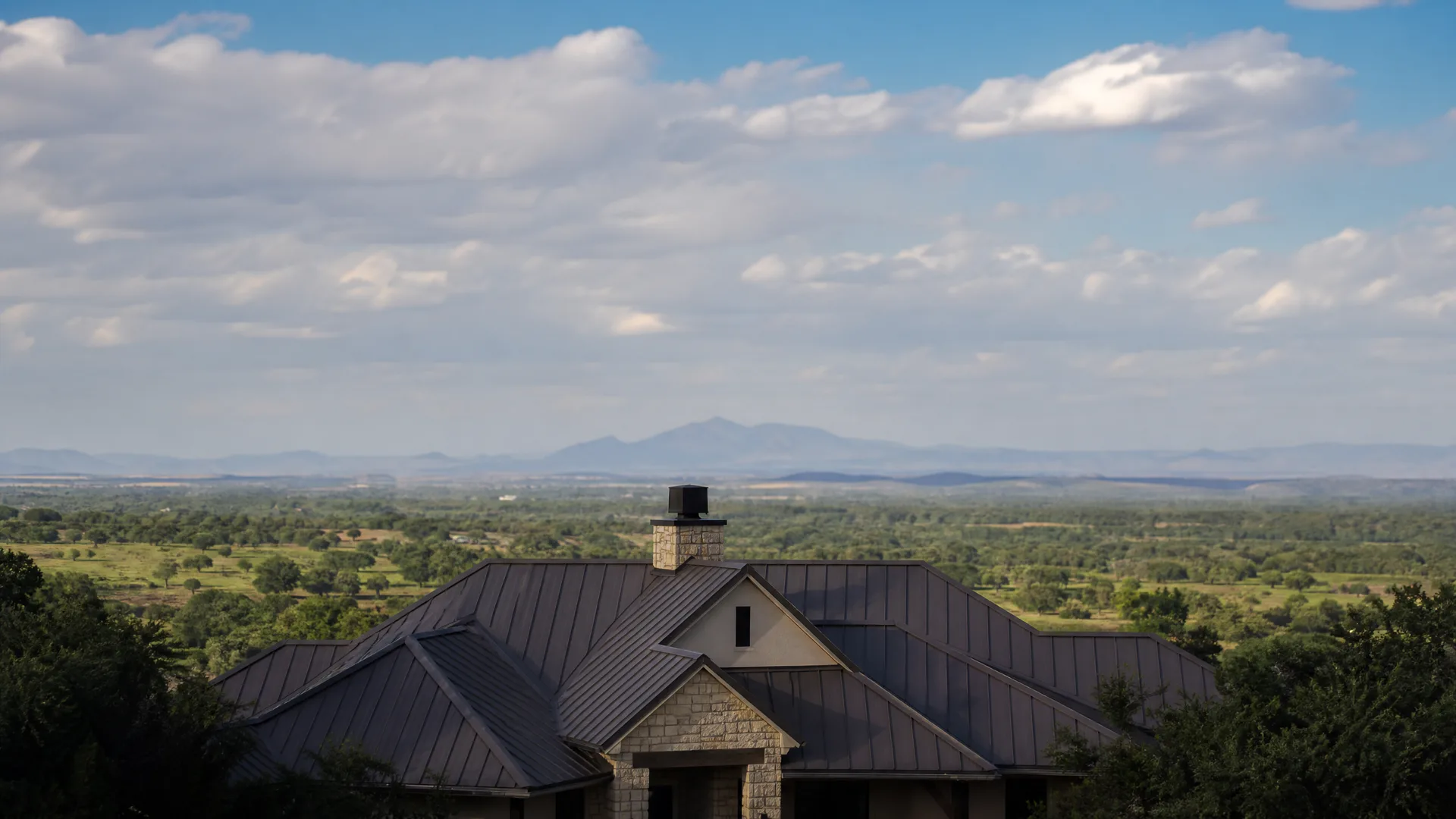
A house with a dark standing-seam metal roof, stone chimney and stone-and-stucco gable in the foreground, with green wooded plains and distant low mountains under a partly cloudy sky behind.

A heat pump pro near you

Get one local pro

You only hire the pro if you want to.

If your system is still paired the way it came from the builder, getting it checked costs you nothing but a conversation. A local contractor who works on these setups all year can tell you in one visit whether yours is worth changing at all.