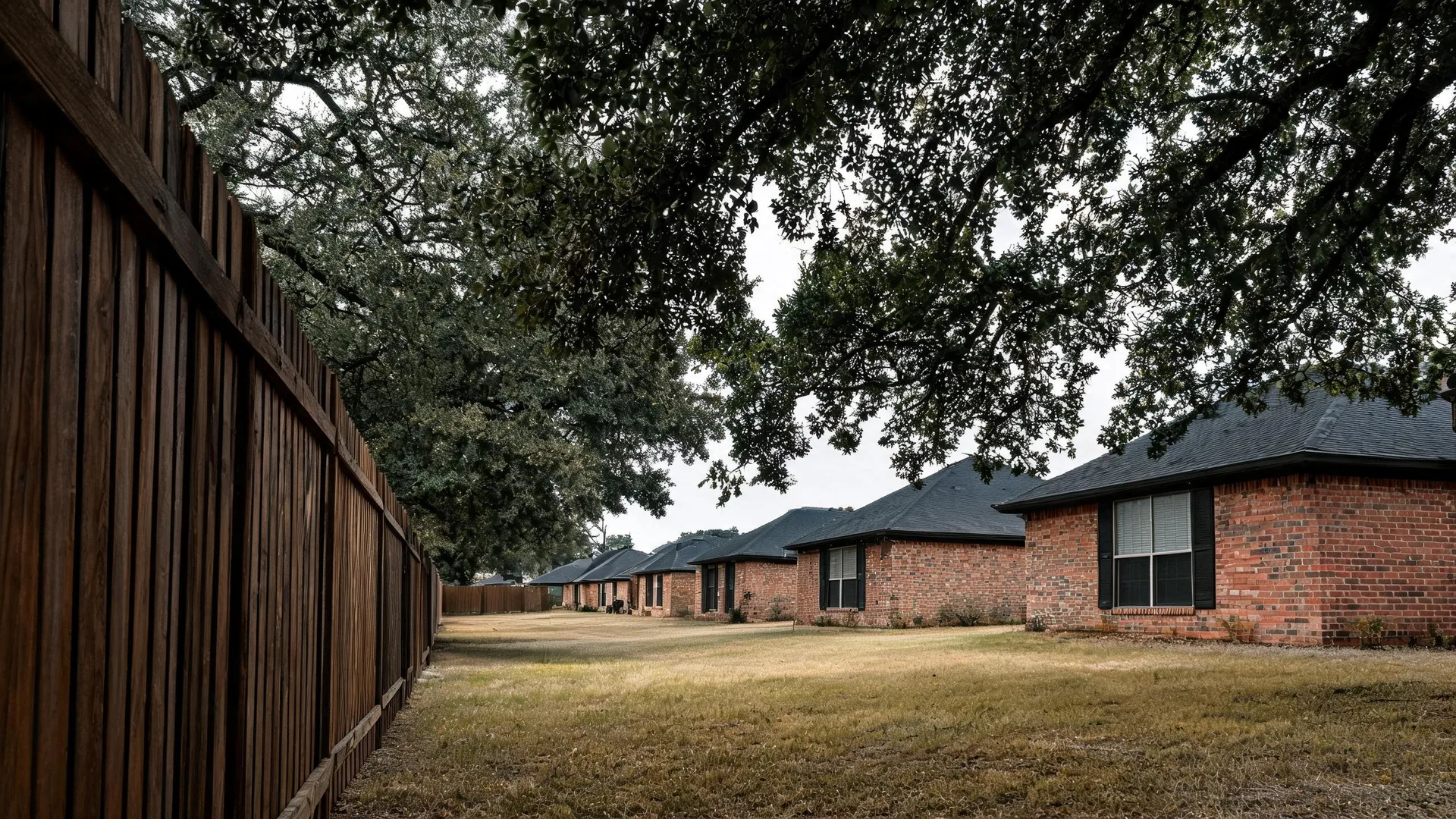

A row of single-story brick houses with dark shingled roofs behind a dry grass strip, bordered on the left by a tall wooden fence and overhung by large tree branches under an overcast sky.

Furnace Maintenance in Anadarko, OK

Tell us about the job

Takes about a minute. No obligation.

Tune-up, service, or cleaningFurnace or heatingCaddo County, OK
Step 1 of 2

What ZIP code is the job in?

A tune-up starts with the flame itself. A technician pulls the burner cover and looks at how the flame sits, whether it burns steady and blue or rolls and flickers yellow. Yellow means the gas isn't burning clean, and that's something you'd never catch from the living room. They'll check the flame sensor too, a small rod that tells the control board the burner actually lit. A sensor coated with a thin film of residue can still work, but it fails early into the season when you least expect it. The heat exchanger gets a close look as well, since a crack there lets combustion gas mix with the air moving through your ducts. None of this shows up as a sound or a smell you'd notice. It shows up as a technician with a flashlight and a reason to check.

Change the air filter yourself between visits, more often if you have pets.

A clogged filter is the one failure you can prevent without ever opening the cabinet.

Half the furnaces in Anadarko are older too

Half the homes here were built by 1972
Heat runs November through April
Winter nights average 29°F
Light duty, not no dutyFurnace here runs about six months a year, November through April.

Furnaces here start working in November. October is when to get the furnace looked at, before it has to carry the house through a cold snap. Heat runs November through April in Caddo County, about six months straight once it gets going. A furnace that sat idle since spring can have a dirty igniter or a weak flame sensor that only shows itself under real load, and the first cold night is a bad time to find out. Booking the check in October means any repair happens before you need the heat, not during.

Storms here are frequent enough to plan around

Caddo County had 242 severe weather events between 2015 and 2024. A furnace sits indoors, but a power cut takes it out of service as fast as a broken part, and a quarter of Oklahoma households went at least a day without power in 2024. Get it checked before storm season gives it a reason to fail.

Find a contractor
A gray gas furnace with attached ductwork and piping installed in an unfinished concrete basement.

An old furnace earns a yearly look

If your furnace came with the house, put it on a yearly check. That's how a cracked heat exchanger or a weak flame sensor gets caught while it's still something to watch, not something that leaves you without heat on a cold night. A yearly visit is a short appointment either way. For an older furnace it's the one that tells you where things stand before winter asks.

What a skipped year lets build up

Dust settles on the burners and the blower wheel a little more each month nobody looks at them. The igniter wears down the same whether it's inspected or not. None of this breaks the furnace outright. It just means the burners fire dirtier, the blower moves less air than it should, and the parts already close to failing get there faster.

Why it shows up as a breakdown, not a warning

A furnace running on a dirty sensor or a worn igniter doesn't send a signal first. It runs fine, then it doesn't light. The parts most likely to fail partway through the season are the same ones a tune-up checks while they're still working, which is the only time a worn part is simple to deal with instead of urgent.

A furnace doesn't have a drain or coils to worry about the way a cooling system does. What it has is a filter, and that filter sits in the path of every bit of air the blower moves. A filter clogged with dust forces the blower to work harder to push air through it, and some furnaces respond by overheating and shutting themselves down on a safety switch. Others just move less air, so the far rooms stay cold while the furnace runs and runs. The blower wheel itself collects dust too, the same way a fan blade does, and a dirty wheel moves less air even with a clean filter in front of it. None of this is subtle once you know to look, but from the living room it just feels like a furnace that can't keep up.

A quick visit looks at the furnace while it runs and calls it good. A thorough one watches it through a full cycle. That means a cold start, the flame settling in, the blower kicking on, and a full shutdown, because some problems only show up at those transitions. A flame that rolls at ignition and settles into blue a few seconds later won't show if nobody watches the start. A thorough tune-up pulls the burners out to clean them rather than brushing what's visible from the front. It checks the blower motor's amp draw against what that motor is supposed to pull, not just whether it spins. And it ends with someone telling you what they found, not just that they were there.