








How to restart a furnace after an Oklahoma power outage

RepairFurnace or heatingOklahoma
Step 1 of 2

What ZIP code is the job in?

Why won't my furnace turn back on after the power went out?

A gas furnace that won't fire back up after the power blinks off is one of those problems you want to catch and fix fast, before a cold house turns into a bigger headache. You've checked the breaker, the power's back, and the furnace is still sitting there doing nothing. That usually points to one specific thing standing between your furnace and a normal startup.

The furnace's control board needs a reset before it will fire again

Most gas furnaces run on a control board that locks out the burner if power cuts off mid-cycle. When the outage hits, the board loses its place, and it won't just pick back up where it left off once power returns. It needs the thermostat to call for heat again with a clean signal, and sometimes it needs the breaker cycled off and on to clear the fault. If your thermostat also lost power and reset its schedule or its wifi connection, that can block the call for heat too, and the furnace sits there looking dead even though nothing inside it actually failed.

A dim unfinished basement with concrete walls, exposed floor joists, a small window, and a furnace connected to metal ductwork and PVC venting.

The power came back an hour ago. Outside it's a cold November night, the kind where Oklahoma wind gets into everything. Downstairs the furnace sits dark where it should be ticking along. You can see dust hanging in the beam of your flashlight, stirred up when you leaned in to check the switch on the side. The thermostat upstairs still reads a degree lower than you set it, and it hasn't moved. You've already flipped the breaker back once. Nothing changed. The house is quiet in the way a house gets when the one machine that's supposed to be running isn't, and you're standing there deciding how much longer to wait before you call someone.

Reset It, or Get It Looked At

Try This First

  • Flip the breaker for the furnace all the way off, then back on, since a power outage can trip it even if it looks fine.
  • Check that the switch on or near the furnace, the one that looks like a light switch, is pushed to on.
  • Set the thermostat a few degrees above room temperature so it calls for heat, then wait a minute to see if the furnace responds.
  • Look at the furnace door panel and make sure it's seated flush, since a loose panel keeps the safety switch from letting it run.
  • If the thermostat screen is blank, replace its batteries if it uses them before assuming the furnace itself is the problem.

Call for Repair

  • The furnace tries to start, you hear clicking, but the burners never catch and it shuts down again.
  • There's a burning or gas smell near the furnace, which means the problem goes past a reset and shouldn't wait.
  • You've reset the breaker and the switch is on, but the furnace stays completely dark with no sound at all.
  • The blower runs but no heat comes through the vents, pointing to something past what a power cycle fixes.
  • A repair call means someone else does the work of finding a licensed contractor, calling around, and explaining the problem more than once.
A smiling man in a gray long-sleeved shirt stands in a kitchen looking to the side, with open shelves of dishes, a white mug on the counter, a potted plant, and a view through a doorway into a living room.
A smiling bearded man in a green sweater sits at a white marble kitchen island with a mug, potted plant and bowl of fruit, in a bright white interior with open shelving and an arched doorway.
A smiling man with dark curly hair and a beard, wearing a dark green knit sweater, stands at a white marble kitchen counter with a dark blue mug, with open shelving, pendant lights and a houseplant behind him.
A smiling man in a green ribbed sweater stands behind a wooden table holding a ceramic mug of coffee in a kitchen with white subway tile, shelves of potted plants, and a bowl of fruit.

Why does my house feel colder than it should by now

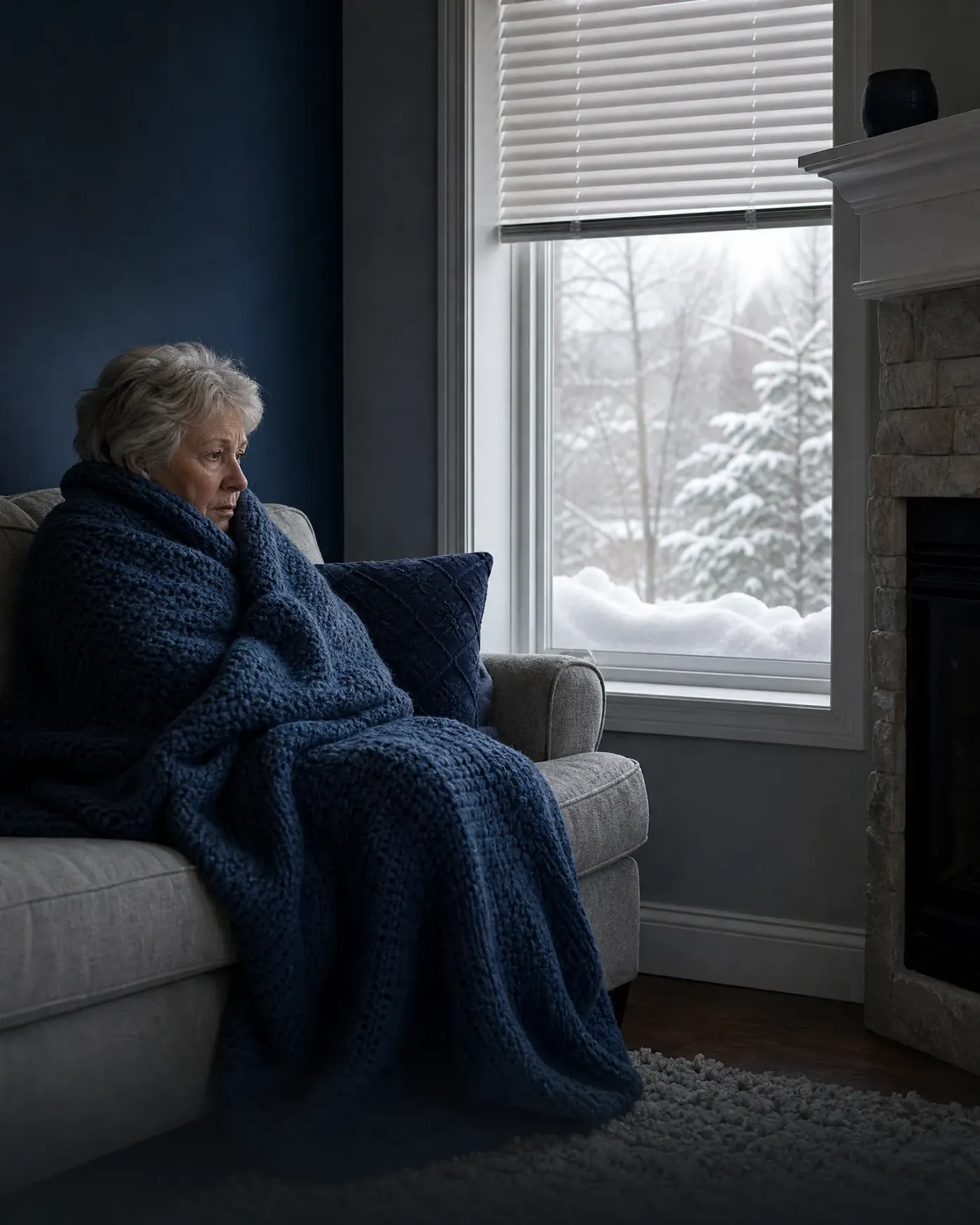
An hour with no furnace in an Oklahoma November doesn't ruin anything by itself. But you're noticing the house losing its warmth room by room, the thermostat number dropping instead of holding, maybe a draft near the windows that wasn't there this morning. If you've got young kids or anyone elderly in the house, that drop matters sooner than it would for the rest of you. Pipes along outside walls are the other thing to keep in mind. They can handle a cold night, but not a cold house for a day while you wait and hope it starts on its own.

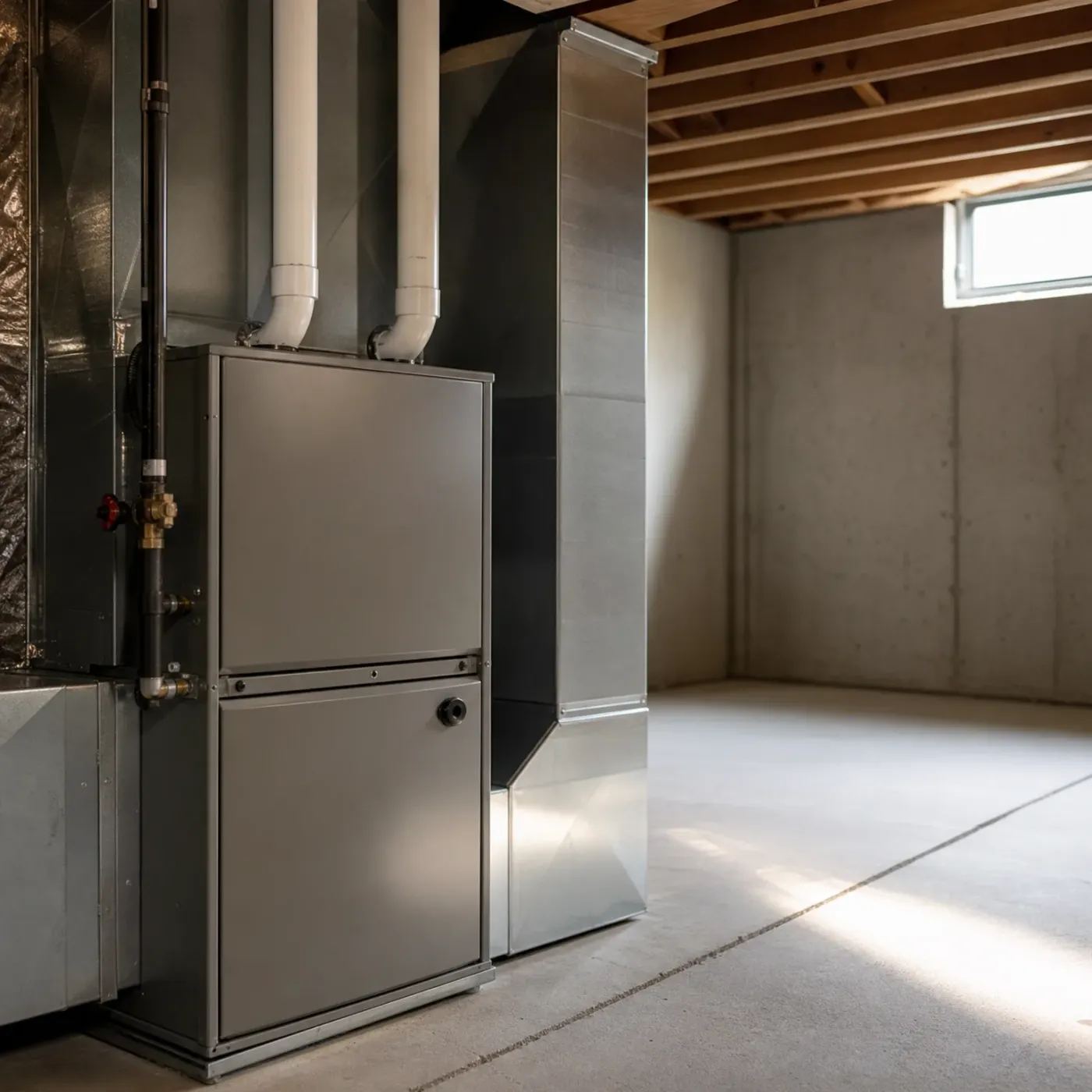
A gray furnace cabinet in a basement with sheet-metal ductwork, white PVC vent pipes, and black gas piping against a concrete wall and wood-framed partition on a bare concrete floor.
A furnace like this one comes back on its own once power is restored, settling into its normal cycle without anyone touching a switch.
A gray metal furnace with two white PVC vent pipes stands on a concrete floor beside galvanized sheet-metal ductwork in a basement or utility space with wood framing.
Rust and age like this make a furnace less likely to restart clean after an outage, and more likely to need a hand getting there.
  1. Power drops, and the furnace control board loses its memory.

  2. Power returns, and the board runs a self-check before doing anything.

  3. The inducer motor spins first to clear the vent of any gas.

  4. A sensor confirms draft is correct before the igniter gets power.

A smiling man in a dark blue T-shirt sits on a light gray sofa in a living room with a wooden shelf and window behind him, with a laptop edge visible in the foreground.
A bearded man in a plaid flannel shirt stands indoors looking out a frost-covered window, with a steaming dark blue mug on the wooden sill and snow-covered trees outside.

Hand off the search today

You've flipped the breaker, checked the switch, bumped the thermostat, and the furnace still won't catch. At that point you're not missing a trick, you're looking at a part that needs a hand to fix, a flame sensor, an igniter, a control board that didn't survive the outage. That's a repair, not a reset. Finding someone for it on a cold night usually means working through a list of HVAC companies, waiting on hold, explaining the same outage story to each one, then weighing quotes against each other while the house keeps losing heat. Send the request through this page instead and that search is done. One contractor who works on furnaces in your area gets your information and takes it from there. You stop chasing the problem and start waiting on the fix, which in an Oklahoma house with the wind working on it tonight is the difference that matters.

What the control board remembers

The control board that runs your furnace keeps no memory of what it was doing once power drops. When power comes back, it has to run through its startup checks again from scratch, the same as if you'd switched the furnace off and on yourself. That's normal and most furnaces clear it in a minute or two without anyone touching anything. If yours is still dark after that, the board itself may not be completing that check, which is a different problem than a tripped breaker or a thermostat set wrong.
Why age changes the odds

A newer furnace is built to shrug off a power blink and pick back up on its own, same as before the outage. An older one, especially if rust has gotten into the burner compartment or the inducer motor, is more likely to stall partway through its restart. The parts still move, but not cleanly enough to pass the furnace's own safety checks. That's not something a breaker flip or a thermostat adjustment fixes. It's the difference between a furnace that restarts itself and one that needs a hand finishing the job.

Winter nights average 30°F statewide

Thirty degrees is a typical overnight low here in December and January, and most of those nights your furnace is the only thing standing between that cold and your living room. An outage on a night like that doesn't take long to matter.

NOAA nClimDiv 1991-2020 county normals weighted by homes

A furnace that stays dark after the power comes back is either waiting on something small, a breaker, a switch, a thermostat setting, or it's waiting on a part that quit. Breaker, switch, thermostat, flame sensor, igniter, control board: that's the whole list, and you've already worked through most of it. If you've tried the simple fixes and the furnace still won't catch, the next step isn't another thing to check, it's someone who can open the panel and test the parts you can't. That's the difference between spending the rest of the night searching for a contractor who answers the phone, explaining the same problem twice, and sorting through quotes, versus sending one form and letting someone else carry the job of finding help. The furnace still needs fixing either way. But you stop being the one who has to track down who can do it.

A gray furnace with PVC vent pipes and sheet-metal ductwork stands against a wall in an unfinished basement with concrete floor and walls, exposed wood joists, and a small window.

Stop chasing a furnace pro

Send my request

Describe what your furnace is doing once, in one form.

You're not committing to anything by asking.