





An unfinished basement interior featuring a large metal furnace unit, exposed ceiling joists, concrete walls, and scattered boxes and cables on the floor.

Furnace Maintenance in Ardmore, OK

Tell us about the job

Takes about a minute. No obligation.

Tune-up, service, or cleaningFurnace or heatingCarter County, OK
Step 1 of 2

What ZIP code is the job in?

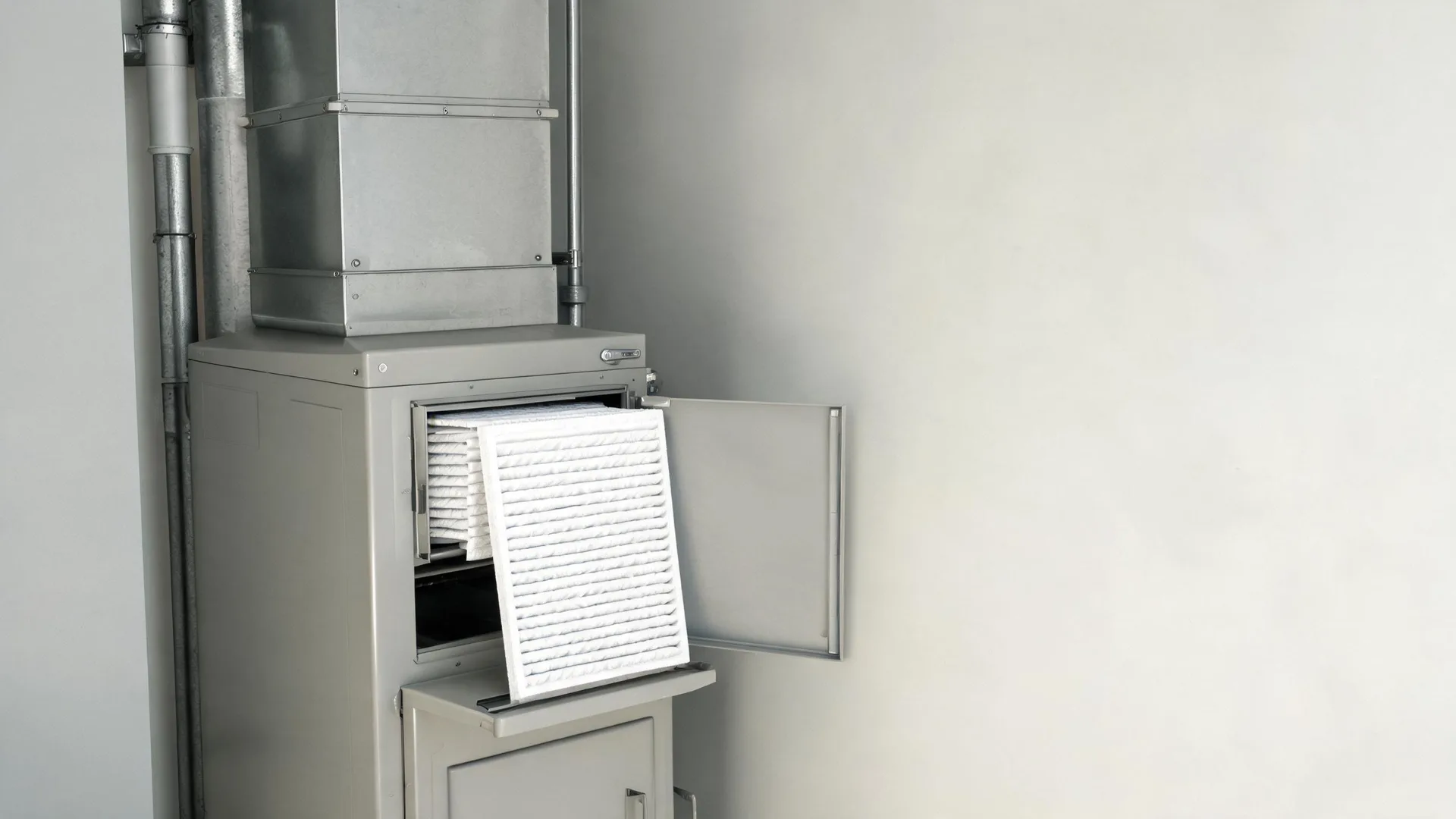
A furnace filter has one job. It keeps dust out of the blower and off the heat exchanger. Once it loads up, air has a harder time getting through, and the blower has to work harder to push the same heat into your rooms. That strain shows up later as a worn blower motor or a heat exchanger that cracks sooner than it should. Most furnaces don't have a condensate drain, but a high-efficiency model does, since it condenses exhaust gas into water as part of running. If that drain line clogs, the furnace shuts itself down rather than let water back up into the cabinet. A tech can pull the filter, check the exchanger, and clear the drain line in the same visit.

Most homes in Carter County heat with electricity, at 62.3 percent.

Gas furnaces still heat close to a third of homes here, and they need the burner, venting and safety controls checked every year, not just a filter swap.

Heat starts in November here. Have it checked in October.

Heat runs November through March
Winter nights average 32°F
Climate zone 3A

Get the burner and venting checked

Gas and oil systems need the burner, venting and safety controls checked, not just a new filter.

Find a contractor
A man in a gray t-shirt and tan work pants, seen from behind, climbs concrete steps toward a dark blue front door while carrying a canvas tool bag, with a potted shrub beside the entry.
A gray gas furnace with attached ductwork and piping installed in an unfinished concrete basement.

Five months on, a long rest after

Five months of heat a year is a light load on a furnace. It gets a long rest every spring and summer, and that rest is on its side. But cold still comes hard when it comes. Overnight lows average 32°F through December, January and February, so once the furnace starts, it runs for real. A yearly check catches the igniter or the flame sensor before a cold night finds the weak one.

A dirty flame sensor shuts the furnace down

A flame sensor reads the burner flame and tells the control board the gas is actually lighting. A thin coat of residue builds on it over time, and once that coating gets thick enough, the sensor can't tell the flame is there. The furnace shuts off mid-cycle, sometimes after a few seconds of heat, sometimes after a few minutes. Cleaning that sensor is routine work during a maintenance visit, and skipping it for a few years is how a furnace earns a reputation for shutting off on its own.
A cracked heat exchanger is a bigger job found late

The heat exchanger is the metal wall between the flame and the air blowing into your rooms. Heat passing through it over and over causes it to expand and contract, and eventually metal fatigue opens a crack. A furnace that never gets inspected can run with that crack for a long time before anyone notices, because the symptoms are easy to miss at first. Once it's found, the exchanger gets replaced or the furnace does, and neither is the kind of job you want to discover you need in the middle of a cold snap.

A tune-up checks things you'd never see from the thermostat. One is burner flame, which should burn steady and blue. A yellow, flickering flame means the burner isn't getting the air mix right, and that's worth catching before it means something worse. A tech also checks the pressure switch and limit switch, the parts that shut the furnace down if venting is blocked or the cabinet gets too hot. Those switches sit there doing nothing most of the time, which is exactly why nobody notices if one goes bad. The blower wheel gets looked at too. Dust builds up on the blades over seasons of use, and an unbalanced wheel wears its motor out faster than it should.

A full tune-up also covers the ignition system itself, not just the flame sensor that reads it. On a furnace with a hot surface igniter, the tech checks that it glows evenly and draws the right current, since a weak igniter can light the burner some mornings and fail on others. Gas pressure gets checked at the manifold too low and the burner struggles to heat the exchanger properly, too high and it can crack the exchanger sooner than it should. The tech also checks that the furnace is pulling the right amount of return air, because a duct system that's restricted anywhere makes the blower work against resistance it wasn't built for. None of this shows up as a problem until the day it does, which is the whole reason for checking it while the furnace is still running fine.