Weather here doesn't let up
Wagoner County logged 150 severe weather events between 2015 and 2024, including damaging wind, hail and tornadoes. That's a lot of chances for an outdoor unit to take a hit.
Takes about a minute. No obligation.
Wagoner County logged 150 severe weather events between 2015 and 2024, including damaging wind, hail and tornadoes. That's a lot of chances for an outdoor unit to take a hit.
A quarter of Oklahoma households went at least 24 hours without power in 2024. A furnace that's been sitting idle, or just came through a surge when the power returned, is worth a look before the next cold snap.
Furnace here runs about seven months a year, October through April.
A once-a-year check is enough to catch a worn part before a cold night finds it.




October is when your furnace starts working for real, not just a test cycle on a cool morning. Get it checked in September, before that first cold push. A tech can catch a cracked heat exchanger or a weak igniter while it's still easy to get on the schedule. Wait until October and you're calling after something's already failed, on a night you needed the heat to begin with. Seven months is a long stretch to run on a part that was already borderline in September.
That same storm count means an outage, a surge or a knock from hail can hit the furnace before it ever runs this season. Get it checked now, while it's idle, so a tech can catch the damage before the first cold night asks the furnace to work.
Find a contractorIf your system came with a newer build, a yearly check is what keeps it running the way it should for years to come. The tech can catch a part wearing out early, before it leaves you without heat on a night you need it. A newer furnace still breaks down the same way an old one does, just less often. That's still worth a look every year it runs.
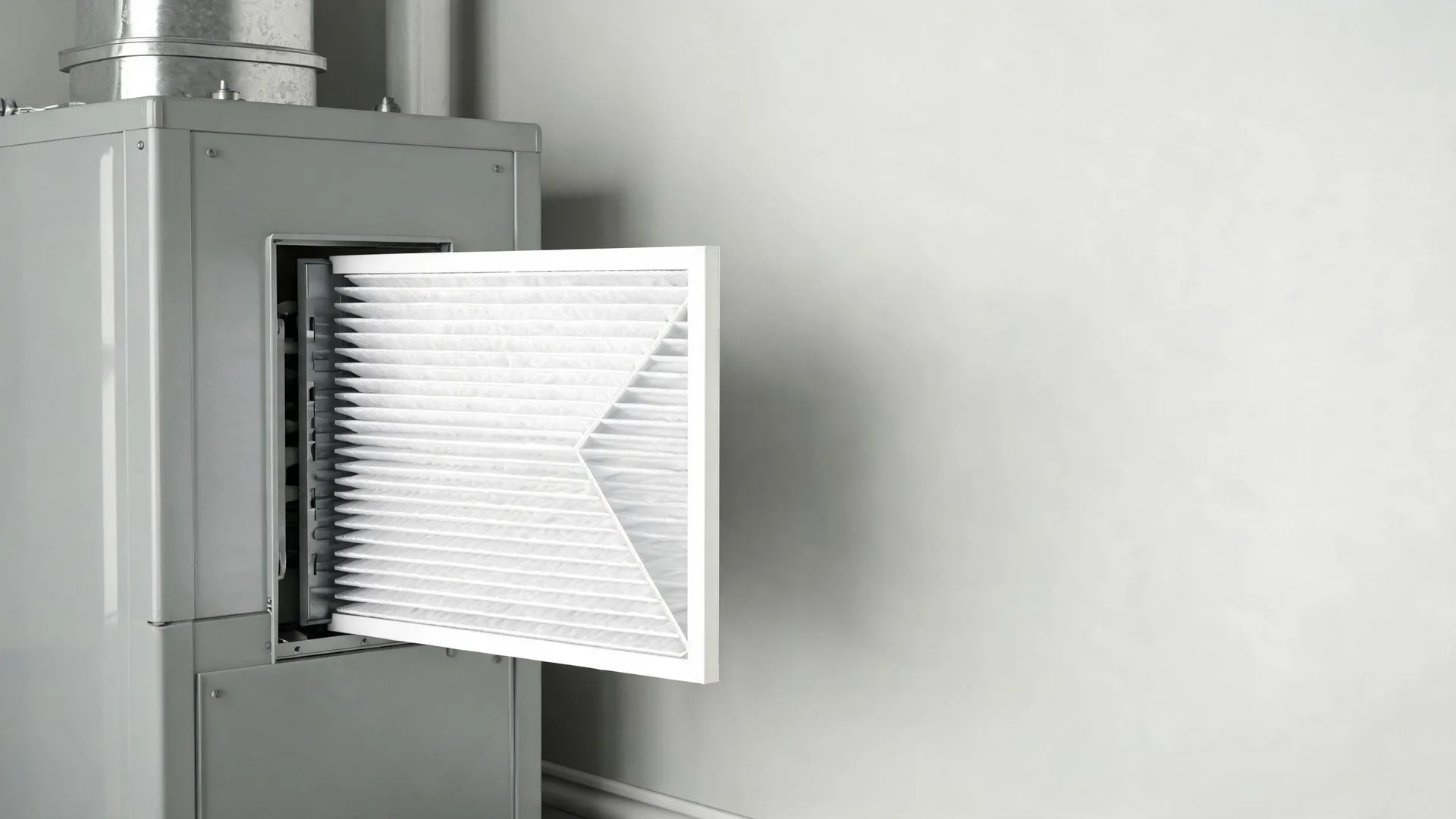
Air has to pass through the filter before it ever reaches the blower and the heat exchanger. A filter clogged with dust makes the blower pull harder to move the same air, and that strain shortens its life. Airflow that's choked down also lets the heat exchanger run hotter than it should, which is the part you really don't want failing.
A high-efficiency furnace produces condensation as it runs, and that water has to clear out through a drain line. If that line clogs or backs up, the furnace is built to shut itself down rather than let water reach the burner or the electronics. A tech checking that line during a yearly visit is checking for a problem that otherwise shows up as a furnace that won't start.
A quick visit usually means someone swaps the filter, glances at the flame through the sight glass, and writes up the invoice. A thorough one takes the panels off. The tech checks the heat exchanger for cracks, because that part separates the flame from the air moving through your house, and a crack there is the one thing that turns a furnace from an inconvenience into a hazard. They'll pull the flame sensor and clean it, since a sensor coated with residue reads the flame weaker than it is and starts shutting the burner down a few seconds after it lights. The igniter gets checked for hairline cracks, not just a glance to see if it glows. Amp draw on the blower motor gets tested against what the motor is rated for, not just a listen for noise. If nobody opens the cabinet, none of that gets seen.
Gas pressure gets checked at the manifold, not guessed at by the look of the flame. Too high and the heat exchanger runs hotter than it was built for. Too low and the furnace struggles to satisfy the thermostat, so it runs longer than it should to make the same heat. The tech also checks the venting, the pipe that carries exhaust out of the house, for a solid connection and the right pitch so condensation drains out instead of pooling. A blower wheel caked with dust gets cleaned, because that buildup throws it off balance the same way a washing machine shakes when the load sits wrong. Belts don't enter into it on this kind of furnace, the motor drives the blower direct, so what fails instead is the motor bearing itself, and a tech can catch that early by how the motor sounds and how hard it's pulling.