


Two illuminated single-story brick houses with mature oak trees photographed at twilight on a quiet residential street.

Furnace Maintenance in Cleveland, OK

Tell us about the job

Takes about a minute. No obligation.

Tune-up, service, or cleaningFurnace or heatingPawnee County, OK
Step 1 of 2

What ZIP code is the job in?

Furnace season here starts in October and runs through April, seven months of the year. That first month is when the furnace works hardest, pushed on right after sitting idle since spring. September is the month to get it checked. A technician can catch a weak igniter or a clogged filter while the furnace is still off, not after it's already running every day. Wait until October and any problem is already showing up as a cold house.

A quick tune-up looks at the filter and calls it done.

A thorough one pulls the burner assembly and checks the heat exchanger with a flashlight, because that crack is the one thing a homeowner can't see for themselves.

Most homes here run on electric heat, but gas furnaces still need a flame and vent check

43.2% of homes heat with electricity
Heat runs October through April
Winter nights average 28°F

One checkup before the season starts covers the winter

Electricity here runs $35.86 per million Btu, and a furnace working harder than it needs to shows up on that bill all winter. One visit before the season starts catches a weak igniter or a dirty filter while the furnace is still off. That is the only checkup this furnace needs before spring.

Find a contractor
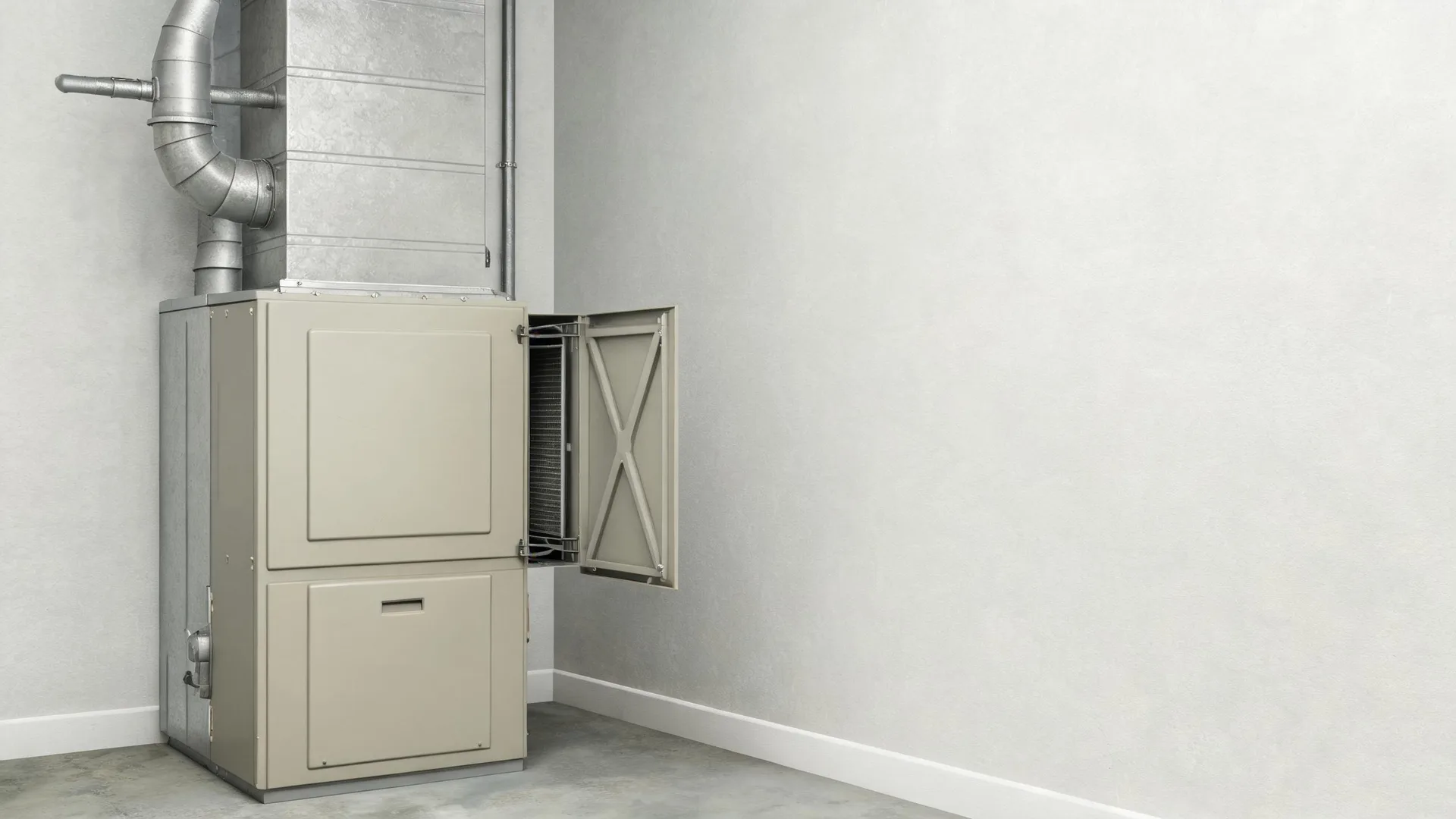
A gas furnace with attached ductwork, gas piping, and condensate lines installed in a concrete-block basement.

Between checkups, the filter is the only job that's yours

Between visits, the filter is the one job that actually belongs to the homeowner. Check it monthly once the furnace is running every day, and swap it when it looks gray instead of white. A furnace pulling air through a clogged filter runs longer to heat the same house, and that extra runtime is what wears out an igniter or a blower motor before its time. Keep the area around the furnace clear too. It needs open air to draw from, not boxes stacked against the cabinet. If the furnace is a condensing type, glance at the drain line now and then for standing water or a slow drip, since a clog there will shut the furnace down on its own rather than risk an overflow. Past the filter and that drain line, leave the panel alone. The heat exchanger, the igniter, the flame itself, none of that is something to check without pulling the furnace apart.

What burns before you smell it

Dust sitting on a heat exchanger since spring burns off the first few times the furnace fires, and that smell is normal. What is not normal, and what a homeowner has no way to check, is a crack in that exchanger. A technician checks it with the panel off and a flashlight, looking for a hairline split that lets combustion gas mix with the air moving through the house.
Flame that looks fine from the register

A burner flame should burn steady and blue. From the vents, a homeowner never sees it at all. A technician pulls the burner assembly, checks the flame for yellow tipping or flickering, and tests the flue draft to make sure exhaust is actually leaving the house instead of backing up.

A dirty filter is the one thing in this whole system a homeowner can actually see, and it matters more than it looks like it should. Air has to move through the furnace to pick up heat and carry it into the house. Block that airflow with a clogged filter and the heat exchanger runs hotter than it was built to, which shortens its life and can trip the furnace's own safety switch mid-cycle. On the other side of the system, a condensing furnace produces water as exhaust gas cools, and that water has to clear out through a drain line. Let that line clog with algae or sludge and the furnace shuts itself down rather than let water back up into the cabinet. Neither of these needs a technician to explain once you know what to check, but both get ignored because nothing about them looks urgent until the furnace stops running.

A tune-up starts before the panel ever comes off, with a look at the flame through the viewport and a check of the flue for a solid draft. From there the technician pulls the burner assembly to clean off the dust and check for yellow tipping, then checks the heat exchanger with a flashlight for any hairline crack. The igniter gets tested under load, not just looked at, because an igniter can glow and still fail once it's asked to hold a flame. Belts went out of furnaces a long time ago, so there is nothing there to tension or replace, but the blower wheel gets checked for dust buildup that throws it off balance. Wiring connections get snugged down, since a loose one is a common reason a furnace starts short cycling. Last is the filter and, on a condensing furnace, the drain line, both cleared so nothing backs up once the furnace is running every day.