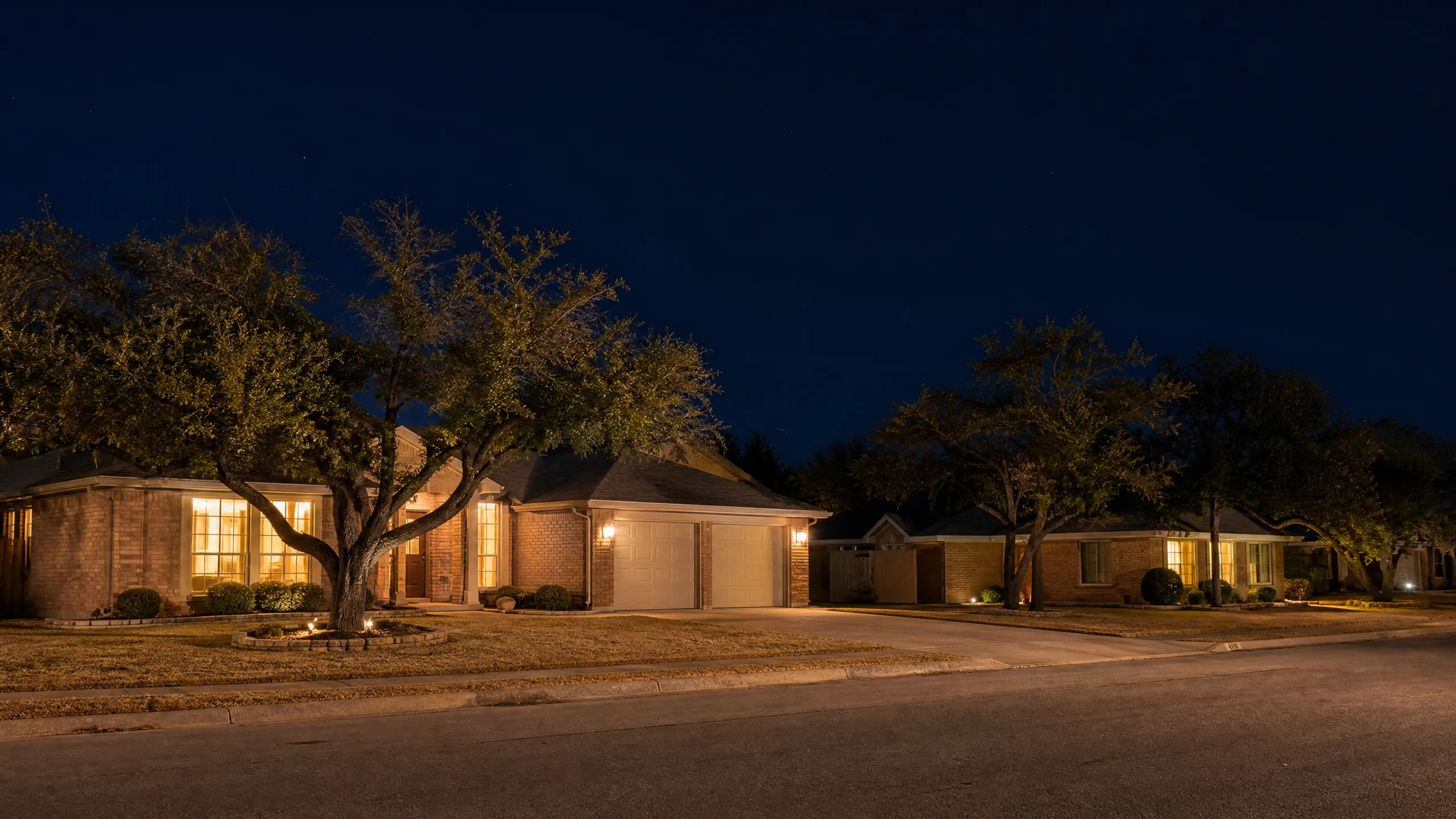
Two single-story brick suburban houses with attached garages and mature trees, photographed at night under a dark blue sky.

Furnace Maintenance in Hugo, OK

Tell us about the job

Takes about a minute. No obligation.

Tune-up, service, or cleaningFurnace or heatingChoctaw County, OK
Step 1 of 2

What ZIP code is the job in?

Five months, not much cold

A furnace in Hugo runs November through March, about five months a year. Overnight lows average 33 degrees across December, January and February, mild as far as furnaces go. It gets a real stretch of use, then sits idle the rest of the year.
Parts still wear on their own clock

An igniter ages and a flame sensor coats over whether the furnace had a hard winter or an easy one. Light duty does not stop that. A yearly check catches the wear before it leaves you without heat on a cold night.

Half the homes in Choctaw County were built in 1982 or later.

A furnace that age still has a lot of life left to protect.

Most of Hugo heats with electricity, not gas

67% of homes heat with electricity
Heat runs November through March
Winter nights average 33°F

Get it checked before it has to run every night

Your furnace sits idle most of the year, then has to run every night it's needed from November through March. A check before that stretch starts catches a worn igniter or a coated flame sensor before either one leaves you without heat.

Find a contractor
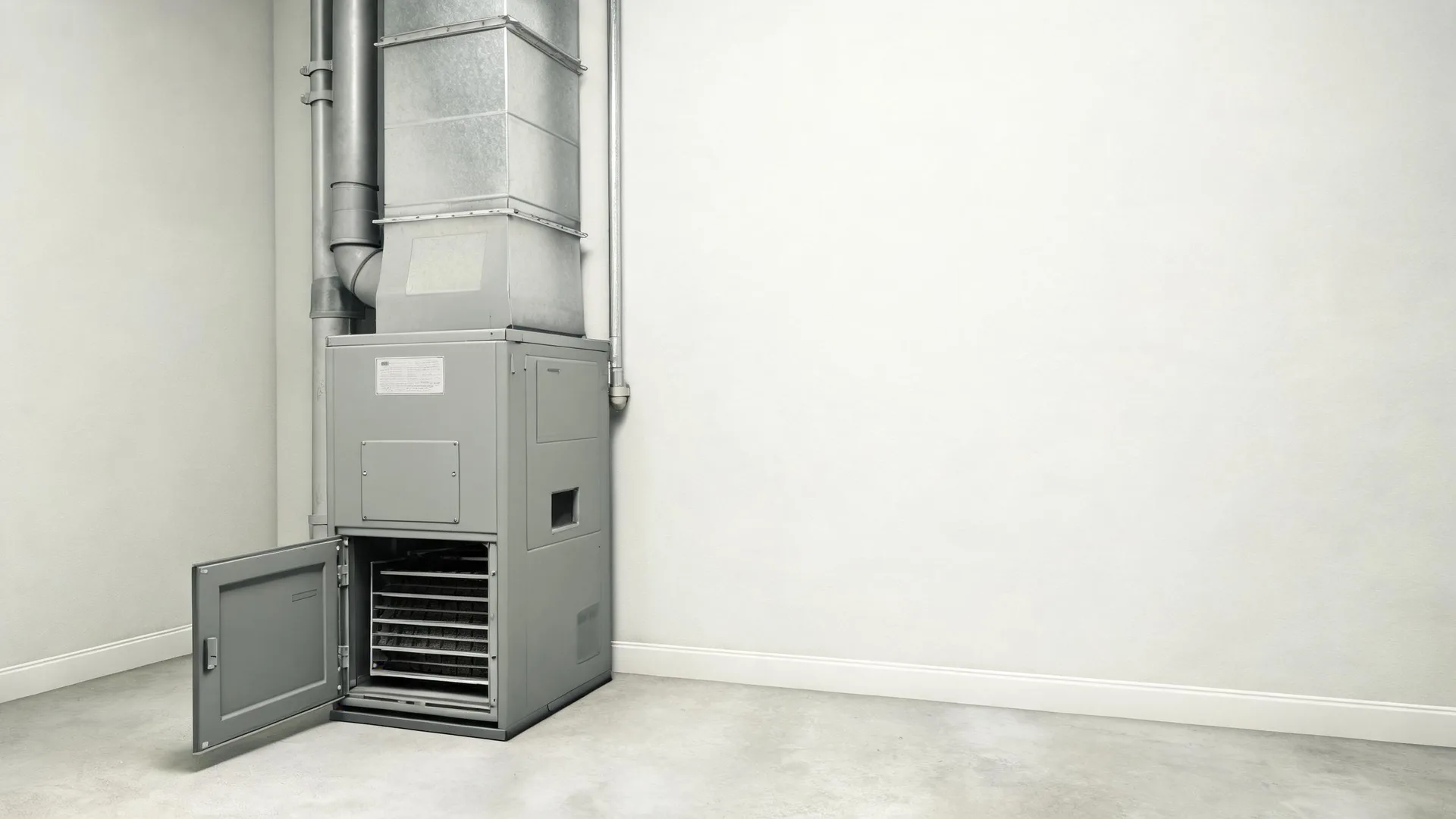
A gray high-efficiency gas furnace installed in an unfinished basement, surrounded by gas lines, a condensate drain, and sheet-metal ductwork.

Skipped checks don't show up until the furnace quits

Skip the yearly check and nothing fails right away. A furnace can run for several seasons on a worn igniter or a flame sensor going dull, lighting a little slower each time until one morning it doesn't light at all. That's how most no-heat calls happen. Not a sudden break, just years of small wear nobody caught stacking up until the furnace finally quits on the coldest night of the year, which is exactly when it's hardest to get someone out to fix it.

The filter protects the furnace, not you

A dirty filter chokes airflow across the heat exchanger. The blower has to work harder to push air through it, and heat that should move into the house backs up around the exchanger instead. Left long enough that causes the exchanger to crack or the furnace to shut itself off on a safety switch.

The drain only matters on certain furnaces

A high efficiency furnace condenses exhaust into water and needs that drain line clear to push it out. Let it clog and the furnace trips a float switch and won't fire at all. An older style furnace vents as gas and has no drain to worry about.

A tune-up puts the furnace through its paces and watches what the homeowner never sees running on its own. The igniter gets watched as it glows, not just checked for a crack. A technician reads the flame itself, since a clean blue flame burns differently than one starved for air or choked on dust. The flue gets checked for a solid draft pulling exhaust out and away, because a weak draft can let combustion gas drift back where it shouldn't. Amp draw on the blower motor tells its own story, running high before a motor ever grinds or seizes. None of that shows up from the thermostat on the wall.

A tune-up also means pulling the burners and cleaning them one at a time. Dust and a little rust build up on the burner surface over a year of sitting idle, and that changes how the gas mixes with air when it lights. A burner running dirty burns orange at the tips instead of blue, and that's carbon monoxide risk, not just a cosmetic thing. The heat exchanger gets a visual pass too, looking for hairline cracks that widen with every heat cycle. Gas pressure gets checked at the manifold against what the furnace is built to run, since too high or too low both cause problems down the line. The igniter, the flame, the draft and the burners all get looked at together, because a furnace that seems fine from across the room can be failing in a way that only shows up with the panel off.