




A gas furnace with sheet-metal ductwork and PVC pipes installed in an unfinished basement.

Furnace Maintenance in Muskogee, OK

Tell us about the job

Takes about a minute. No obligation.

Tune-up, service, or cleaningFurnace or heatingMuskogee County, OK
Step 1 of 2

What ZIP code is the job in?

Muskogee County saw 135 severe weather events between 2015 and 2024. Most of that was wind, 73 events, with 36 hail events and 16 tornadoes mixed in. Hail dents a furnace's outdoor components and wind drives debris into them, and that kind of damage doesn't always show itself until the system is asked to run. Ten winter storms over the same ten years mean ice and heavy snow are part of the picture too, not just summer wind and hail. A tune-up before the weather turns is the time to find a problem, not after a storm has already made its case for you.

Electricity heats 54.7% of homes in Muskogee County.

Gas and propane heat the rest, and those furnaces need the burner and venting checked, not just a filter change.

Seven months of work a year is a light load for a furnace

Heat runs October through April
Winter nights average 31°F
10 winter storms from 2015 to 2024

October is the first cold month here, and it's also the first month this furnace has to work for its living. Homes in Muskogee County run heat from October through April, seven months straight once it starts. A furnace that sat quiet since spring doesn't get a trial run before that first cold night asks it to hold the house at temperature. September is the window to have it checked, while the weather is still mild enough that a problem found is a problem fixed on your schedule, not during a cold snap. Overnight lows here average 31°F across December, January and February, so once winter settles in, this furnace isn't cycling on now and then. It's running most nights, and it needs to be ready for that before October arrives.

Check it now, before the power does it for you

A quarter of Oklahoma households went at least a day without power in 2024. A furnace that's already weak doesn't get a second chance to prove itself once the heat cuts out and the house starts losing warmth. Have it looked at now, while that's still a choice and not something a storm decided for you.

Find a contractor
A man in a cap, gray long-sleeved shirt and brown work pants walks up concrete steps toward a dark blue front door, carrying a worn canvas tool bag beside a potted shrub.
A gray gas furnace with attached ductwork and piping installed in an unfinished concrete basement.

Light duty means a check-up is usually worth it

Seven months of running isn't much strain on a furnace. Most of what wears a part out here is time sitting idle or dust left to collect, not the work itself. That's good news for a tune-up. A furnace with an easier life responds better to one. A cracked igniter, a dirty flame sensor, a blower motor running dry on lubricant, these get caught and fixed instead of turning into a reason to replace the whole unit. Have it checked before October and whatever's wrong gets found while it's still a small job.

Change the filter, nothing else inside the cabinet

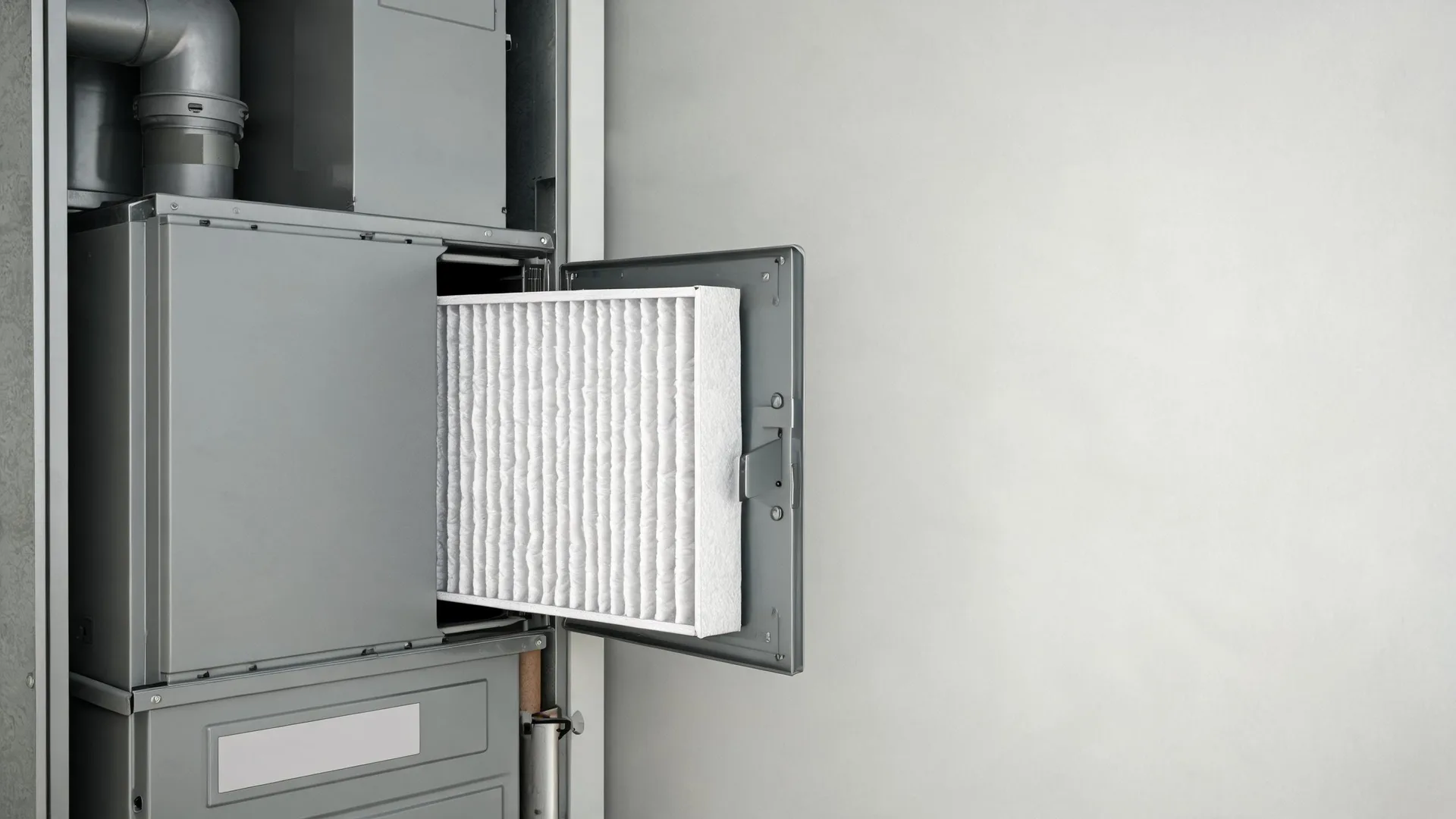
A dirty filter is the one thing a homeowner should handle alone. Slide the old one out, hold it up to a light, and if you can't see through it, replace it. A clogged filter starves the burner of airflow and can crack a heat exchanger over time. Past the filter, the panels stay on. The igniter, the flame sensor, the blower wheel all need a trained hand, and opening that cabinet without knowing what you're looking at risks a burn or a gas connection you didn't mean to touch.
Watch for what the furnace is telling you

Between visits, pay attention to short cycling, a burner flame that looks yellow instead of blue, or a smell of gas near the unit. Any of those means the furnace needs a technician before the next cold night, not at the next scheduled visit. A furnace that's cycling on and off fast is usually struggling with airflow or a failing sensor, and running it that way wears the parts down faster. Keep the area around the furnace clear too. Boxes, paint cans and laundry piled against the cabinet block the air it needs to breathe and draw.

A furnace usually tells you something before it fails outright. A burner that used to light with one soft thump and now takes two or three tries has a weak igniter or a dirty flame sensor, and that part is close to done. A blower that used to come on quiet and now rattles or hums louder than it used to is wearing a bearing or losing its lubricant. Rooms that used to heat evenly and now run cold at the far end often mean the blower is losing power or a duct connection has come loose. A furnace that shuts off before the house reaches the set temperature, then kicks back on a few minutes later, is short cycling, and that's usually a sensor reading wrong or airflow that's choked somewhere. None of these mean the furnace is about to quit tonight. They mean it's asking for a look before it does.

A real tune-up starts with the burner. A technician pulls it and cleans away rust and scale so the flame burns even and blue instead of ragged and yellow. The flame sensor gets cleaned too, since a coating of oxidation on that rod is one of the most common reasons a furnace lights, runs for a second, then shuts itself back off. The igniter gets checked for cracks, because that part fails by breaking a little more each season until one day it doesn't glow hot enough to catch the gas at all. On the blower, the technician checks the bearings and the lubricant, since dry bearings are what make a motor run hot and loud long before they make it quit. The heat exchanger gets inspected for cracks, which matter because a cracked exchanger can let combustion gas mix into the air the blower pushes through the house. Vent piping and the condensate line, if the furnace has one, get checked for blockage so exhaust has a clear path out and condensation has somewhere to drain. Every wire connection in the control board gets snugged down too, since a loose connection left alone is what turns into a furnace that won't start at all.