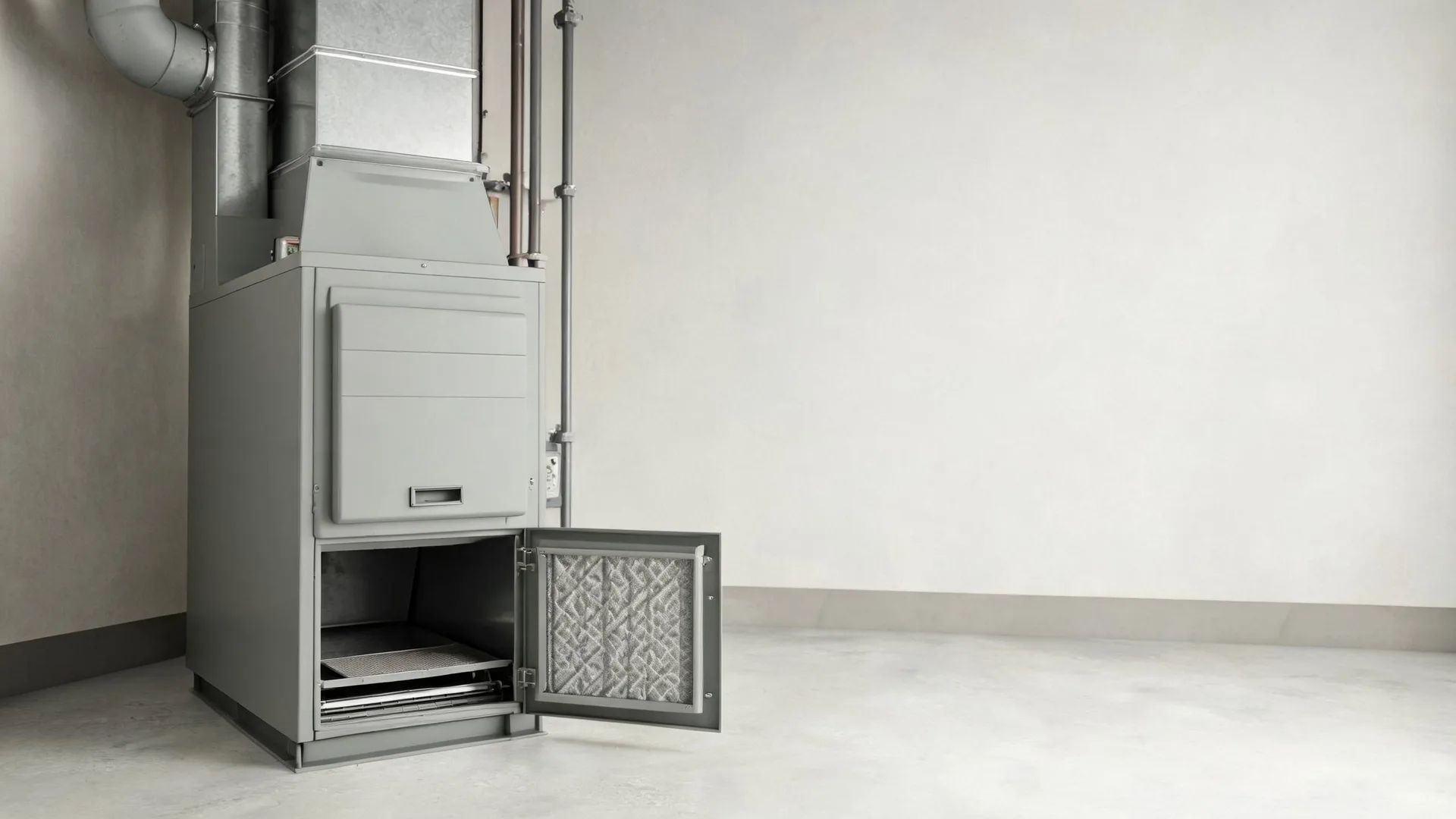
An unfinished basement containing a gray HVAC furnace with ductwork, exposed wooden joists, a concrete floor, and miscellaneous clutter in one corner.

Furnace Maintenance in Norman, OK

Tell us about the job

Takes about a minute. No obligation.

Tune-up, service, or cleaningFurnace or heatingCleveland County, OK
Step 1 of 2

What ZIP code is the job in?

Hail and wind are routine here

Cleveland County logged 267 hail events and 163 damaging wind events over the past decade. Hail dents a condenser's fins, and wind drives branches and grit into the cabinet. A furnace tied to a heat pump shares that outdoor unit.

Worth a look before the cold sets in

A bent coil or a cracked line from last season's storms can go unnoticed until the system is asked to run hard. Have the outdoor unit checked for damage and cleared of debris before furnace season starts, not after the first cold snap.

Half the homes in Cleveland County were built in 1990 or later.

A furnace that age still has years in it, and a yearly check is what keeps it that way.

Six months of work a year, not year-round

Heat runs November through April
Winter nights average 30°F
10 winter storms from 2015 to 2024

Furnace here starts up in November and runs through April. October is the month to get it checked. Wait until the first cold snap and you're calling after something has already failed, with the furnace running hard from day one and no slack in the schedule. Have it looked at while it's still sitting idle. A cracked heat exchanger or a weak igniter shows up on a check. It doesn't show up until the furnace is already carrying the house through a cold night.

Most furnaces here burn gas, and gas needs a closer look than a filter change

Gas heats 55.6% of homes in Cleveland County, more than any other fuel. A gas furnace has a burner, a vent and safety controls that a filter swap doesn't touch. A cracked heat exchanger or a clogged vent won't announce itself until the furnace is already running, and that's a bad time to find out.

Find a contractor
A man in a gray shirt and tan work pants, seen from behind, climbs porch steps toward a dark blue front door while carrying a canvas tool bag, with a potted shrub to the right.
A gray residential gas furnace installed in an unfinished basement, surrounded by ductwork, a metal flue pipe, and a gas supply line.

Newer here, but still worth checking every year

If your furnace came with a house built in 1990 or later, it still has working years ahead of it. What decides how many is whether anyone opens the cabinet in between. A yearly check catches a cracked heat exchanger or a weak igniter while the furnace is sitting idle, not after it's been carrying the house through a cold night.

Dirt does its damage slowly

A furnace that never gets opened up keeps running, but the blower wheel collects dust and the flame sensor picks up a film that keeps it from sensing the flame. Neither stops the furnace outright. Both make it work harder and shut down more often, in small ways that look like the furnace just getting old.

The safety checks are the ones you skip

A filter change doesn't touch the heat exchanger or the gas pressure. Those need someone to actually look, and without that, a crack or a bad burn pattern can sit there for a season or more. The furnace keeps heating the house the whole time.

Between visits, the filter is the one thing worth your attention. Check it monthly and swap it when it's gray and matted, more often if there's a pet in the house. A clogged filter starves the furnace of airflow, and that makes it run longer to heat the same rooms. Keep the area around the furnace clear too, nothing stacked against the cabinet or blocking the return vent. If you smell anything like rotten eggs, or the furnace short cycles on and off, that's not a wait and see. Everything else, the burner, the heat exchanger, the flame sensor, is inside the cabinet and needs a trained eye, not a homeowner with a screwdriver.

A real tune-up starts with the burner. A tech pulls it and cleans off the rust and scale that builds up over months of sitting idle, because a dirty burner doesn't light evenly and that uneven flame is what scorches a heat exchanger over time. The heat exchanger itself gets inspected for cracks, since that's the part separating the flame from the air going into the house. The flame sensor gets cleaned so it keeps sensing the pilot and doesn't shut the furnace down on a false reading. The igniter gets checked for a weak glow, because that's what fails right when you need heat most. The inducer motor and the vent get checked for a clear path, so exhaust actually leaves the house instead of backing up. Gas pressure gets tested at the valve, not guessed at. Electrical connections get tightened, since a loose one causes the kind of intermittent fault that's hard to track down later. None of this is a filter swap. It's someone opening the cabinet and looking at the parts that only fail when nobody's watching.