October starts the work
Furnaces in Craig County come on in October and run through April. That's seven months straight this system has to hold up without a break.
Takes about a minute. No obligation.
Furnaces in Craig County come on in October and run through April. That's seven months straight this system has to hold up without a break.
Get the furnace looked at in September, before it's asked to run every day. A problem found before October gets fixed on your schedule, not in the middle of a cold stretch.
One stretch of cold is what a Craig County furnace has to get through each year, October to April.
One check before October covers the furnace for that whole stretch.




A furnace doesn't need attention more than once a year to make it through a cold stretch. Electricity in Oklahoma cost $35.86 per million Btu in 2024, and that price doesn't change whether the burner lights clean or struggles to. A furnace that starts easy and burns clean at the start of the season will likely still be doing that at the end of it, as long as nothing changes inside it over the summer. One check before the season catches what would otherwise go unnoticed until the furnace is running every day.
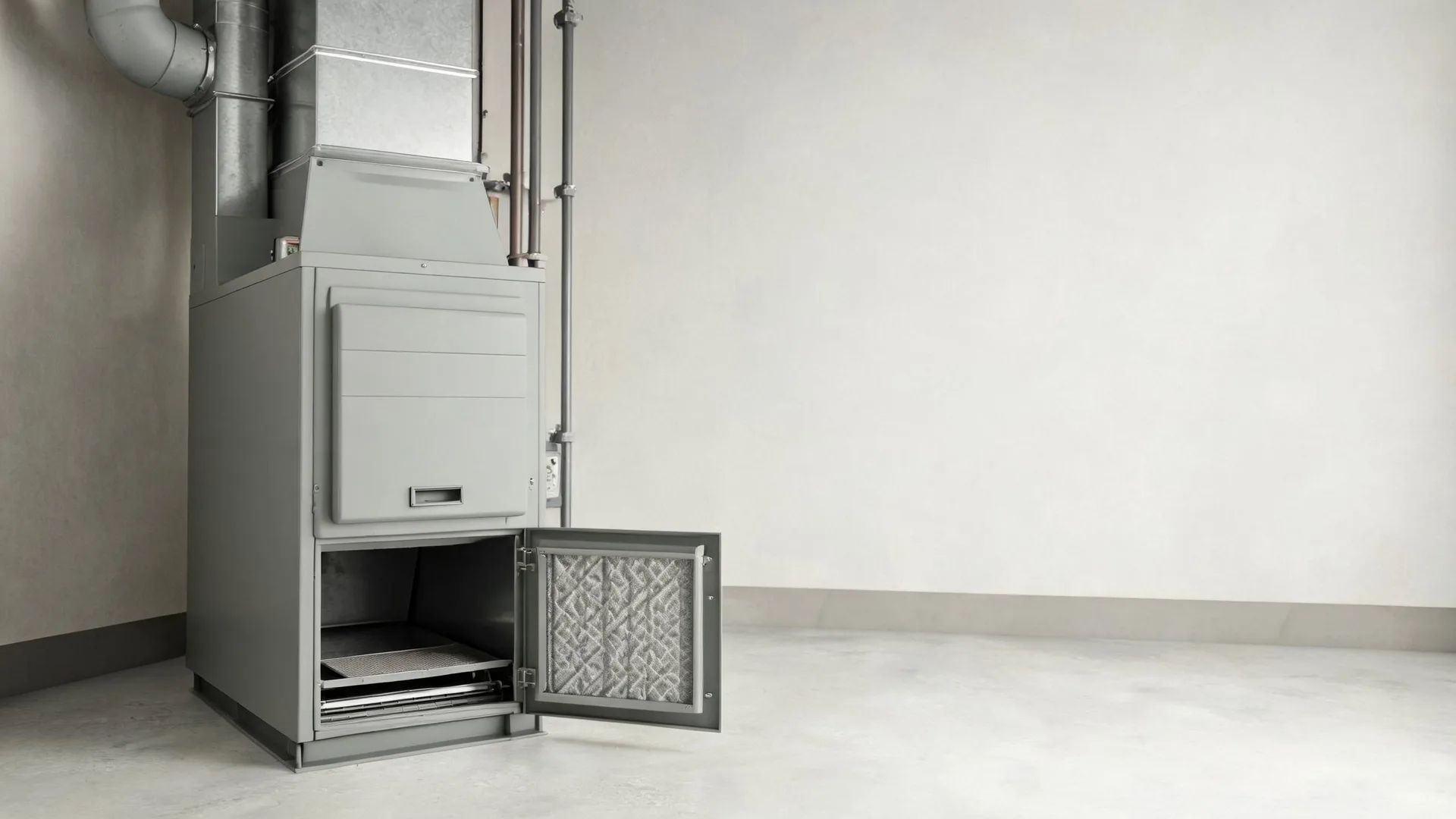
Gas heats close to three in ten Craig County homes, with most of the rest on electric furnaces and a smaller share on propane. A gas furnace has a burner, a vent and safety controls that an electric furnace doesn't, and those are what a yearly check needs to cover. A filter swap alone won't catch a cracked heat exchanger or a vent that isn't drawing right.
Find a contractor
A flame sensor builds up a film after a season of lighting the burner, thin enough that you'd never see it looking at the thing, thick enough that the furnace stops reading a flame and shuts itself off. A blower wheel collects dust on each blade until it's moving less air than it was built to move, and nothing about the sound changes to tell you. The pressure switch, the limit switch, the igniter drawing more current than it should before it finally fails outright, none of it shows on the thermostat. The furnace either comes on or it doesn't, and by the time it doesn't, the part has usually been failing for a while.
A dirty filter chokes airflow across the heat exchanger, and that alone can trip the limit switch and shut the furnace down. Check it monthly during the season and swap it when it looks gray and matted. This is the one part of the system built for you to handle, not a technician.
Past the filter, the furnace is not a place to go looking. The burner, the flame sensor, the pressure switch and the wiring behind the panel are set during the tune-up and shouldn't be touched between visits. Opening the cabinet to poke at something you don't recognize is how a working part gets knocked out of adjustment.
A furnace doesn't have coils or a drain, that's the air conditioner's side of the same cabinet, but most systems share a blower and the same duct run, so what clogs one affects the other. The filter sits in that shared airflow path, and a furnace pulls air across it every time the blower runs, all winter. Let it load up with dust and the burner still lights fine, but the heat exchanger behind it runs hotter than it should, because there isn't enough air moving past to carry the heat away. That's what trips the limit switch, not the burner itself. On a system with air conditioning built into the same unit, a tech checking the furnace will usually look at the evaporator coil too, since a coil caked in dust restricts airflow the same way a dirty filter does, and the drain line underneath it needs to be clear so condensation has somewhere to go instead of backing up into the cabinet.
A real tune-up starts with the burner itself, pulled and inspected for a flame that burns even across each port instead of lifting or guttering to one side. The flame sensor gets cleaned regardless of how it looks, since the film that trips a furnace offline is thinner than what you'd catch by eye. A tech checks the heat exchanger for cracks, because a cracked exchanger can let combustion gas mix into the air moving through the house, and that's not something a filter or a thermostat setting will ever show. The venting gets checked for a solid connection and a clear path out, since a vent that isn't drawing right backs combustion gas up into the cabinet instead of outside. Gas pressure gets measured at the manifold and set to spec, not eyeballed. The igniter gets checked for a crack or for drawing more current than it should before it fails outright. Belts don't come into it on this kind of furnace, since the blower motor drives the wheel directly, but the wheel itself gets checked for dust buildup on the blades, because that cuts into airflow the same way a clogged filter does.