Weather here takes a toll
Custer County recorded 183 severe weather events between 2015 and 2024, including 98 damaging wind events and 60 hail events. Hail dents an outdoor unit's cabinet and bends its fins. Wind drives branches and debris into it.
Takes about a minute. No obligation.
Custer County recorded 183 severe weather events between 2015 and 2024, including 98 damaging wind events and 60 hail events. Hail dents an outdoor unit's cabinet and bends its fins. Wind drives branches and debris into it.
A furnace that heats with electricity depends on power getting to the house. Statewide, a quarter of Oklahoma households went at least 24 hours without power in 2024. Winter storms hit this county 9 times between 2015 and 2024, the same months a power cut matters most.
A furnace that's been ignoring warning signs for a while fails without much warning.
A yearly check catches a cracked heat exchanger or a weak igniter before the first cold morning it won't fire.



Furnaces here start running in October and keep going through April, seven months straight. That first cold snap in October is when a weak part gets found out, usually at the worst time. Book the tune-up in September, before the heat gets switched on for the season. A technician can catch a cracked heat exchanger or a failing igniter while the furnace is still sitting idle, instead of after it's already struggled through a cold morning. With overnight lows averaging 27°F in December and January, this isn't a system that gets a break once winter sets in. Getting the check done early means it's ready for the long stretch ahead, not catching up partway through it.
A tune-up is the time to check the outdoor unit for dents, bent fins, and debris, and to make sure the furnace is ready to restart on its own once power comes back. That's worth doing before the weather starts doing damage, not after.
Find a contractorA furnace that never gets opened up keeps running, right up until the day it doesn't. Dust builds on the burners and they don't light clean. The flame sensor picks up a coating it can't see through and starts telling the control board no flame is there, even when there is. The furnace shuts itself off, not because it's broken, but because that's what it's built to do when it can't tell what's happening inside it. A blower motor with a dry bearing works harder every time it spins up, and harder means hotter, and hotter is how a motor burns out early instead of lasting as long as it should. None of this shows up as a single clear symptom. It shows up as the furnace running longer than it used to, or cycling on and off more than it should, or smelling faintly like something warm and electrical when it kicks on. A cracked heat exchanger is the one that matters most, because it can leak combustion gas into the air the blower pushes through the house, and it gives almost no warning before it gets to that point. Regular maintenance catches these while they're still small and still cheap to fix, instead of after they've taken something else down with them.
A fast visit gets the furnace firing and calls it done. The tech checks for a flame, feels for warm air at a register, and packs up. That tells you the furnace works right now. It doesn't tell you why the flame sensor is reading weak, or whether the blower bearing is starting to go dry.
A real tune-up pulls the burners and cleans them, not just looks at them. It tests the flame sensor's signal instead of trusting that the furnace lit. It checks amp draw on the blower motor against what that motor is rated for, inspects the heat exchanger for cracks with a light and a mirror, and confirms the gas pressure is set where the manufacturer calls for it. Those are the checks that find a part failing before it fails.
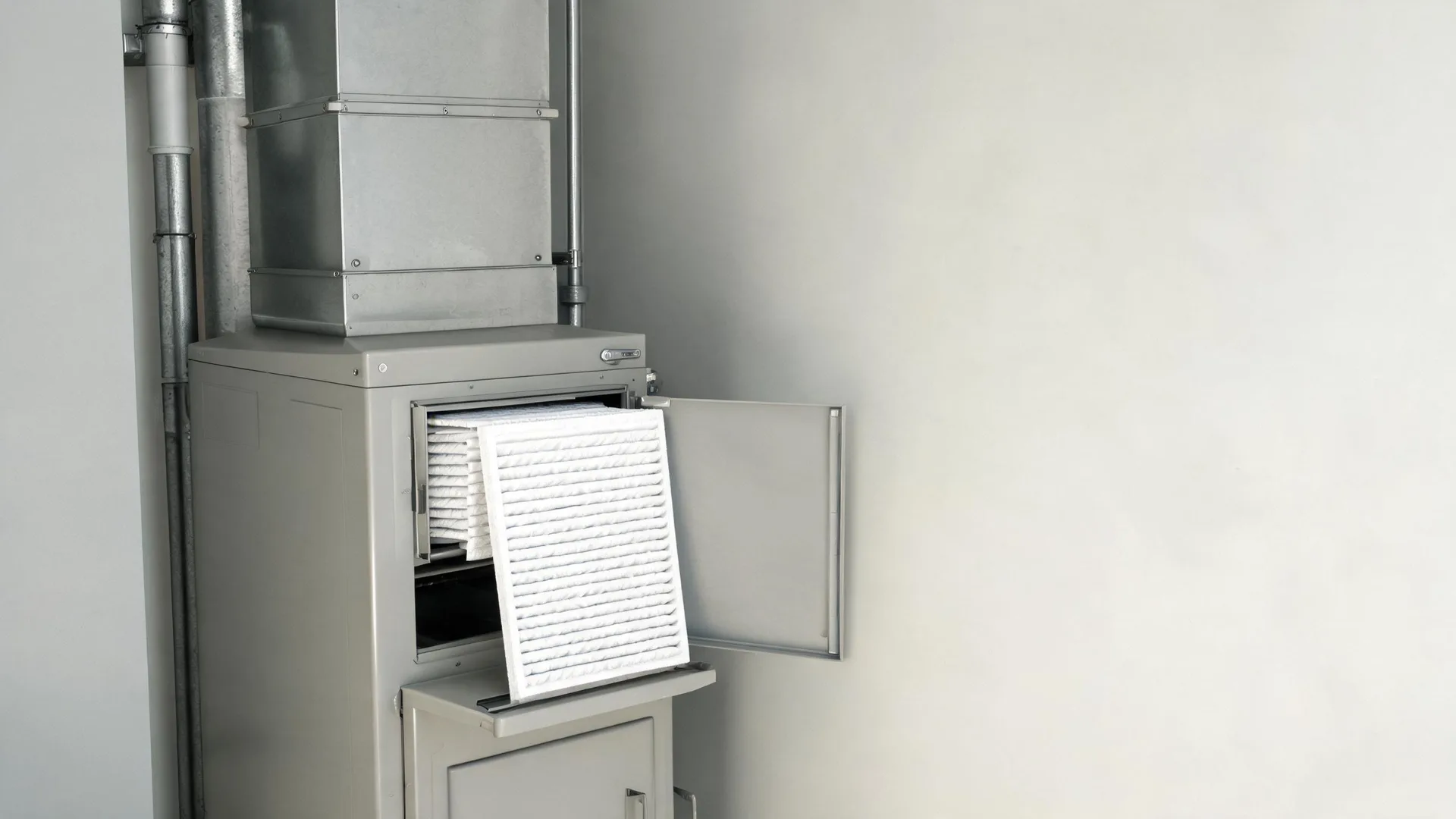
A furnace pulls air through a filter before it ever reaches the burners or the blower. A filter clogged with dust makes the blower work harder to push air through, and that strain carries right back to the motor. On the cooling side, the same system has a coil and a condensate drain, and both depend on that air moving freely too. A coil needs full airflow across it to do its job, and a drain line clogged with algae or sludge backs up and can shut the system down or let water sit where it shouldn't. None of these parts fail loudly. They just make the whole system work harder until something gives out. Keeping the filter changed and the drain clear is less about any one part and more about not forcing the rest of the system to compensate for it.
A tune-up starts with the furnace shut down and opened up, not running. The burners come out for a real cleaning, since a shop vac on a dirty burner just moves the dust around instead of clearing it. The igniter gets checked for hairline cracks that only show up under a light, the kind that make it fail next week instead of today. Gas pressure gets measured at the manifold and adjusted if it's drifted off what the furnace calls for, because pressure that's even a little off changes how clean the flame burns. The blower wheel gets pulled and cleaned if dust has built up on the blades, since a dirty wheel moves less air no matter how strong the motor is. Wiring connections at the control board get checked for a loose screw or a corroded terminal, because that's a common reason a furnace works fine for months and then won't start at all.