





An unfinished basement containing a metal furnace with ductwork, exposed wooden joists on the ceiling, cardboard boxes, a coiled cable, and a single hanging incandescent bulb.

Furnace Maintenance in Yukon, OK

Tell us about the job

Takes about a minute. No obligation.

Tune-up, service, or cleaningFurnace or heatingCanadian County, OK
Step 1 of 2

What ZIP code is the job in?

Canadian County sees its share of rough weather. Between 2015 and 2024 the county logged 236 severe weather events, including 110 hail storms and 97 rounds of damaging wind. Thirteen tornadoes touched down in that same stretch. Any of that can pelt or knock around whatever sits outside your house, and a furnace tune-up is a chance to have that unit looked over for dents, bent fins or debris caught where it shouldn't be. Statewide, a quarter of Oklahoma households lost power for 24 hours or more in 2024, and a furnace with a dirty flame sensor or a failing igniter is in worse shape to come back on when the power does.

Almost 6 in 10 homes in Canadian County heat with gas furnaces.

A gas furnace tune-up means checking the burner and venting, not swapping a filter.

Half these furnaces are still young, and a yearly check keeps them that way

Half the homes here were built by 1999
Heat runs October through April
Winter nights average 29°F
September Is When This Gets DoneFurnace season here starts in October. Have yours checked in September.

A yearly check on a newer furnace is cheap insurance against the kind of weather this county sees. The technician can clean the flame sensor, check the igniter and confirm the burner lights properly before the next hard freeze or the next power cut. Catching a part that's starting to wear costs less than replacing it after it fails on a cold night. If your furnace came with the house, ask the technician roughly how old it is and whether anything about its install is working against it. A furnace that still has years ahead of it is worth keeping that way.

Get the Furnace Ready Before the Weather Turns

Have the furnace checked before the weather turns. A technician on site can clean the flame sensor and test the igniter now, while the unit outside is easy to reach and nothing is frozen over or buried in storm debris.

Find a contractor
A gray high-efficiency gas furnace installed in an unfinished basement, surrounded by gas lines, a condensate drain, and sheet-metal ductwork.

A Real Tune-Up Opens the Cabinet

A quick visit gets the filter swapped and the thermostat checked, then calls it done. A thorough one opens the cabinet and looks at what's actually burning. The technician should check the flame itself, a steady blue with maybe a tip of yellow, not a flame that's lifting off the burner or rolling out past where it should. The flame sensor gets cleaned, not just glanced at, since a thin layer of residue on it is enough to make the furnace shut down seconds after startup. The igniter gets tested under load, not just looked at, because an igniter can glow and still fail to light the burner reliably. A real tune-up checks the heat exchanger for cracks or rust-through, since that's the part standing between the flame and the air moving through your house. It includes checking the venting for blockage or corrosion and confirming the inducer motor pulls exhaust the way it should before the burner ever fires. Gas pressure gets measured, not assumed. If the technician is in and out in a few minutes without opening the furnace up or asking about how it's been running, something got skipped.

A Furnace Doesn't Announce Itself

A furnace that's starting to fail rarely stops outright. It shows up first as a burner that takes a couple tries to catch, a flame that looks more yellow than blue, or a blower that runs longer than it used to. Short cycling, where the furnace fires up and shuts off again before the house warms, usually points to a flame sensor or limit switch losing its margin. These are easy to miss because the furnace still technically heats the house, right up until the morning it doesn't.
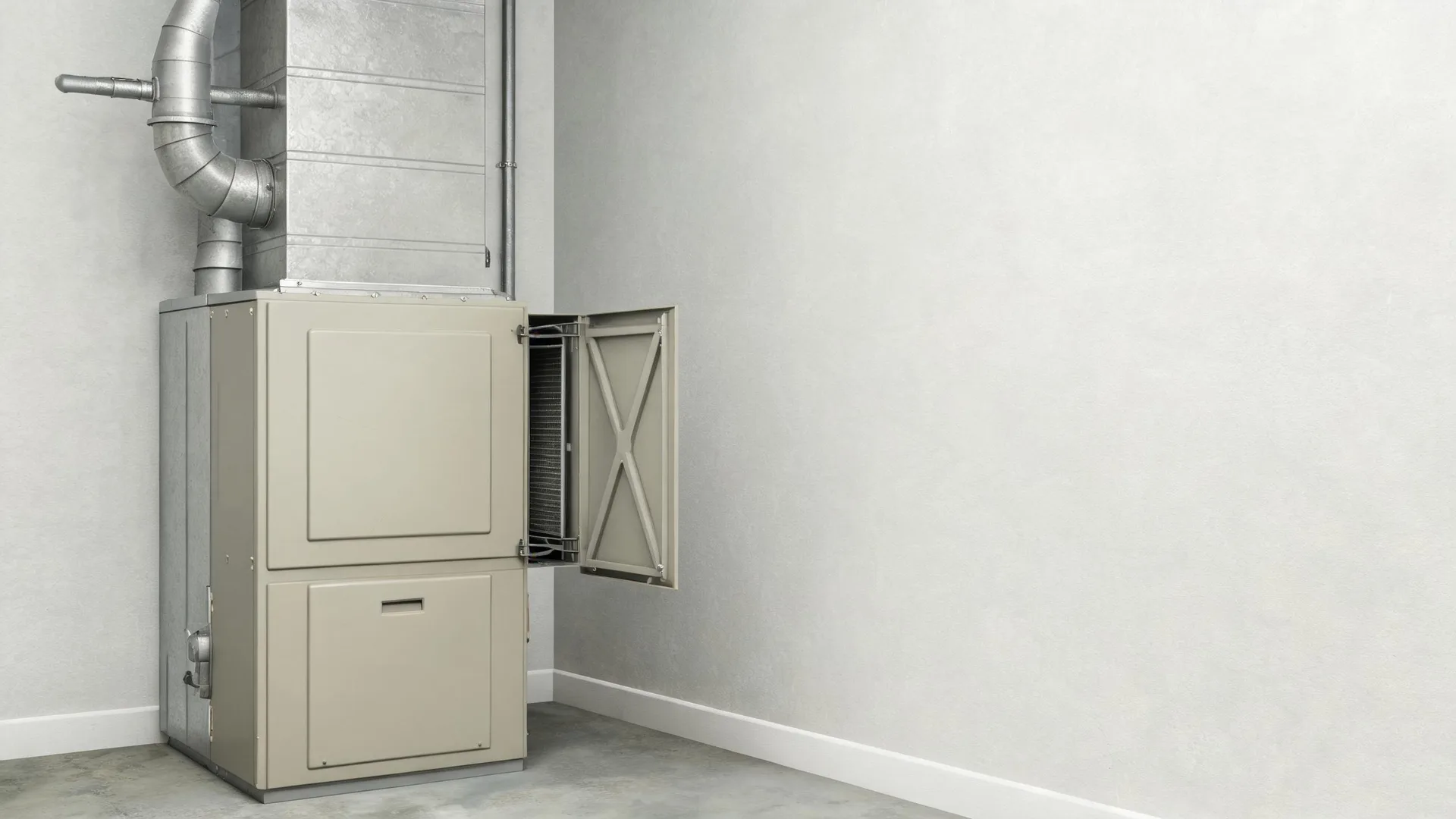
The Weather Isn't When You Want to Find Out

A furnace tends to fail during the first real cold snap, because that's when it's asked to run longest and cycle hardest after sitting idle most of the year. A part that's been degrading quietly usually gives out under that load. A check beforehand catches the weak igniter or the failing sensor while it's still a five minute fix, not a no heat call when the furnace needs to work the most.

A furnace moves air, and everything on this list is about keeping that air clean and moving. A dirty filter chokes that airflow, and the blower has to work harder to push air through it. Starve the furnace of airflow long enough and the heat exchanger runs hotter than it should, which shortens its life. On the air conditioning side of the same system, the evaporator coil depends on that airflow too. A coil caked with dust and grime can't transfer heat properly, and it can ice over instead of cooling the air that passes through it. Low airflow is also the main reason that coil freezes in the first place. The condensate drain matters just as much, even though it has nothing to do with heat. Once the coil starts producing condensation, that water needs somewhere to go, and a clogged drain line backs that water up into the cabinet or the drain pan. Most furnace and air handler setups include a safety switch that shuts the system down if that pan fills, which protects your house from water damage but leaves you without heat or cooling until the clog is cleared. None of these parts work in isolation. A dirty filter strains the blower, a dirty coil can't shed heat properly, and a blocked drain turns a cooling problem into a water problem. Checking all three during the same visit is the only way to know the airflow through the whole system is doing what it should.

A tune-up also means pulling the burner assembly and cleaning it, not just the flame sensor sitting next to it. Dust and lint settle in the burner ports over the off season, and a partly blocked port throws the flame pattern off even when the sensor itself is clean. The technician should check the flame on every burner, not just the first one, since a furnace can run fine on three burners and still be down one without you noticing a difference in how the house feels. Wiring connections get checked too, especially at the control board, because a loose connection can cause the same short cycling a bad sensor does. The blower wheel gets inspected for dust buildup on the blades, which throws it out of balance and wears the motor bearings faster than normal use would. Belts aren't part of this on a modern furnace, since the blower motor drives the wheel directly, but the motor mounts and bearings still wear and still need a look.