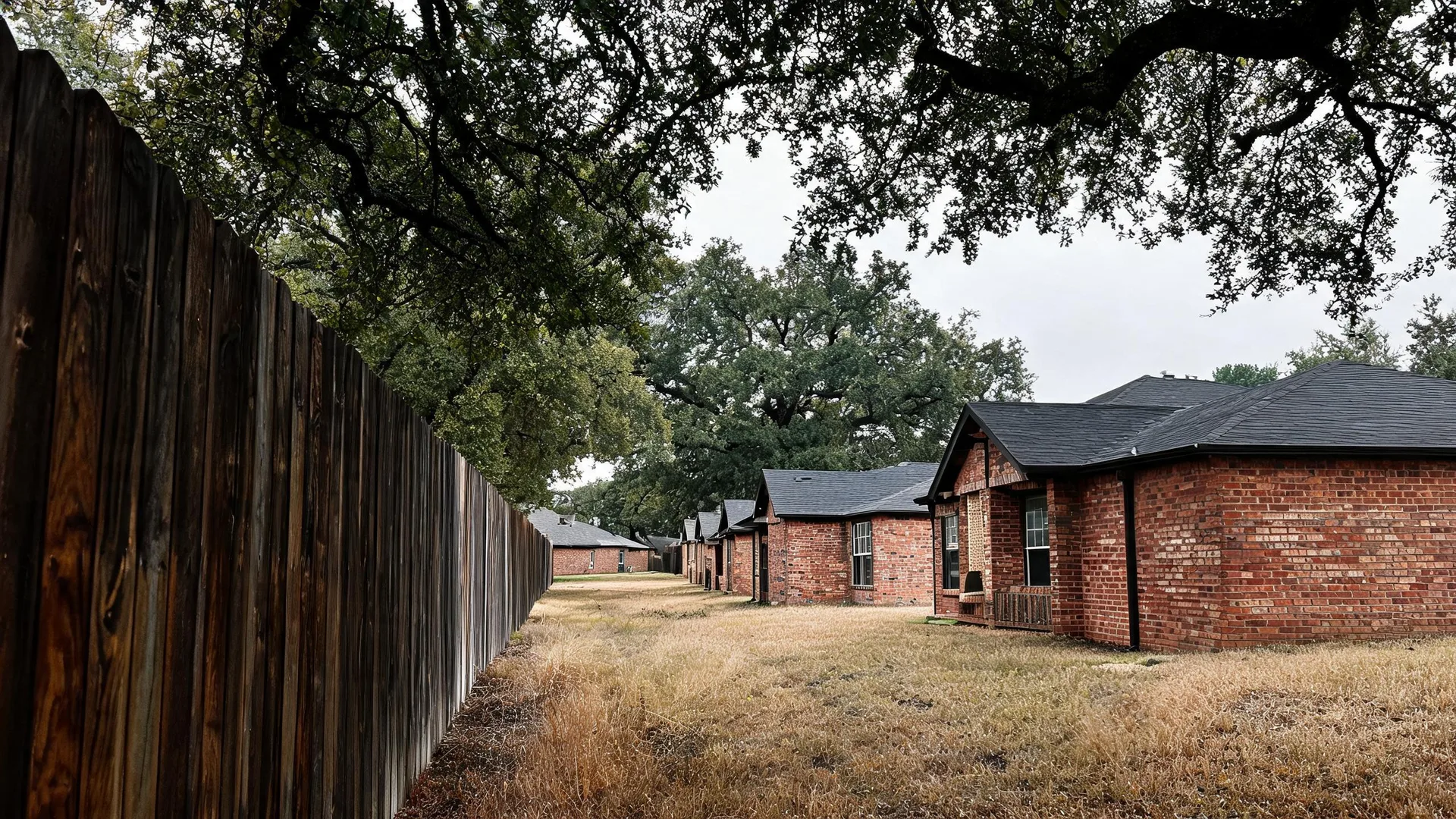




A row of single-story brick houses with dark shingled roofs stands along a dry grass strip beside a tall weathered wooden fence, under large overhanging oak branches and an overcast sky.

Furnace Repair in Altus, OK

Tell us about the job

Takes about a minute. No obligation.

RepairFurnace or heatingJackson County, OK
Step 1 of 2

What ZIP code is the job in?

A furnace that's struggling still tries to do its job, and that's the problem. A cracked heat exchanger gets hotter and more dangerous the longer it runs, because the metal keeps flexing under heat it was never built to take. A dirty flame sensor lets the burner cycle on and off harder, which wears the igniter faster than if you'd just shut it down. Even something as simple as a clogged filter forces the blower motor to strain against restricted airflow, and that strain shortens its life. None of these get better on their own. If your furnace is making a new noise, short cycling, or not keeping up, the safer move is to have it looked at before the next cold stretch, not after.

6 months
November through April, your furnace is on duty
30°F
the average winter night it heats against
63%
of homes here heat with gas, so most furnaces here burn gas
7 winter storms
in ten years, the nights a failure hurts most
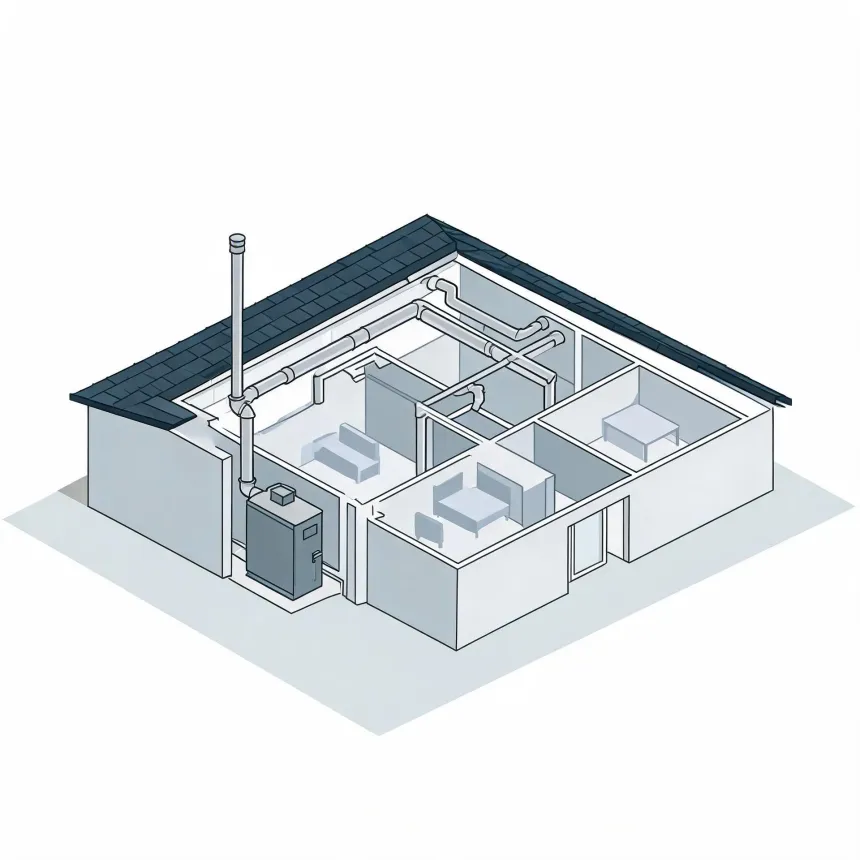
Isometric line illustration of a cutaway single-story house showing interior rooms with furniture, ceiling ductwork, and an exterior furnace unit with a tall flue pipe.
Your furnace works hardest from November through March.

NOAA nClimDiv, 1991–2020 normals

Furnace season starts in November here, and October is the month to get a furnace checked.

A weak part usually fails in the first hard freeze, not before.

Six months of winter work is a light load for a furnace

Heat runs November through April
Winter nights average 30°F
Climate zone 3A

Half the houses in Jackson County were built in 1973 or earlier. If your furnace came with a house that old, it's probably not the original unit, but whatever replaced it may be getting up there too. Furnaces don't usually give out of nowhere. They start short cycling, or the burner takes longer to catch, or a room that used to heat fine doesn't anymore. Those are signs the furnace is nearing the end of what it can do, not just a part acting up. Worth asking a contractor straight out how much life is left in it before you put real money into a repair.

Get it looked at early

Problems tend to show up in the first weeks of the season, when the load hits a part that was already weak.

Find a contractor
A gas furnace with attached ductwork, gas piping, and condensate lines installed in a concrete-block basement.

Ask about the whole furnace, not just the part that broke

A repair call is a good time to ask that question. While the contractor is already looking at the burner and the blower, have them tell you straight what shape the rest of the furnace is in. That's worth knowing before you pay for the repair, not after.

What you can check safely

Check the thermostat is set to heat and the temperature is actually above room temperature. Look at the filter and replace it if it is gray or clogged, since a blocked filter can make a furnace short cycle or blow cool air. Check that the furnace switch, the one that looks like a light switch on or near the unit, is on. Check the breaker for the furnace hasn't tripped. If you have a gas furnace, make sure the gas valve is open and other gas appliances are working.

What to leave alone

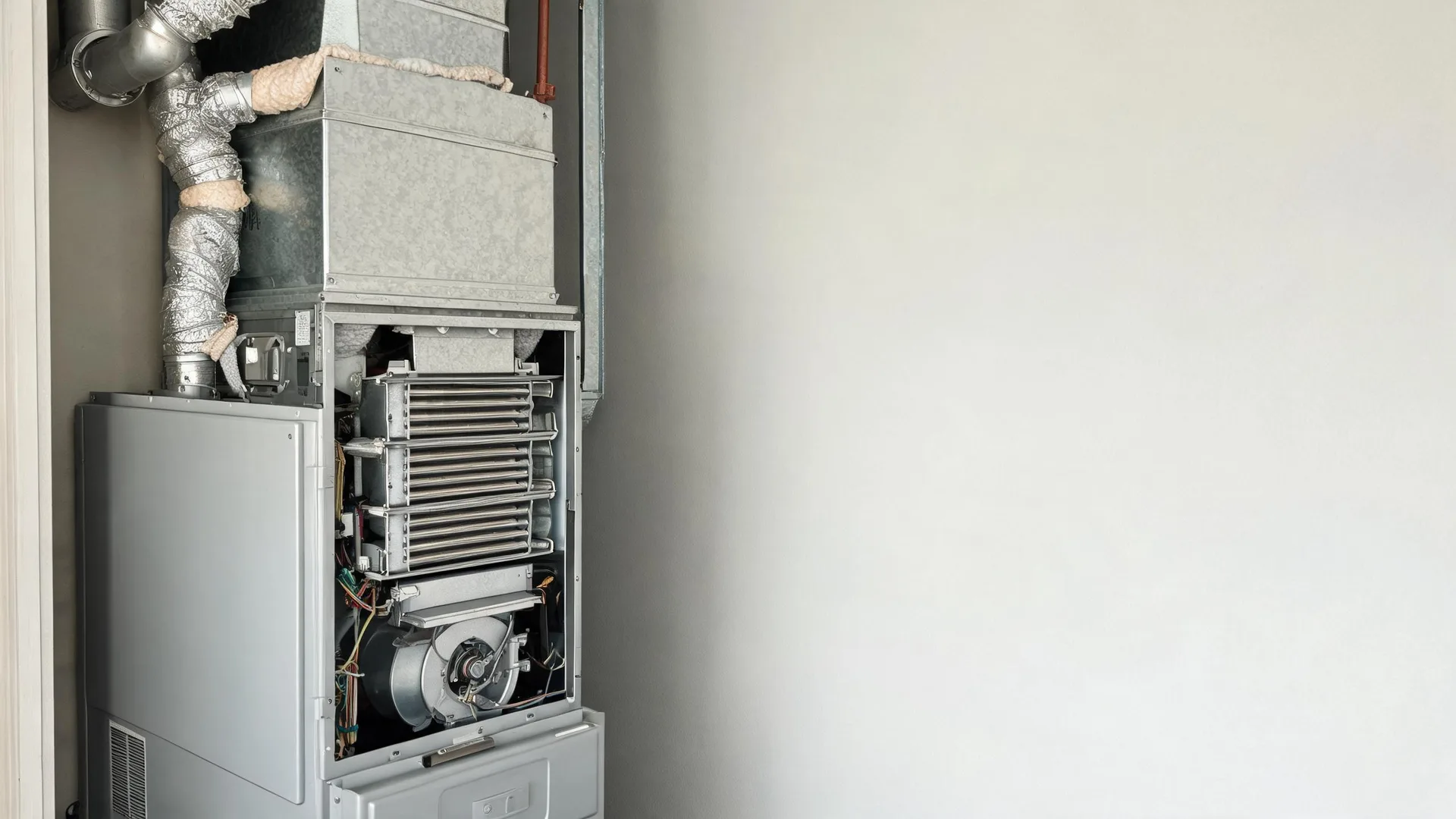
Don't open the burner compartment or touch the flame sensor or igniter. Don't reset the furnace more than once if it won't stay running, since a furnace that shuts itself off is usually protecting itself from something, and repeated resets can let it run with that problem still there. If you smell gas, don't flip any switches at all. Leave the house and call the gas company from outside.

An unfinished basement containing a gas furnace with ductwork in the foreground and miscellaneous stored items along the far concrete wall.

A new furnace would cut about $90 a year off heating for a typical Jackson County home.

  • A new high-efficiency furnace$430 a year
  • An older furnace$520 a year

Estimates for a typical Jackson County home, compared with an older unit built to the previous federal minimum, from EIA household energy data, Oklahoma fuel prices and NOAA climate normals. Your home will differ.

Repair makes sense when one part has failed and the heat exchanger is sound.

Replacement makes sense when the heat exchanger is cracked or the furnace keeps needing parts.

Repair and replacement come down to what's failing and what it sits inside of. A blower motor or an igniter is a contained part. It fails on its own, gets replaced, and the rest of the furnace doesn't care that it happened. A heat exchanger is different. It's the core the whole furnace is built around, so a crack there isn't really a repair question, it's a replacement question wearing a repair's clothes. The other thing worth weighing is pattern. One part failing after years of no trouble is just a part wearing out. A furnace that's had several different things go wrong in a short stretch is telling you the whole unit is reaching the end of its working life, even if each repair looks small and cheap on its own.