




A bare concrete basement containing a gray gas furnace with metal ductwork and a vertical flue pipe, lit by a single hanging bulb.

Furnace Repair in Anadarko, OK

Tell us about the job

Takes about a minute. No obligation.

RepairFurnace or heatingCaddo County, OK
Step 1 of 2

What ZIP code is the job in?

A furnace that's struggling usually tells you before it quits outright. The burner flame should burn steady and blue. If it's flickering, yellow, or sputtering, that's a sign the fuel isn't burning clean, and it's worth having someone look at it soon. Short cycling, where the furnace fires up, runs briefly, then shuts off before the house warms up, often points to a dirty flame sensor or a clogged filter choking the airflow. Listen for banging or scraping when it starts up or shuts down. Those sounds usually mean a cracked heat exchanger or a blower wheel that's come loose, and neither one gets better on its own. If the air coming out of the vents feels lukewarm instead of hot, or one room never seems to warm up like the rest, that's worth mentioning to whoever comes out to look at it.

6 months
November through April, your furnace is on duty
29°F
the average winter night it heats against
13 winter storms
in ten years, the nights a failure hurts most
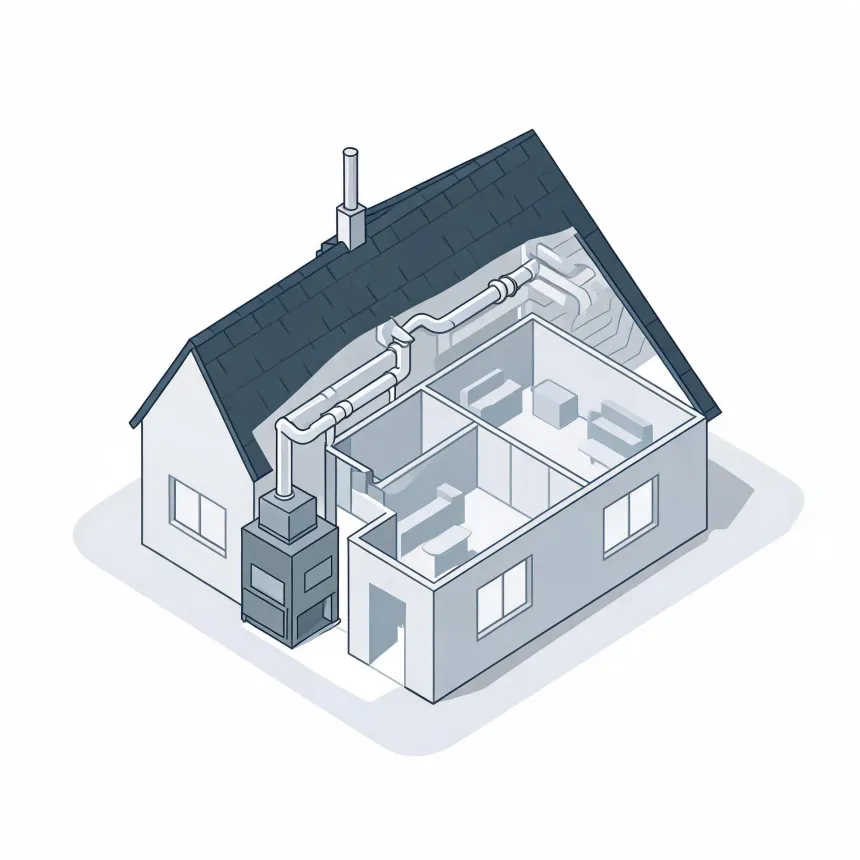
Isometric line illustration of a cutaway single-story house with a dark shingled roof, showing interior rooms and ductwork connected to a gray furnace unit with a flue pipe.
Your furnace works hardest from November through March.

NOAA nClimDiv, 1991–2020 normals

Half the homes in Caddo County were built in 1972 or earlier.

A furnace that old may be near the end of what it can do, so it's worth finding out how much life is left in it.

Furnace repair calls in Anadarko climb fast once November heat kicks on

Heat runs November through April
Winter nights average 29°F
13 winter storms from 2015 to 2024

A weak flame sensor signal or a bad igniter doesn't fix itself by running more cycles. Each short cycle puts the furnace through another cold start, and cold starts are what wear an igniter down in the first place. A furnace that keeps firing on a cracked heat exchanger is pushing combustion gas into the airstream every time it runs, so the longer it's left going, the more that gas moves through the house. A blower wheel that's come loose can keep turning for a while, but it's grinding against something it shouldn't be, and that usually ends with a motor that has to be replaced instead of a wheel that just needed to be reset. A weak draft from the inducer can let a little carbon monoxide spill back instead of venting out, and that risk doesn't go away because the furnace is still blowing warm air. The parts most worth stopping for are the ones you can't see failing. The ones you can see, like a lukewarm vent or a flame that's a little off color, are the furnace telling you before the part that matters most gets dragged into it.

Ask how much life it has left

If your system came with an older house, it may be near the end of its life. Ask how much life it has left before paying for a big repair.

Find a contractor
A man in a dark shirt, tan pants and cap walks up porch steps toward a navy blue front door, carrying a canvas tool bag filled with hand tools, beside a potted shrub in a blue planter.
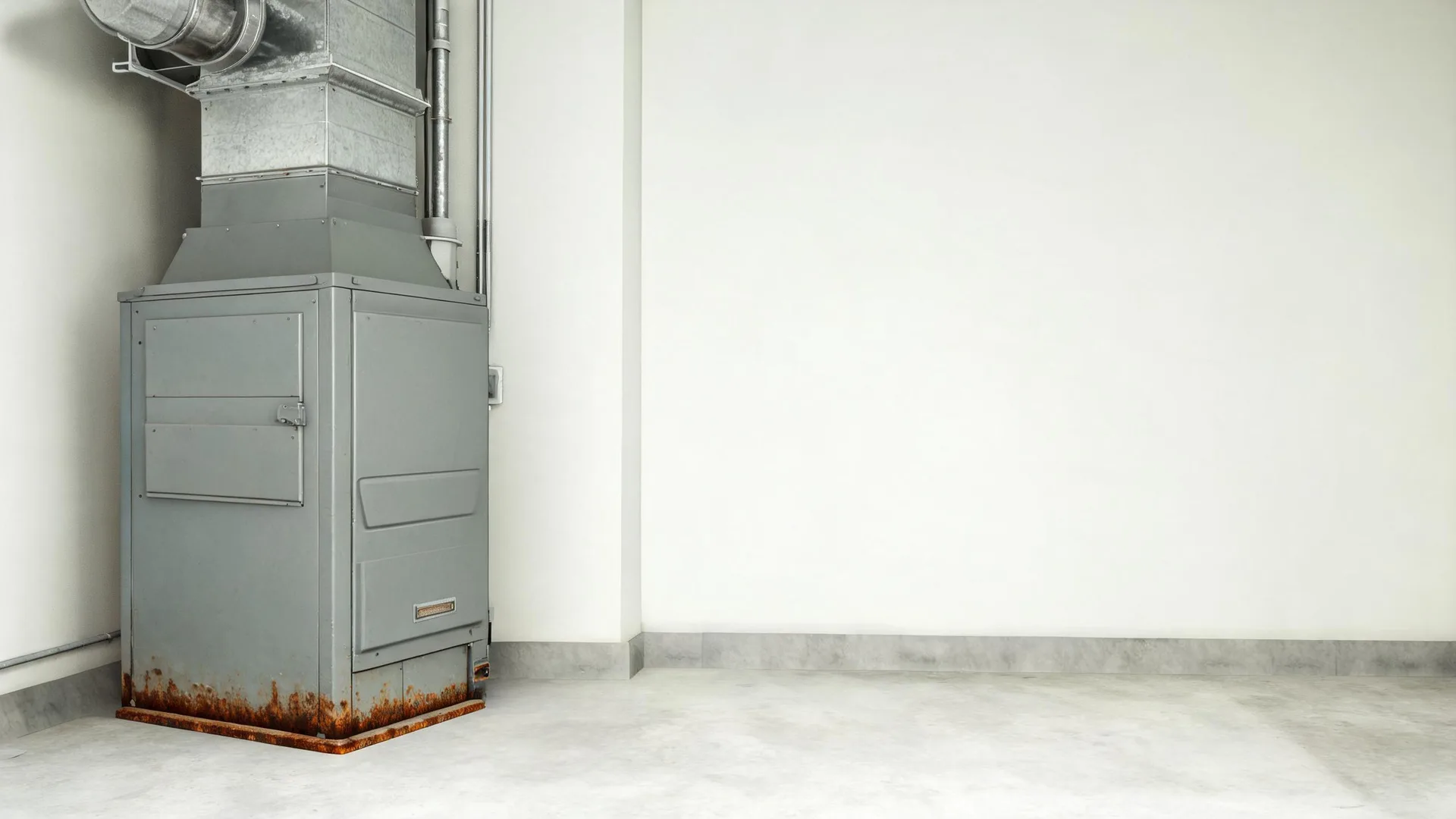
A gray residential gas furnace installed in an unfinished basement, connected to sheet-metal ductwork and PVC pipes.

How much is left in it

If this furnace came with the house, ask whoever looks at it how many years it has left. That answer should shape the decision as much as whatever is wrong with it today.

Check the filter and the thermostat first

Pull the filter and hold it up to a light. If you can't see through it, swap it. A clogged filter chokes airflow and can cause the burner to short cycle or the air to run lukewarm. While you're at it, check the thermostat is set to heat and the batteries aren't dead. These take a few minutes and rule out the simplest cause before anyone comes out.
Know what not to touch

Don't open the burner compartment or try to relight a pilot that's gone out on a furnace with electronic ignition, there isn't one. If the breaker for the furnace has tripped, you can reset it once, but if it trips again, leave it off and call. Resetting it repeatedly can hide a short that needs a tech to find.

A lot of furnace failures trace back to the same handful of parts. The igniter wears out from switching on and off hundreds of times over its life, and when it goes, the furnace won't light at all. The flame sensor coats over with a thin layer of residue and stops telling the control board that a flame is present, so the burner shuts off seconds after starting. Blower motors wear out at the bearings, and when they do, airflow drops off or the motor seizes and won't turn at all. A cracked heat exchanger is the one that matters most, since it can let combustion gas mix into the air moving through the house, and that furnace needs to stay off until it's replaced. Most of these don't happen suddenly. They show up first as a hesitation at startup, a weaker flame, or a cycle that ends too soon, and catching that early is what keeps a worn part from taking the rest of the furnace down with it.

A diagnostic starts before any panel comes off. Whoever shows up should ask what the furnace was doing, whether it was a sound, a smell, a short cycle, or no heat at all, since that points to a different part before any tool comes out. From there they'll check the flame itself, pull and inspect the flame sensor, and test the igniter for resistance rather than just looking at it. The blower gets checked too, both the motor and the wheel, since a wheel that's come loose can sound like something worse. If the furnace has a draft inducer, they'll confirm it's pulling exhaust properly, since a weak draft can trip a safety switch and shut the whole system down before it ever gets to the burner. Somewhere in there they'll also check the heat exchanger for cracks, because that's the one finding that changes everything else about the visit.