A brick single-story house with warm landscape and window lighting photographed at dusk on a residential street lined with mature trees.

Furnace Repair in Broken Arrow, OK

Tell us about the job

Takes about a minute. No obligation.

RepairFurnace or heatingWagoner County, OK
Step 1 of 2

What ZIP code is the job in?

What the repair history says

A furnace that has needed a few service calls over its life is still worth fixing in most cases, especially for a cracked hose, a bad igniter or a failed control board. Those are separate parts failing on their own, not the furnace itself giving out. What changes the math is the heat exchanger. Once that cracks, the whole unit is done, because it's not sold as a replaceable part on its own.

What it means for this call

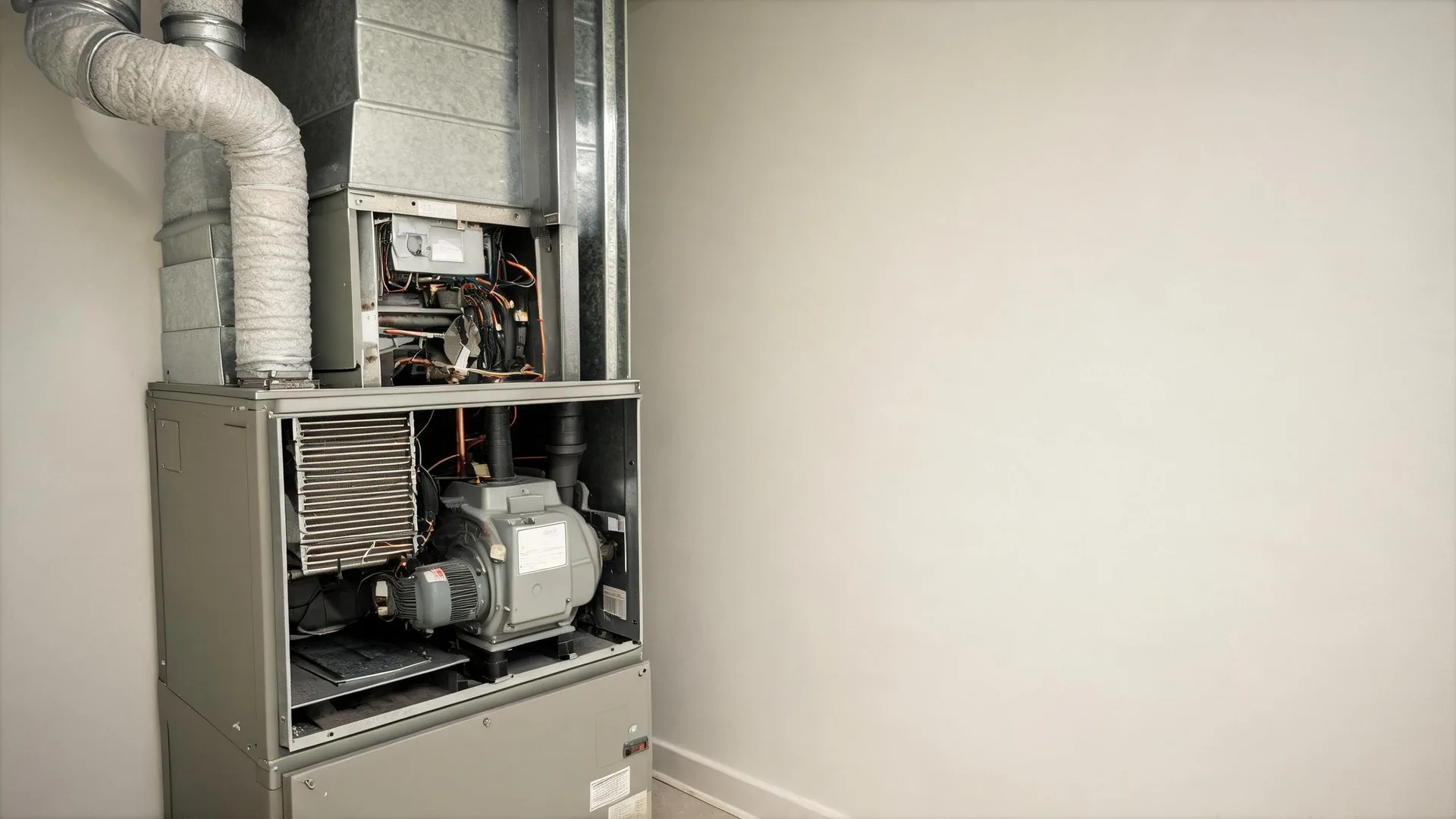
If the furnace is short cycling, blowing cold air, or tripping its limit switch, a tech can usually trace it to one part and quote the fix on the spot. Get the furnace looked at before deciding anything. A tech who's inside the cabinet can tell you whether this is a part swap or whether the heat exchanger is the real problem, and that's not something to guess at from the symptoms alone.

7 months
October through April, your furnace is on duty
30°F
the average winter night it heats against
60%
of homes here heat with gas, so most furnaces here burn gas
8 winter storms
in ten years, the nights a failure hurts most
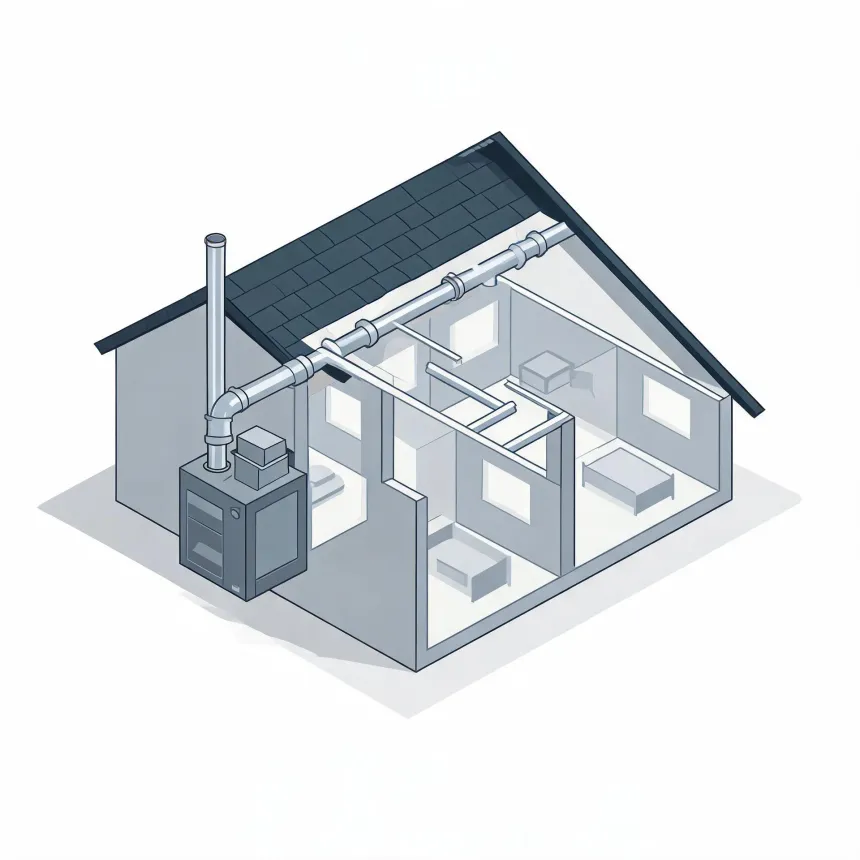
Isometric cutaway illustration of a small house showing interior rooms, ductwork running through the attic, and a furnace unit with a vertical flue pipe on the exterior wall.
Your furnace works hardest from November through March.

NOAA nClimDiv, 1991–2020 normals

Check the thermostat is set to heat and the batteries are good before anything else.

A dead thermostat screen looks exactly like a dead furnace, and it takes a minute to rule out first.

Half the furnaces in Wagoner County are newer than you'd think

Half the homes here were built by 1995
Heat runs October through April
Winter nights average 30°F
Seven months of work, not a full yearFurnace here runs October through April, not all year.

Furnaces here sit idle from spring until October, then get asked to run for hours at a stretch. A weak igniter or a cracked hose can pass a quick check while the house is still warm, and only fail once the system has to hold heat overnight. That's usually what the first cold week in October looks like here, seven months of heat starting all at once. September is the month to have it looked at, while the house doesn't need the furnace yet and there's still time to fix what a quick check would miss.

Get it fixed, not replaced

Half the houses in Wagoner County were built in 1995 or later. If yours is one of them, the furnace is probably still within its working life, and the part failing now is a separate repair, not a sign the whole unit is done. Have it looked at and get a real answer before anyone talks replacement.

Find a contractor
A gray high-efficiency gas furnace installed in an unfinished basement, surrounded by gas lines, a condensate drain, and sheet-metal ductwork.

Running it longer doesn't fix it, it spreads it

A cracked hose or a sticking limit switch doesn't stay the same size problem if the furnace keeps firing through it. Heat where there shouldn't be heat, or airflow that's already restricted, gets worse a little more each cycle. A limit switch that trips once from a dirty filter will trip again sooner the next time, because the blower is working against the same restriction plus whatever the last cycle added to it. A cracked heat exchanger is the clearest case. Small, it leaks combustion gas into the airflow only under certain conditions. Run it enough cycles and the crack grows with the metal expanding and contracting each time, until it's leaking all the time instead of sometimes. None of this is a reason to shut the furnace off and wait. It's a reason to get the part looked at while it's still one part, before it takes the blower motor or the exchanger down with it.

Most failures are one part, not the whole unit

An igniter wears out from repeated heating and cooling every time it fires. A flame sensor coats with residue and stops reading the flame. A draft inducer motor's bearings wear and it gets noisy or quits. A control board fails from age or from a power surge. Each of these is its own part, replaced on its own, and one failing doesn't mean the others are close behind.

The symptom usually points to the part

A furnace that clicks but won't light is often the igniter or the flame sensor. One that starts then shuts off partway through a cycle is usually tripping a limit switch, often from restricted airflow. One that won't call for heat at all can be the control board or a loose connection at the thermostat wire. A tech can narrow it down fast once the cabinet is open, because each failure leaves its own kind of trail.

An unfinished basement containing a forced-air furnace with metal ductwork, exposed wooden ceiling joists, a hanging Edison bulb, and bare concrete floors.

A new furnace would cut about $110 a year off heating for a typical Wagoner County home.

  • A new high-efficiency furnace$470 a year
  • An older furnace$580 a year

Estimates for a typical Wagoner County home, compared with an older unit built to the previous federal minimum, from EIA household energy data, Oklahoma fuel prices and NOAA climate normals. Your home will differ.

Repair makes sense when one part has failed and the heat exchanger is sound.

Replacement makes sense when the heat exchanger is cracked or the furnace keeps needing parts.

A diagnostic visit starts before the cabinet ever opens. A tech will ask when the trouble started and what the furnace does, whether it tries to light and fails, lights and shuts off, or never calls for heat at all. Then the cover comes off and the burners, igniter and flame sensor get a direct look, since a cracked or coated part usually shows itself to the eye. Wiring connections get checked at the control board, because a loose one can mimic a dead part that isn't actually bad. If the furnace runs, a tech will watch it through a full cycle rather than stop at the first sign of a flame, since some failures only show up once the blower kicks on or the cycle runs long. The last check is the heat exchanger, because everything else can be sound and that one part still decides whether the furnace gets fixed or replaced.