


An unfinished basement containing a forced-air furnace with metal ductwork, exposed wooden ceiling joists, a hanging Edison bulb, and bare concrete floors.

Furnace Repair in Hugo, OK

Tell us about the job

Takes about a minute. No obligation.

RepairFurnace or heatingChoctaw County, OK
Step 1 of 2

What ZIP code is the job in?

Half the homes in Choctaw County were built in 1982 or later. That's not old for a house, and the furnace in it may not be old either, especially if it was swapped out at some point since. A furnace that age still has plenty of working life in it. When something goes wrong, a repair is usually what gets it running again, not a sign the whole system is done. Worth finding out what's actually broken before you think about replacing anything.

5 months
November through March, your furnace is on duty
33°F
the average winter night it heats against
3 winter storms
in ten years, the nights a failure hurts most
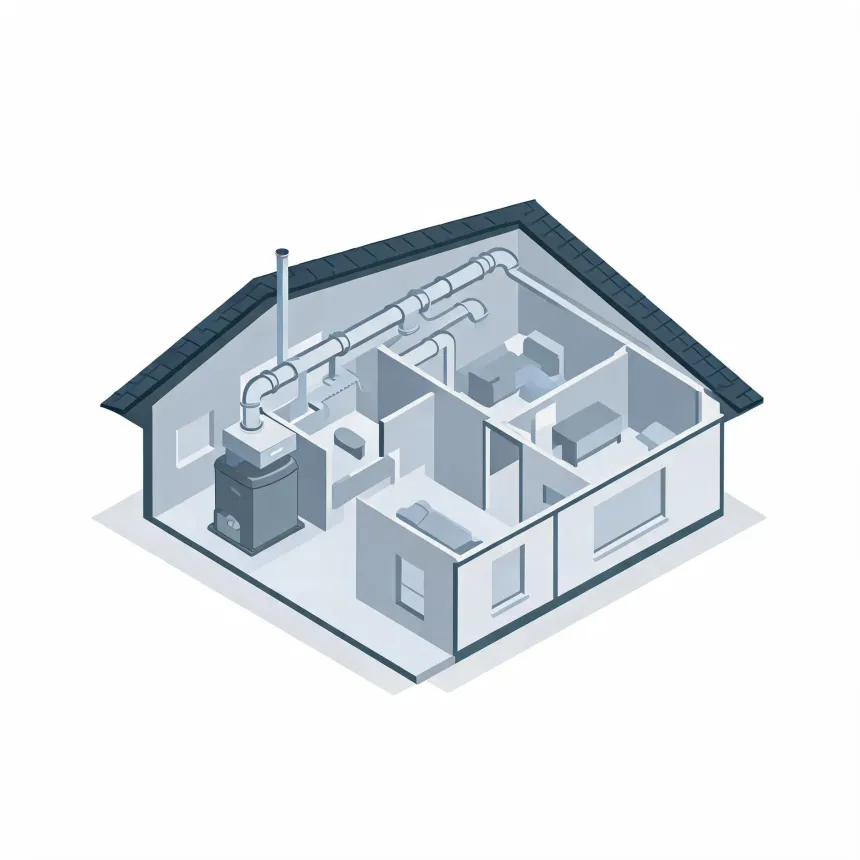
Isometric cutaway illustration of a single-story house showing interior rooms, ductwork running along the ceiling, a flue pipe through the roof, and a dark furnace unit in one corner.
Your furnace works hardest from November through February.

NOAA nClimDiv, 1991–2020 normals

A furnace in Choctaw County only has to run about five months a year, November through March.

A furnace that sits idle most of the year usually still has the life left in it to be worth repairing.

October is worth paying attention to here. That's the month before Choctaw County furnaces start up for the season, and it's a good time to catch a weak part before it has to carry a full load. Once November hits and the furnace is running every day, anything that was already marginal tends to show itself fast, often in the first cold snap. If your furnace is acting up right at the start of the season, that's not unusual. It just means something was already worn and the season found it.

Find out what's broken before you write it off

Get the furnace looked at before you decide it's done. In a newer house, there's a good chance the system still has years in it, and most problems come down to one worn part, not a reason to replace the whole thing.

Find a contractor
A man in a faded olive work shirt and dark trousers climbs porch steps toward a navy front door, carrying a green canvas tool bag in his right hand, with a potted shrub in a blue planter beside the door.
A gas furnace with attached ductwork, gas piping, and condensate lines installed in a concrete-block basement.

A short season, not a worn-out machine

Overnight lows average 33 degrees through December, January and February, so when the furnace is on, it has real work to do. But that stretch is short. Once March ends, the furnace sits until November. A part that fails now failed after a few months of use, not years of hard running, and that's a repair worth making.

A cracked heat exchanger gets worse with every cycle

A small crack in the heat exchanger flexes a little wider each time the burner fires and the metal heats up, then cools down again when the cycle ends. Left alone, that crack can open enough to let exhaust gas mix with the air moving through the house. Shutting the furnace off as soon as you notice a problem, rather than running it another week to see, keeps a bad part from becoming a dangerous one.
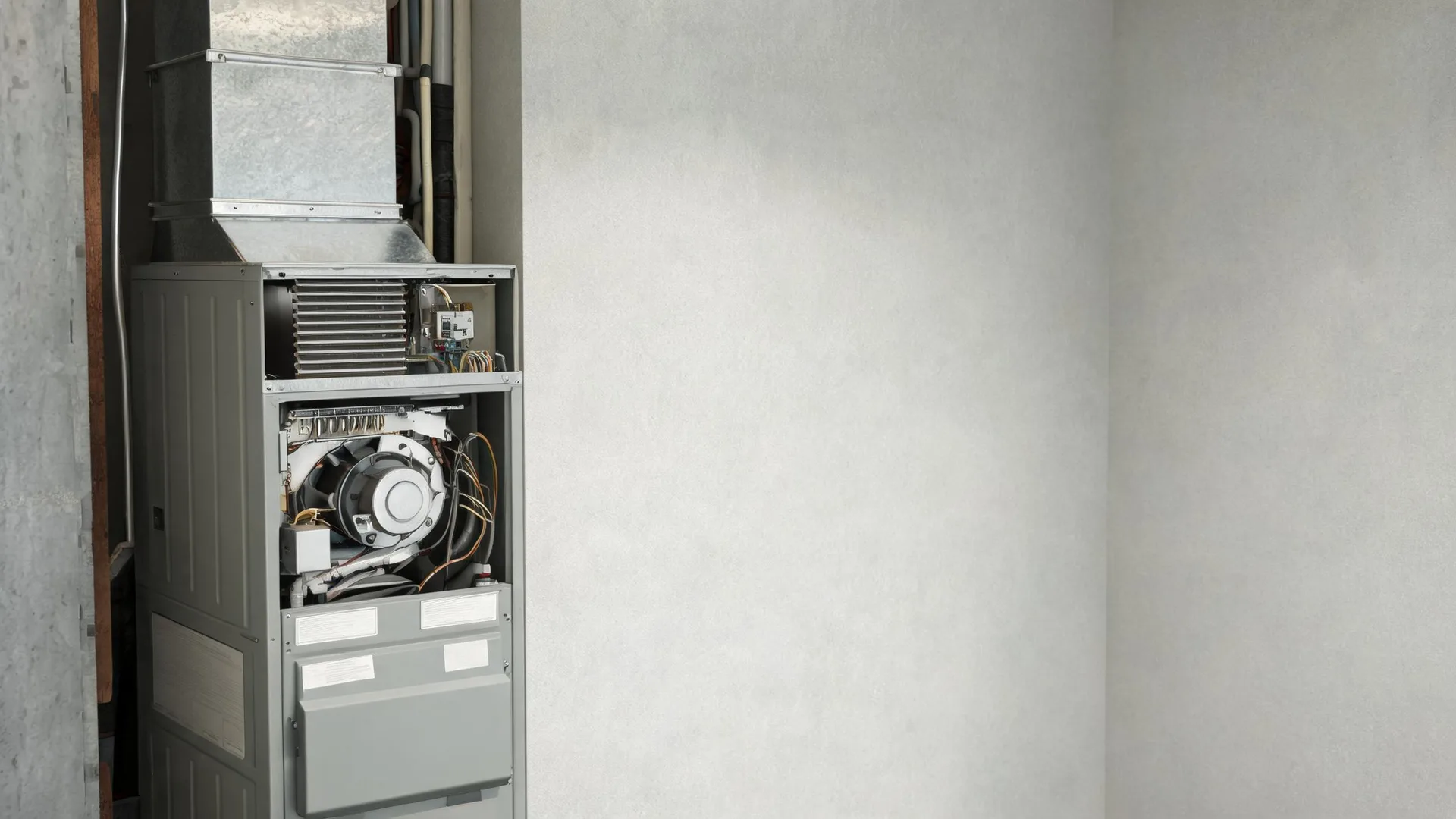
A failing blower motor can take other parts with it

A blower motor that is starting to fail draws more current to push the same air, and it runs hotter than a healthy motor would. Keep it running and that extra heat can trip the limit switch over and over, or burn out the motor windings for good. What might have been a motor repair turns into a motor replacement, and sometimes a control board too, if the motor keeps straining the rest of the furnace along with it.

A furnace usually tells you something is wrong before it quits outright. It might take a few tries to light instead of catching right away. The burner flame might show yellow or flicker instead of burning steady blue. Air coming out of the vents can feel cooler than it used to, like the furnace is running but not keeping up. Some furnaces start making a noise they didn't make before, a rattle, a screech on startup, or a boom when the burner lights. A furnace that shuts off before the house reaches the temperature on the thermostat, or won't stay running for more than a few minutes at a time, is worth having looked at rather than waited out.

A diagnostic starts with the thermostat and works back from there, checking that the signal calling for heat is actually reaching the furnace before anything gets opened up. From there it's the burner and ignition first, since a furnace that won't light or won't stay lit usually shows its cause right there, a dirty flame sensor or a failed igniter. The tech will pull the panel and look at the heat exchanger too, since a crack there isn't always something you can hear or smell. Airflow gets checked on both sides, the filter and the blower wheel, because a furnace starved for air behaves a lot like one with a bad control board. Pressure switches and limit switches get tested under power, not just looked at, since a switch can look fine and still fail to close. Most of this gets done without pulling the furnace apart, just opening the cabinet and testing with meters while it runs.