A single-story brick house with a two-car garage photographed at dusk, with interior lights glowing through the windows and trees on either side.

Furnace Repair in Norman, OK

Tell us about the job

Takes about a minute. No obligation.

RepairFurnace or heatingCleveland County, OK
Step 1 of 2

What ZIP code is the job in?

Check the thermostat and the filter first

Make sure the thermostat is set to heat and the setpoint is actually above room temperature. Then look at the filter. A filter packed with dust chokes airflow, and a furnace starved for air will often shut itself down to protect the heat exchanger. If the filter is gray and stiff, swap it before you do anything else.

Know what tells you to stop and call

Go to the breaker panel and make sure the furnace circuit hasn't tripped, and check that the gas valve is turned to on. If you smell gas, or the breaker trips again right after you reset it, stop there. Those aren't jobs to keep pushing on at home, and a furnace that trips its breaker repeatedly has a fault that a reset won't fix.

6 months
November through April, your furnace is on duty
30°F
the average winter night it heats against
56%
of homes here heat with gas, so most furnaces here burn gas
10 winter storms
in ten years, the nights a failure hurts most
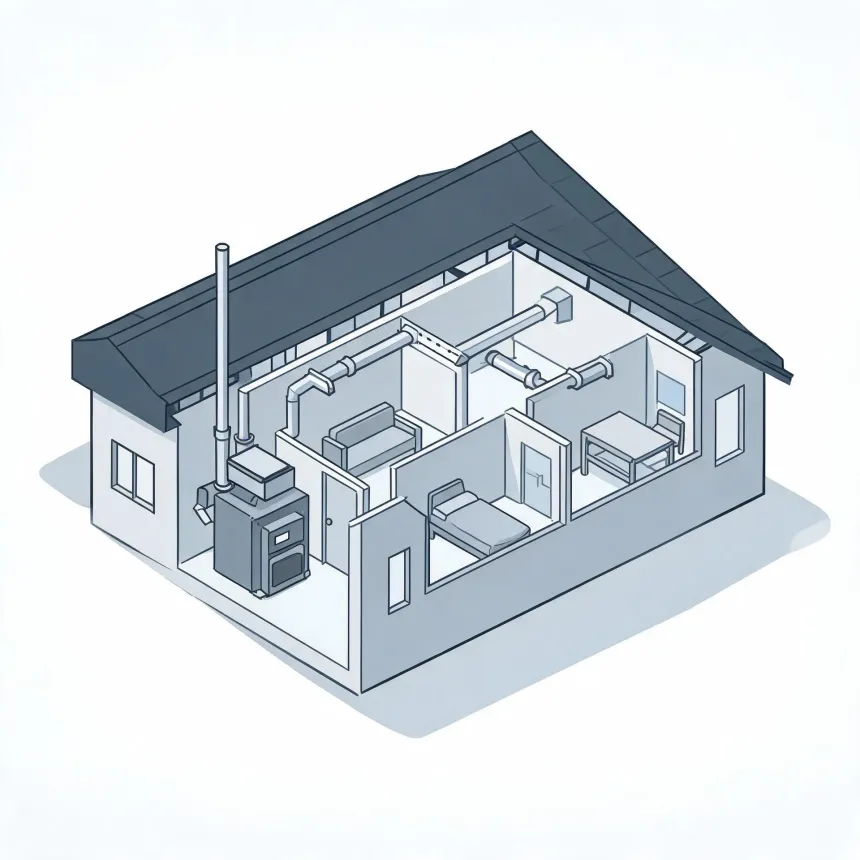
Isometric cutaway illustration of a single-story house showing interior rooms with furniture, overhead ducting, a flue pipe, and a furnace unit against an interior wall.
Your furnace works hardest from November through March.

NOAA nClimDiv, 1991–2020 normals

Norman furnaces only run about six months a year, November through April.

Six months of moderate work is easy on a furnace, so a repair usually brings it back to full use, not just a patch.

Furnace trouble tends to start in November, the first time the heat has run since April

Heat runs November through April
Winter nights average 30°F
10 winter storms from 2015 to 2024
Half of Cleveland County built since 1990A furnace in a newer house usually has years left to give back for a repair.

Cleveland County logs a lot of severe weather, 481 events between 2015 and 2024, and hail is the biggest part of it. An outdoor vent or intake can take a hit from hail or flying debris without the furnace failing right away. If a storm has come through recently, it's worth having the outside of the system looked at even if the furnace is still running fine. Oklahoma also has one of the higher rates of extended power outages in the country, a quarter of households went at least a full day without one in 2024, and a furnace won't run without power regardless of what shape the gas side is in.

A newer furnace is worth fixing

If your house was built in 1990 or later, the furnace likely has plenty of working life left in it. Get a repair quote before you look at replacement.

Find a contractor
A man in a gray t-shirt and tan work pants, seen from behind, climbs concrete steps toward a dark blue front door while carrying a canvas tool bag, with a potted shrub beside the entry.
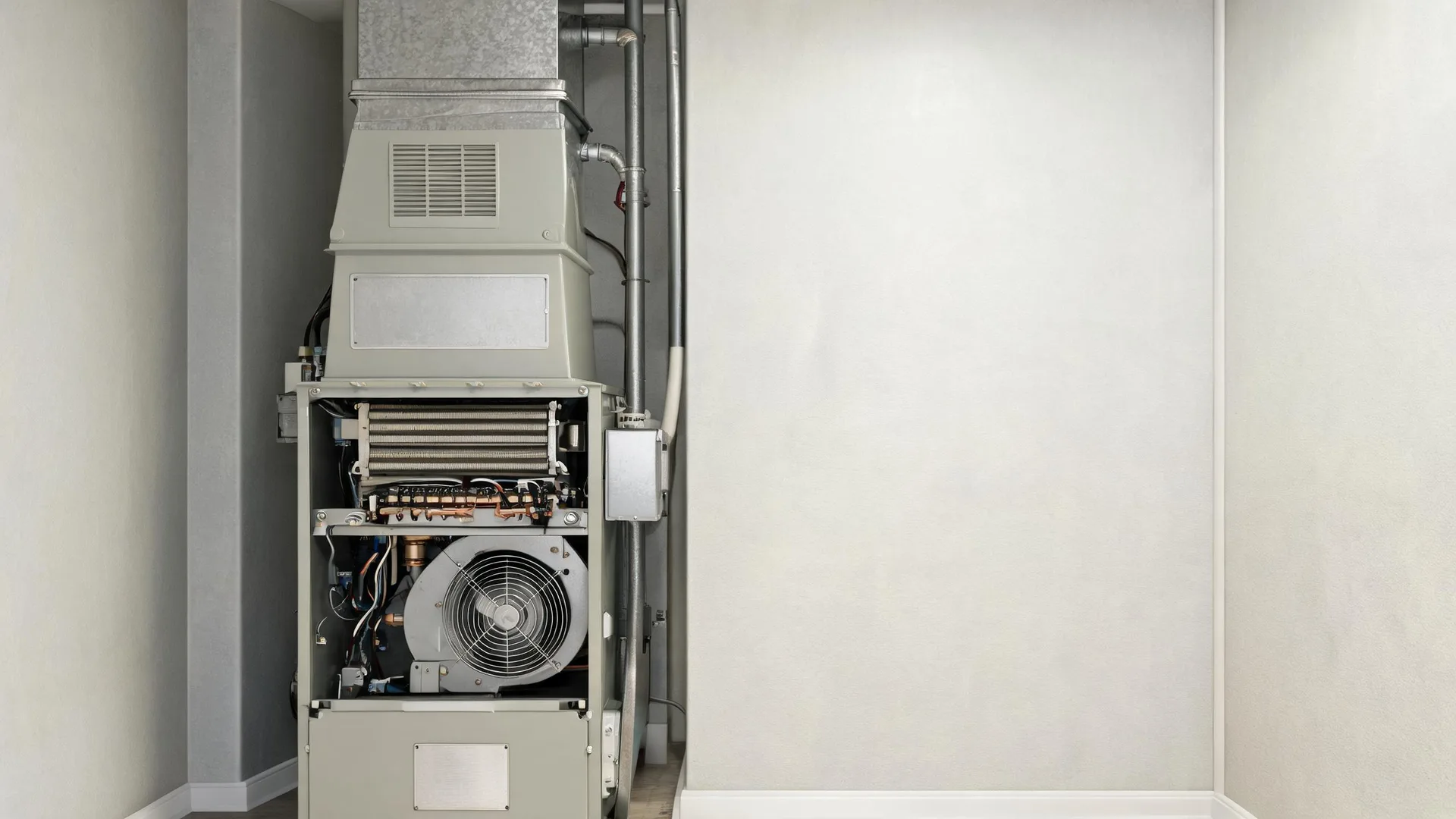
A gray gas furnace with attached ductwork and piping installed in an unfinished concrete basement.

Light duty, most of the year

Six months of work a year gives a furnace time to sit idle, and that's when small problems get noticed instead of ignored. Watch this one through a full night and it's running a modest schedule, not grinding nonstop. That's the case for calling about a repair now rather than waiting to see if it gets worse. A furnace that isn't under constant load tends to respond well to a fix, so there's little reason to let a strange noise or a short cycle go through another cold night untouched.

Short cycling wears out the parts that start it

A furnace that fires up, runs a couple minutes, then quits before the house warms up is short cycling. Usually it's a flame sensor coated in residue, so the control board cuts fuel because it can't confirm the flame is still lit. Every cycle like that adds wear to the igniter and the inducer motor, so a sensor that just needs cleaning turns into an igniter that needs replacing if it waits too long.

Noise tells you where to look

A boom at startup usually means gas is building up for a second before it catches, often a dirty burner. A screech points to the inducer motor bearings. A rhythmic clicking after the furnace shuts off is normal, that's metal cooling. The furnace that stays dead silent and just won't start at all is a different problem, usually the igniter or a safety switch, not the burners or the motor.

An unfinished basement interior featuring a large metal furnace unit, exposed ceiling joists, concrete walls, and scattered boxes and cables on the floor.

A new furnace would cut about $100 a year off heating for a typical Cleveland County home.

  • A new high-efficiency furnace$460 a year
  • An older furnace$560 a year

Estimates for a typical Cleveland County home, compared with an older unit built to the previous federal minimum, from EIA household energy data, Oklahoma fuel prices and NOAA climate normals. Your home will differ.

Repair makes sense when one part has failed and the heat exchanger is sound.

Replacement makes sense when the heat exchanger is cracked or the furnace keeps needing parts.

Most furnace problems come down to one part failing, and most parts can be replaced without touching the rest of the furnace. An igniter, a flame sensor, a blower motor, a control board, each one fails on its own schedule and gets swapped on its own. The one part that changes the answer is the heat exchanger. A crack there lets combustion gas mix into the air moving through the house, and that's not something a tech patches and moves on from. Everything else, a furnace that's been run lightly and looked after tends to take a repair well and keep going. So the question worth asking isn't how old the furnace is, it's which part actually failed.