




A wooden privacy fence runs along the left side of a dry grass field, with a row of single-story brick houses with dark shingled roofs on the right and tree branches overhead.

Furnace Repair in Okmulgee, OK

Tell us about the job

Takes about a minute. No obligation.

RepairFurnace or heatingOkmulgee County, OK
Step 1 of 2

What ZIP code is the job in?

Okmulgee County saw 122 severe weather events between 2015 and 2024. Damaging wind came through 44 times, hail 57 times, and 10 tornadoes touched down in that stretch. A furnace doesn't take a direct hit from any of that, but the vents, the gas line, and the power supply it depends on do. A statewide survey found a quarter of Oklahoma households lost power for 24 hours or more in 2024. A gas furnace still needs electricity to run the igniter and blower, so a long outage shuts it down no matter how much fuel is behind it. If a storm has come through your area, it's worth having the furnace checked even if it still lights.

7 months
October through April, your furnace is on duty
30°F
the average winter night it heats against
11 winter storms
in ten years, the nights a failure hurts most
Isometric grayscale illustration of a cutaway single-story house showing interior rooms with furniture, a furnace unit connected to ductwork and a tall vertical flue pipe extending above the roof.
Your furnace works hardest from November through March.

NOAA nClimDiv, 1991–2020 normals

A furnace that won't start can mean a tripped breaker or a switched-off wall switch, not a failed part.

Check the breaker and the switch on the furnace housing before you call anyone out.

Seven months of work a year is a light load for a furnace

Heat runs October through April
Winter nights average 30°F
11 winter storms from 2015 to 2024

After a storm, check the furnace before you need it

If a storm has come through since your furnace last ran right, get it looked at before the cold settles in for good. A unit that's been through wind or hail can still light every time and still have a problem waiting in the vents or the power supply behind it.

Find a contractor
A gray residential gas furnace installed in an unfinished basement, connected to sheet-metal ductwork and PVC pipes.

What a failing furnace sounds and feels like

A furnace usually tells on itself before it quits outright. Short cycling is one of the clearest signs, where the burner fires, runs for a minute or two, and shuts off again before the house warms up. That points to a dirty flame sensor, a clogged filter, or a heat exchanger tripping its limit switch from overheating. A burner that won't stay lit, or lights with a pop instead of a steady whoosh, usually means the igniter or the gas valve is on its way out. Cold air blowing from the vents while the unit runs points to the blower motor or the ductwork, not the burner itself. A grinding or squealing sound from the cabinet is a bearing or motor mount wearing down, and it won't fix itself. Any smell of gas, or soot around the burner compartment, means shutting the furnace off and getting it looked at before running it again. None of these mean the furnace is done. Most of them are one part failing, and a furnace that's otherwise sound is worth repairing rather than replacing.

Most failures are one part, not the whole unit

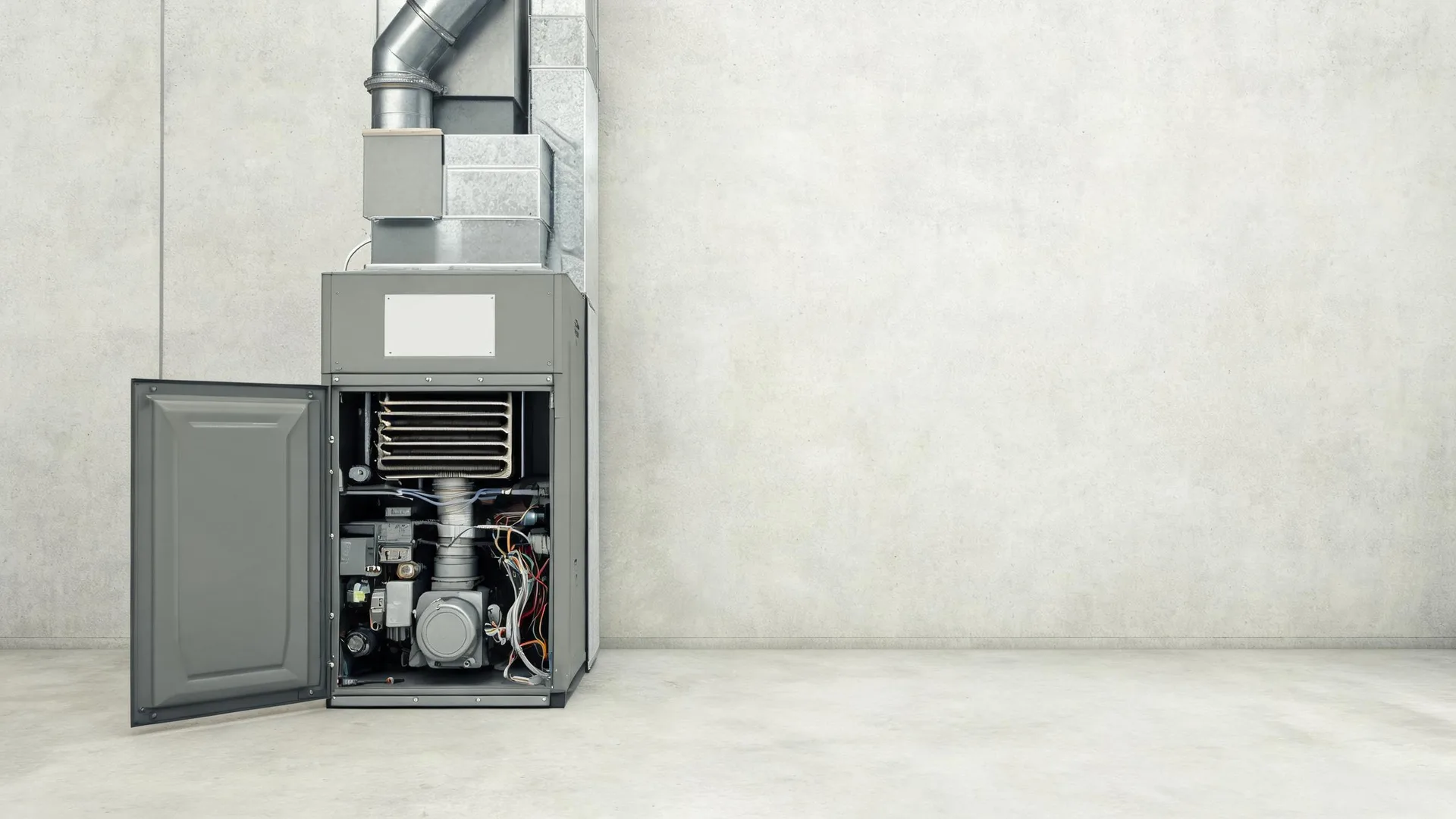
A furnace is a chain of parts that each do one job: the igniter lights the gas, the flame sensor confirms it's burning, the inducer motor clears the exhaust, the blower pushes the heat through the house. When a furnace quits, it's almost always because one of these failed, not because the system wore out all at once. Igniters crack with age and heat cycling. Flame sensors coat over with a film that stops them from reading the flame. Capacitors weaken and can no longer start the blower motor. Each of these is a single part doing one job, and failing on its own.

What that means for the repair call

Knowing which part tends to fail, and why, is what makes a repair visit quick instead of a guessing game. A tech who hears a furnace short cycle already suspects the flame sensor or a limit switch before opening the cabinet. One that won't light at all points straight at the igniter or the gas valve. Diagnosing a furnace is mostly a process of matching the symptom to the part behind it, then confirming it with a meter or a visual check. That's why a furnace acting up is a repair question first, not a replacement question.

A gray forced-air furnace with metal ductwork stands in an unfinished basement with exposed wooden joists, concrete walls, and a single hanging light bulb.

A new furnace would cut about $110 a year off heating for a typical Okmulgee County home.

  • A new high-efficiency furnace$460 a year
  • An older furnace$570 a year

Estimates for a typical Okmulgee County home, compared with an older unit built to the previous federal minimum, from EIA household energy data, Oklahoma fuel prices and NOAA climate normals. Your home will differ.

Repair makes sense when one part has failed and the heat exchanger is sound.

Replacement makes sense when the heat exchanger is cracked or the furnace keeps needing parts.

At some point a repair stops being worth it, and the heat exchanger is usually where that line sits. It's the part that can't be swapped out on its own, since replacing it costs close to what a new furnace would. Cracked or corroded, it's a sign the unit has reached the end of its life rather than hit a rough patch. Everything else on a furnace gets replaced on its own: a motor, a control board, a gas valve. If the exchanger is sound and something else failed, repair is the right call almost every time. Age by itself isn't the deciding factor. A furnace that's had one or two things go wrong over the years, each fixed as it came up, is often in better shape than one that's never needed a thing and is now failing for the first time.