An unfinished basement featuring a forced-air furnace, exposed wooden ceiling joists, bare concrete walls, and miscellaneous items including cardboard boxes and coiled cables on the floor.

Furnace Repair in Pauls Valley, OK

Tell us about the job

Takes about a minute. No obligation.

RepairFurnace or heatingGarvin County, OK
Step 1 of 2

What ZIP code is the job in?

A cracked heat exchanger starts small

A furnace that's short cycling or struggling to light is already working harder than it should to heat the house. Run it in that state long enough and the heat exchanger can crack under the stress. A cracked exchanger isn't something a technician patches. It means a new furnace.

The noise won't fix itself

A furnace making a new noise or tripping its limit switch is telling you something is already wrong. It gets looked at either now, while the cause is still one worn part, or later, after that part fails completely and takes the furnace down on a cold morning.

6 months
November through April, your furnace is on duty
31°F
the average winter night it heats against
7 winter storms
in ten years, the nights a failure hurts most
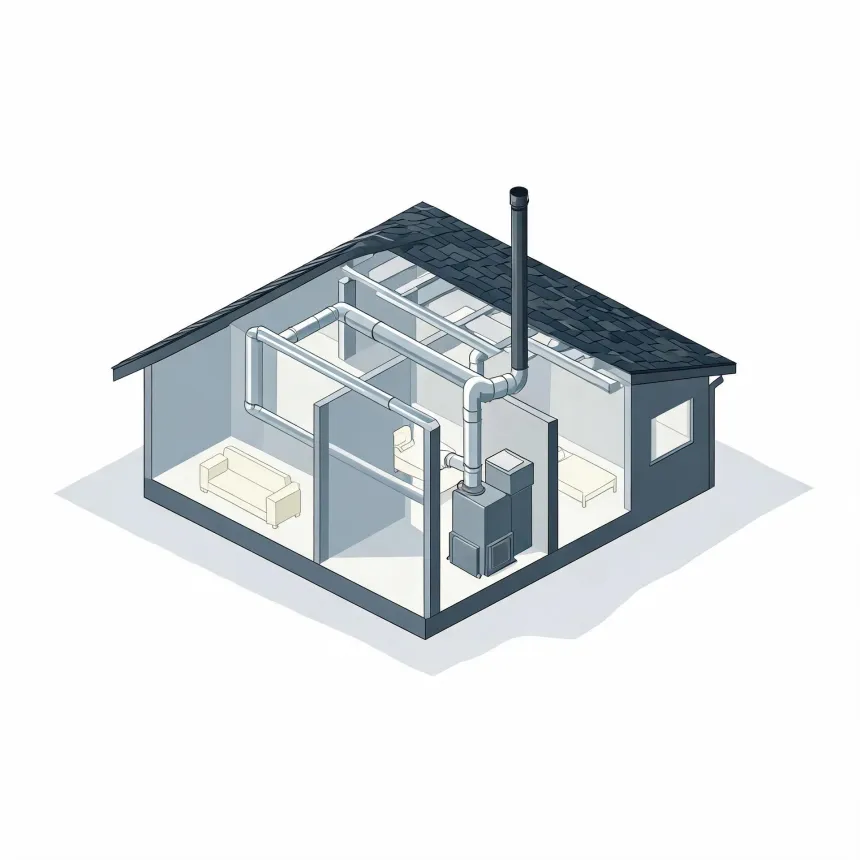
Isometric cutaway illustration of a small single-story house showing a furnace with a flue pipe through the roof and ducting running to rooms containing a sofa, chair and bed.
Your furnace works hardest from November through March.

NOAA nClimDiv, 1991–2020 normals

Furnaces in Pauls Valley go back on in November.

A part that was already weak from last season tends to fail in the first cold weeks, not in the middle of winter.

Six months of heat a year is a light enough job that most problems are a part, not a dying furnace.

Heat runs November through April
Winter nights average 31°F
Climate zone 3A

Half the houses in Garvin County were built in 1973 or earlier. If your furnace came with a house that age, it's probably not the original unit, it's likely the second or third one in that spot, and nobody wrote down what year it went in. A furnace that's been running a long time doesn't owe you much more. At some point a repair just buys a few more months before the next part goes. Worth asking the technician straight out how many years they'd give it before you pay for anything big.

Get it looked at early

Problems tend to show up in the first weeks of the season, when the load hits a part that was already weak.

Find a contractor
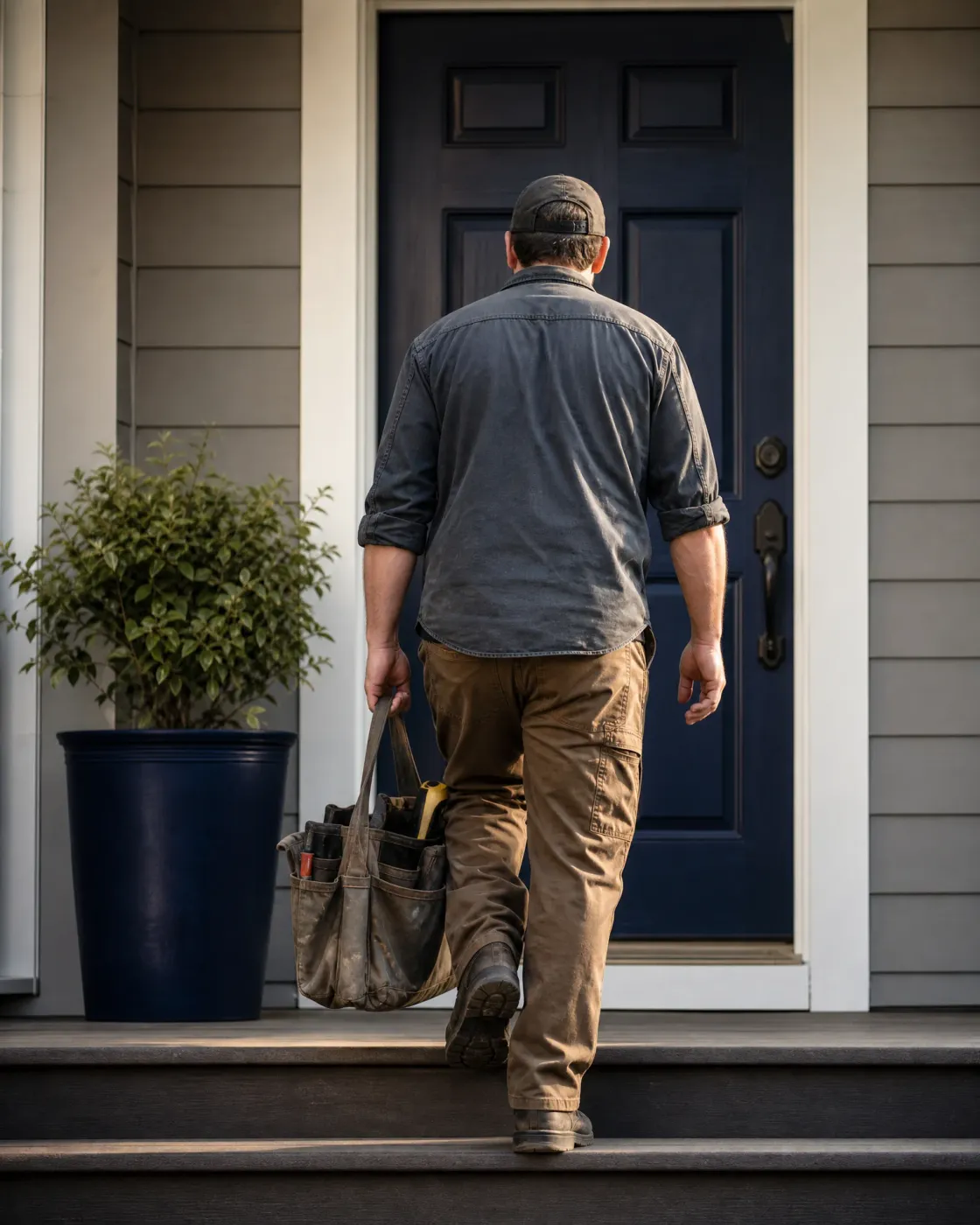
A man in a cap, gray shirt and brown work pants, seen from behind, carries a canvas tool bag up steps toward a dark navy front door beside a potted shrub.
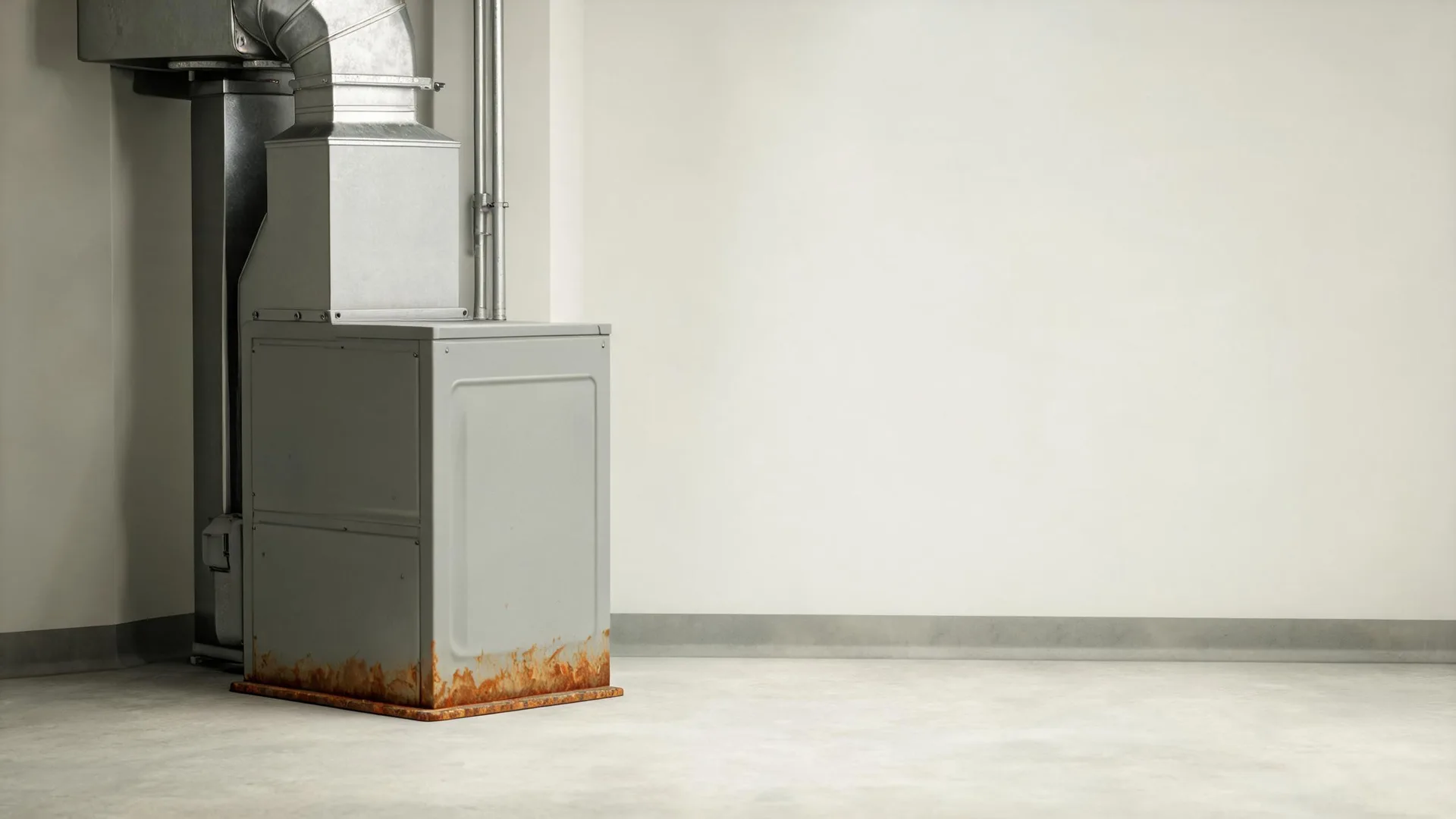
A gray residential gas furnace installed in an unfinished basement, surrounded by ductwork, a metal flue pipe, and a gas supply line.

What actually happens when the panel comes off

A diagnostic starts before any panel comes off. The technician asks what the furnace was doing, what it sounded like, whether it quit all at once or got worse over a few tries. Then the cover comes off and the furnace gets watched through a full cycle, call for heat to ignition to the blower kicking in, because a lot of faults only show up in that sequence. Along the way they're reading voltage at the board, checking the flame sensor's signal, watching the flame itself for color and shape. A weak flame or a short cycle points at something specific, not just a swap-and-hope. Nothing gets replaced until the actual fault is found, since different problems can cause the same symptom and guessing wrong just means doing it over.

Most calls are the ignition system

A furnace that won't light is usually down to the igniter, the flame sensor, or the flame itself not being proven. The igniter goes brittle with age and cracks. The flame sensor builds up a film from normal combustion and stops reading the flame, so the control board shuts the gas off as a safety measure. Neither points to anything wrong with the furnace itself.

The blower motor wears on its own schedule

The blower runs every time the furnace calls for heat, far more than the burners do, so its bearings and windings put in more hours than any other part. A motor that whines before it starts, or hums without turning, is close to the end. A failing capacitor can cause the same symptoms, so that gets checked first, before anyone assumes the motor itself is done.

Before anyone comes out, there are a few things worth checking yourself. Look at the thermostat first. Make sure it's set to heat, not just fan, and that the set temperature is actually above room temperature. If the furnace won't start at all, go check the breaker it's on, and the switch that looks like a light switch near the furnace itself, since that cuts power to it and gets bumped off more often than people expect. If you've got a gas furnace, make sure the gas valve is open. Pull the filter and look at it. A filter packed with dust chokes airflow and can make a furnace run rough or shut off on its own. None of this fixes a cracked heat exchanger or a dying blower motor, but it rules out the simple stuff before you pay anyone to find it for you.

A repair is worth doing when the furnace does its job the rest of the time and one part has simply quit. An igniter, a flame sensor, a capacitor, a blown fuse on the control board, any of these can be swapped out and the furnace goes back to normal. Replacement starts to make sense when the failures stack up, one thing fixed this year and another soon after, or when the part that's gone is the heat exchanger itself, which isn't something a technician patches. Age matters less than what's actually failing. An old furnace that's only ever needed a filter and a thermostat battery is in better shape than a newer one already on its second control board. Ask the technician what exactly failed and why, not just what it costs to fix. That answer tells you whether it's bad luck or a furnace that's done.