A red brick house with a white-columned porch and a row of pale clapboard cottages sit behind a trimmed hedge and lawn, under oak branches draped with Spanish moss.

Furnace Repair in Pryor Creek, OK

Tell us about the job

Takes about a minute. No obligation.

RepairFurnace or heatingMayes County, OK
Step 1 of 2

What ZIP code is the job in?

Mayes County sees real storm damage

Mayes County logged 200 severe weather events between 2015 and 2024, with 99 of those damaging wind and 65 hail. A furnace shares the outside unit's space with the air conditioner, and hail or wind-blown debris can hit that outdoor equipment during the same storms that knock out power.

Outages hit heating too

A quarter of Oklahoma households went at least 24 hours without power in 2024. Most furnaces here run on electricity to start and operate, even the gas ones, so when the power goes out, the furnace stops with it until service is restored.

7 months
October through April, your furnace is on duty
29°F
the average winter night it heats against
8 winter storms
in ten years, the nights a failure hurts most
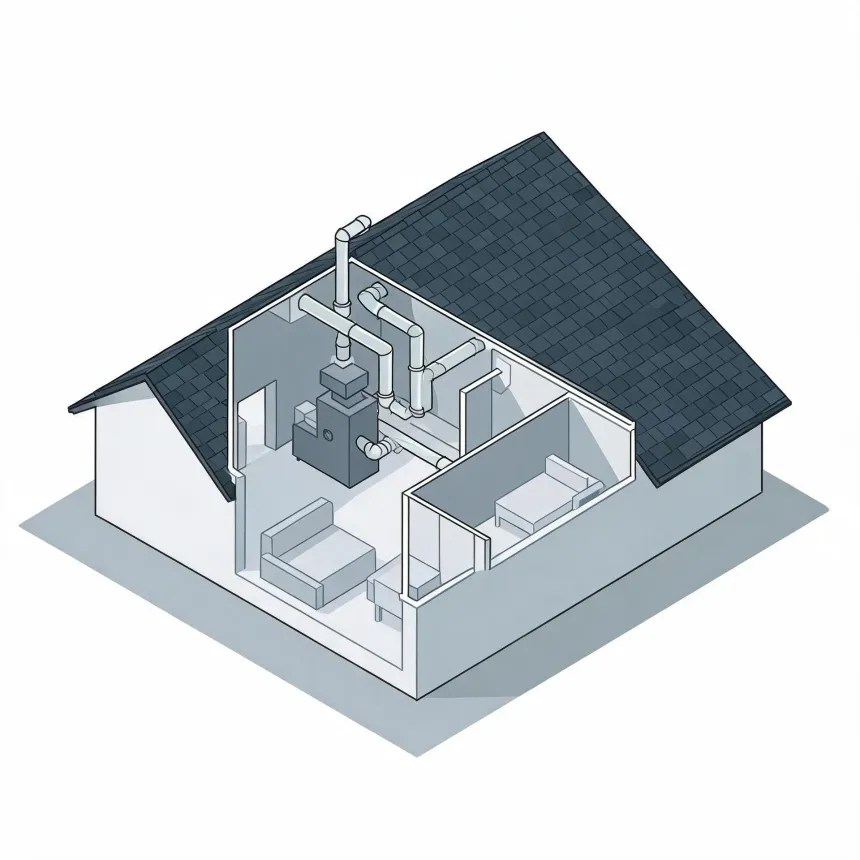
Isometric cutaway illustration of a single-story house with a dark shingled roof, showing interior rooms with furniture and a furnace connected to ductwork.
Your furnace works hardest from November through March.

NOAA nClimDiv, 1991–2020 normals

Your furnace only has to run about seven months a year here, October through April.

That's less strain than furnaces see in colder states, so a repair can still make sense even on an older unit.

October is when a weak furnace gets found

Heat runs October through April
Winter nights average 29°F
Climate zone 3A

So if your furnace is acting up now, don't write it off as worn out. A unit that only runs seven months out of the year hasn't put in the kind of hours that break things down for good. Get it looked at before you decide it's done. A cracked heat exchanger or a dead control board is worth replacing around, but a bad igniter or a stuck flame sensor is a quick fix on a furnace that still has years left in it. Age on its own doesn't tell a technician much. What matters is what's actually failed.

After a storm, have it checked before it fails

If your furnace outdoor equipment has taken hail or wind damage in a past storm, get it checked even if the furnace still runs. Damage can sit there unnoticed until the day it doesn't start.

Find a contractor
A man in a cap, dark T-shirt and brown work pants walks up porch steps toward a navy front door, carrying a canvas tool bag.
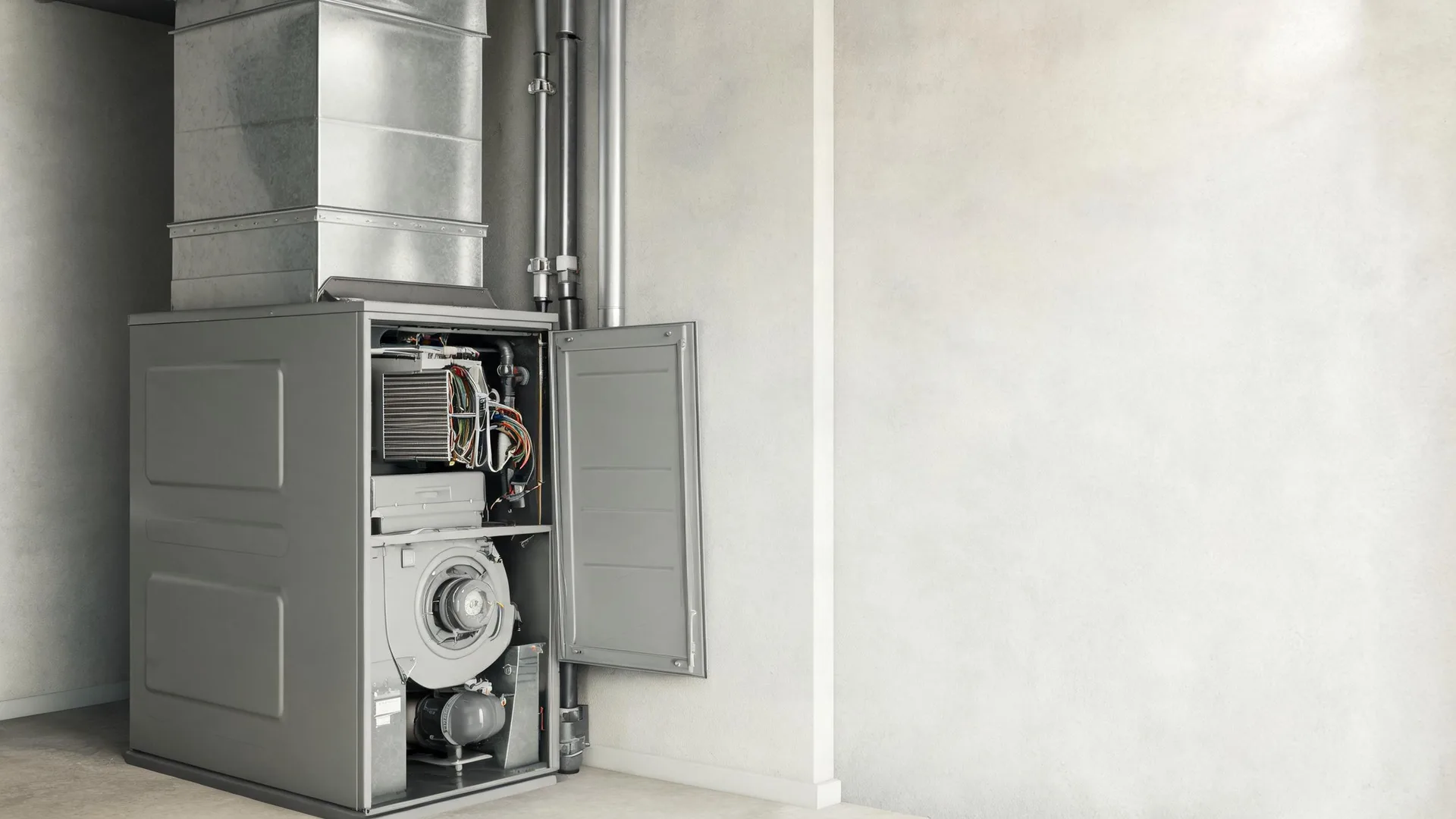
A gray residential gas furnace installed in an unfinished basement, surrounded by ductwork, a metal flue pipe, and a gas supply line.

What to check before you call

Before anyone comes out, there are a few things worth checking yourself. Start at the thermostat. Make sure it's set to heat, not just on, and that the set temperature is actually above room temperature. Dead batteries in the thermostat will leave the screen blank or frozen, so swap them if you're not sure. Next, check the furnace switch, the one that looks like a light switch on or near the unit itself. It gets bumped off more often than people expect. Then go to the breaker box. A furnace that won't start at all is sometimes just a tripped breaker, and it's worth resetting once. If it trips again right away, stop and leave that to a technician, since that usually means a short somewhere in the system. Check the air filter too. A filter so clogged that air can't move through it will sometimes cause the furnace to shut itself off as a safety measure. If you can see daylight isn't getting through it, replace it. Last, look at the vent hood or exhaust pipe outside and make sure nothing is blocking it. If the furnace runs but no warm air is coming out, check that your air vents inside the house are open and not blocked by furniture or rugs. None of this involves opening the furnace cabinet or touching the burners, gas line or electrical connections. That part is a technician's job.

Most failures are a handful of parts

When a furnace quits, the cause is usually small. An igniter weakens and stops glowing hot enough to light the gas. A flame sensor coats with residue and can't tell the burner is lit, so the control board shuts things down to be safe. A pressure switch or its tubing gets blocked and the furnace won't fire at all. These are the parts that wear out first, long before anything major goes wrong with the unit.

The big failures are different

A cracked heat exchanger or a failed control board is a different kind of problem. The heat exchanger carries the flame's heat and exhaust separately from the air blown into the house, and a crack in it is a safety issue, not a wear item to patch. A control board that's failed outright usually means replacing the board. Neither of these is common, but they're why a technician checks the cause before anyone talks about fixing or replacing the unit.

Most of the time a furnace gives some warning before it quits outright. Short cycling is one of the clearest: the burner fires, runs for a minute or two, then shuts off before the house gets warm. That's usually the flame sensor or a restricted filter, not the burner itself. A furnace that blows cool or lukewarm air instead of hot points somewhere else, often the igniter struggling to light the burner reliably. Listen for a bang at startup too. A delayed ignition means gas is building up in the burner chamber before it finally catches, and that's worth having checked soon rather than waiting. A furnace that cycles on and off rapidly without ever settling into a normal run is telling you the control board is reacting to something it doesn't like. None of these mean the unit is finished. They mean a specific part is failing, and most of them are straightforward to replace.

A diagnostic visit starts before the panels come off. A technician checks the thermostat call, the power switch, the breaker, and the filter, the same things worth checking on your own, then moves to what you can't check yourself. With the cabinet open, they'll test for a flame signal at the sensor, check for spark or glow at the igniter, and read the pressure switch to confirm the inducer motor is pulling enough draft. Many boards store a fault code behind a blinking light, and that code narrows down the search before any part gets touched. If the burners are firing unevenly or the flame looks yellow instead of blue, that gets checked too, since it can point to a cracked heat exchanger rather than a simple part swap. The visit ends with the technician telling you what failed and what it takes to fix it, not just that something's wrong.