




A bare concrete basement containing a gray gas furnace with metal ductwork and a vertical flue pipe, lit by a single hanging bulb.

Furnace Repair in Sapulpa, OK

Tell us about the job

Takes about a minute. No obligation.

RepairFurnace or heatingCreek County, OK
Step 1 of 2

What ZIP code is the job in?

Creek County sees more than its share of severe weather. Between 2015 and 2024 the county recorded 144 severe weather events, including 65 damaging wind events, 58 hail events, and 12 tornadoes. A furnace itself usually sits in a closet or attic, out of the weather, but the outdoor condenser that's part of a combined heating and cooling system doesn't get that protection. Wind-driven debris and hail can bend its fins or crack the housing without stopping it from running. Power matters too. A quarter of Oklahoma households went at least a full day without electricity in 2024, and a furnace with an electric igniter or blower won't fire without it. None of this means your system took damage. It means a system that's been through a storm is worth a second look even if it still turns on.

7 months
October through April, your furnace is on duty
29°F
the average winter night it heats against
9 winter storms
in ten years, the nights a failure hurts most
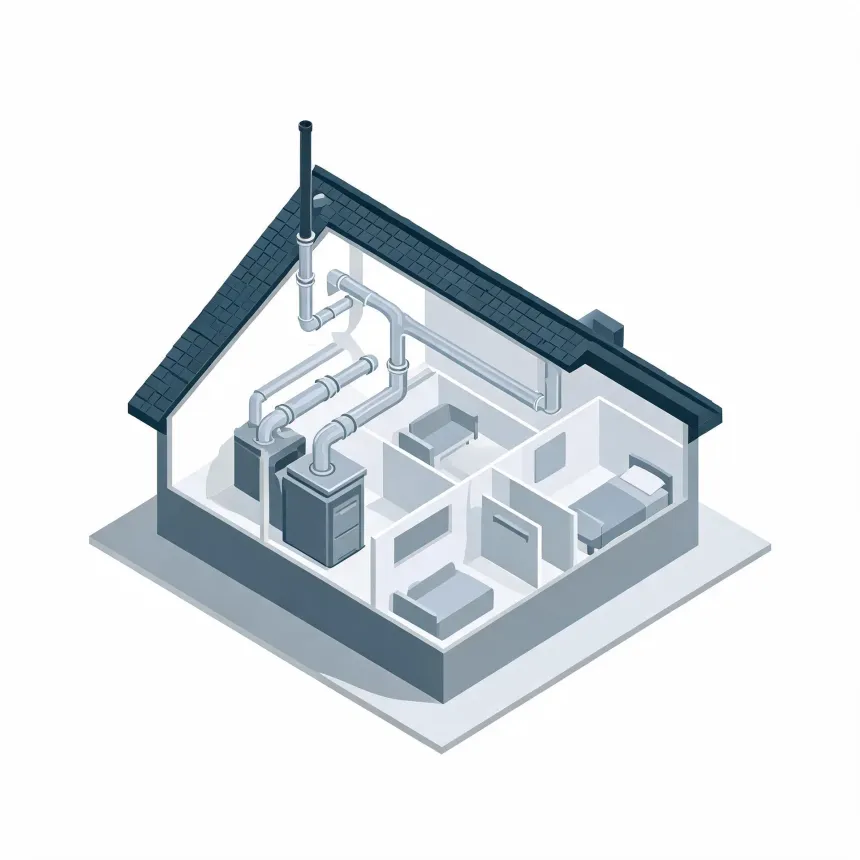
Isometric illustration of a cutaway house showing a furnace unit with ductwork and a flue pipe running through the interior rooms, which contain simple furniture.
Your furnace works hardest from November through March.

NOAA nClimDiv, 1991–2020 normals

Your furnace only runs about seven months a year here, October through April.

That long break each year means less wear, so a repair on a furnace in otherwise decent shape is usually worth making.

October is when a weak furnace shows itself

Heat runs October through April
Winter nights average 29°F
Climate zone 3A

A diagnostic call starts before any panel comes off. A technician will ask what the furnace was doing right before it stopped or started acting up, since a boom at startup and a flame that won't stay lit point to different problems. Then comes power and gas, checked at the source, because a tripped switch or a closed valve can look exactly like a failed part from the thermostat. From there it's a sequence: the igniter or pilot, the flame sensor, the gas valve, the blower motor and its capacitor, each tested on its own rather than guessed at. A multimeter reads voltage and resistance where a part can't be judged by looking at it. The point of going in order is that two things can look like the same symptom and have nothing to do with each other, so a tech rules each one out instead of replacing the first thing that seems likely. At the end you should hear which part failed, what reading or sign pointed to it, and why that part and not another one.

After a storm, have it checked before the cold sets in

If your furnace has been through wind, hail or a stretch without power this year, it's worth having a technician look it over even though it still runs. A cracked housing or a loose connection from an outage doesn't always show up on its own.

Find a contractor
A gray high-efficiency gas furnace installed in an unfinished basement, surrounded by gas lines, a condensate drain, and sheet-metal ductwork.

Running while it fails is how a small problem becomes a bigger one

A furnace that's struggling will often keep running anyway, and that's the part worth understanding. A cracked heat exchanger doesn't stop the blower. A flame sensor coated with residue just makes the burner shut off and restart over and over instead of failing outright. The machine doesn't know when to quit, so it keeps asking a weak part to do its job until that part gives out completely, and sometimes it takes a relay or a circuit board with it. A rattle that gets ignored becomes a cracked mount. A short cycle that gets ignored becomes a burner that won't light at all. Catching it on the first strange noise or the first short cycle is almost always a smaller job than catching it on the last one.

The sounds mean something specific

A boom at startup usually means gas is building up before it catches, instead of lighting right away. A rattle that keeps time with the blower often means a loose panel or a wheel out of balance. A high squeal points to the blower motor bearing. None of these fix themselves, and each one is easier to deal with before it takes another part down with it.

Watch what the flame and the air are doing

A furnace flame should burn steady and blue. Yellow or flickering flame means the burner isn't getting clean combustion, and that's worth a same-week call, not a wait and see. Air that comes out lukewarm instead of hot often means a clogged filter is starving the system, or a heat exchanger that's failing. Either way, the fix gets simpler the sooner someone looks at it.

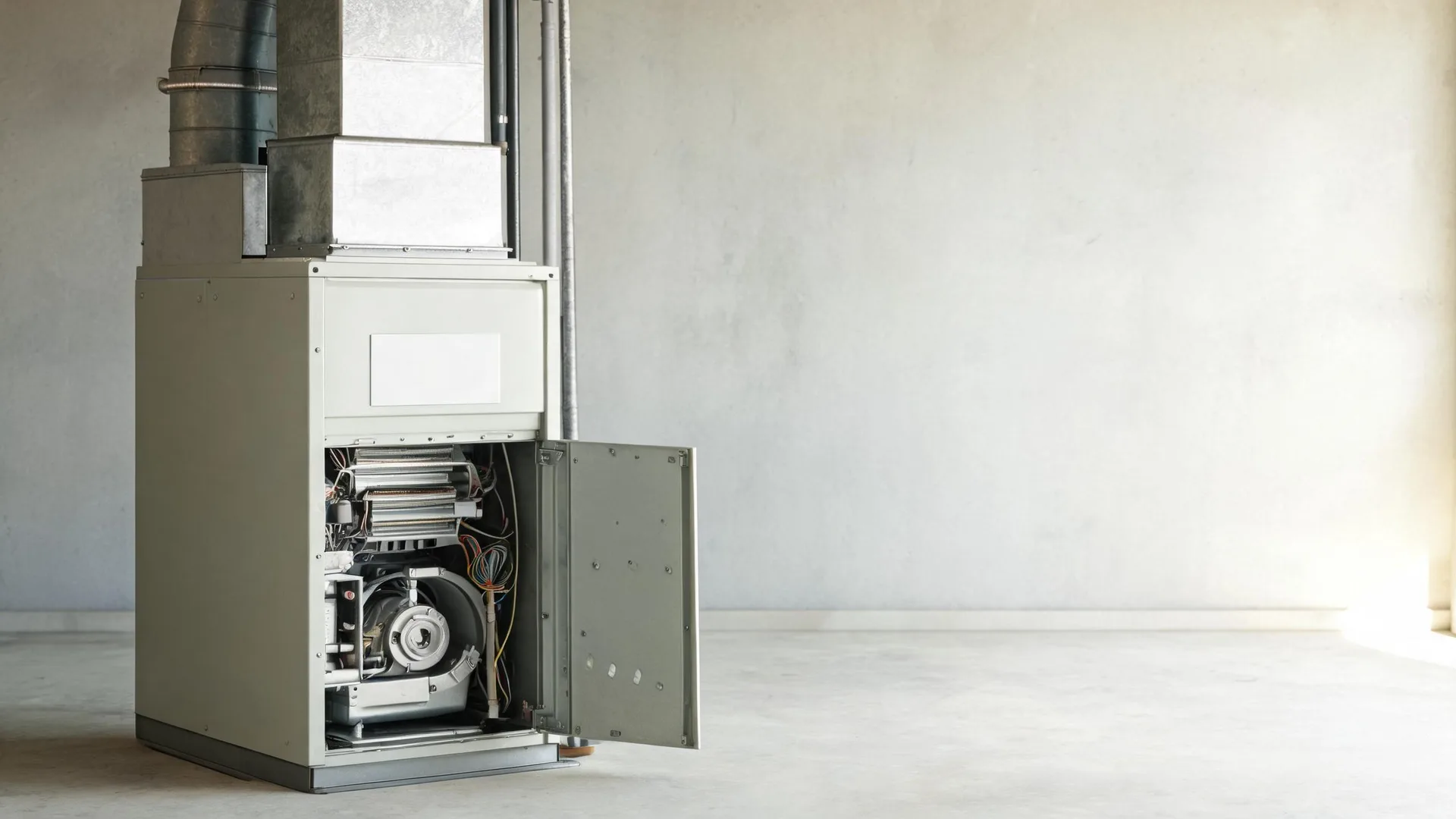
An unfinished basement featuring a forced-air furnace, exposed wooden ceiling joists, bare concrete walls, and miscellaneous items including cardboard boxes and coiled cables on the floor.

A new furnace would cut about $110 a year off heating for a typical Creek County home.

  • A new high-efficiency furnace$490 a year
  • An older furnace$600 a year

Estimates for a typical Creek County home, compared with an older unit built to the previous federal minimum, from EIA household energy data, Oklahoma fuel prices and NOAA climate normals. Your home will differ.

Repair makes sense when one part has failed and the heat exchanger is sound.

Replacement makes sense when the heat exchanger is cracked or the furnace keeps needing parts.

Age is the first thing worth asking about, but it isn't the only thing. A furnace that's otherwise sound is usually worth repairing even for a part that isn't cheap, because the alternative is replacing a cabinet, blower and heat exchanger that still had years left in them. What changes the math is a cracked heat exchanger, since that's the part that isn't sold on its own and isn't worth opening the unit up for. Repeated failures of different parts within the same year or two is another sign worth weighing, since it points to a system that's wearing out generally rather than one part that happened to fail. Ask what's actually wrong and why before deciding how far to go. A technician who can name the failed part and explain why it failed is giving you something to decide with. One who jumps straight to replacement without that explanation isn't.