Six months of work a year
Furnaces in Seminole County run from November through April. The rest of the year the system sits idle, with overnight lows averaging 30°F in the coldest months but no load on it the rest of the time.
Takes about a minute. No obligation.
Furnaces in Seminole County run from November through April. The rest of the year the system sits idle, with overnight lows averaging 30°F in the coldest months but no load on it the rest of the time.
A furnace that isn't worn out from overuse is a furnace worth fixing. When one acts up here, it's more likely a part failed or got neglected than that the machine is worn through.
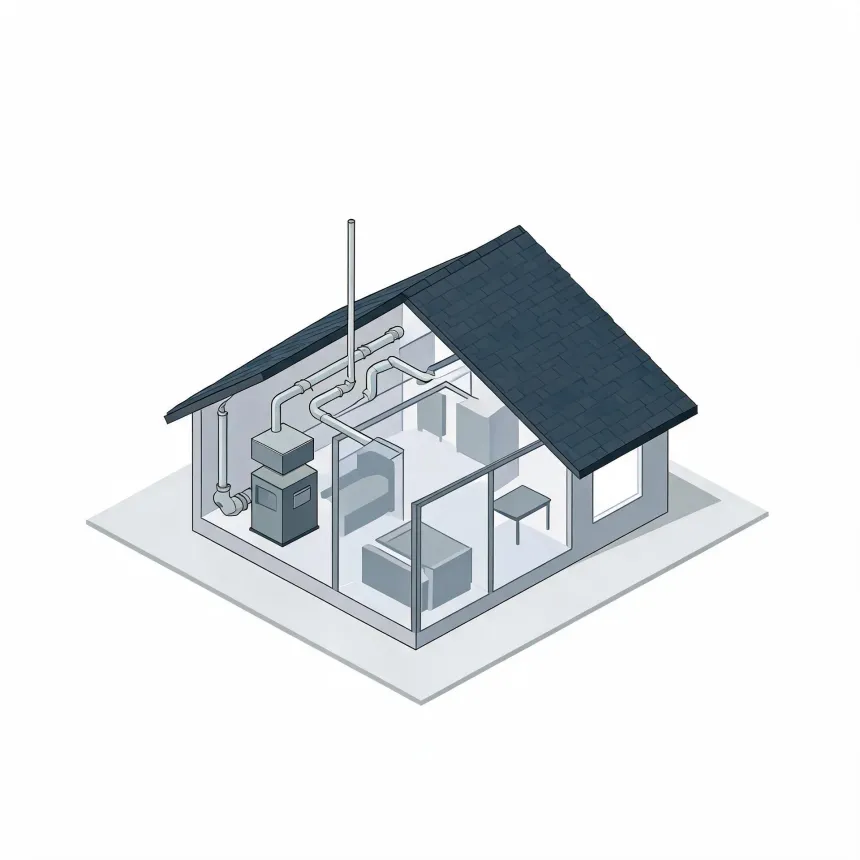
NOAA nClimDiv, 1991–2020 normals
October is the last quiet month before Seminole County furnaces start up in November.
A part that was already failing gets found in that first cold snap, not before.




So when a furnace here starts short cycling, or the blower won't shut off, or it fires up smelling like dust burning off, get it looked at instead of guessing. A technician can trace the problem to its actual cause, a cracked heat exchanger, a dirty flame sensor, a blower motor on its way out, and most of the time there's a straightforward fix behind it. Six months of light use a year means the parts inside usually have life left in them. Worth knowing before you decide a repair isn't worth the trouble.
It has an easier job here than in most places, so your furnace is often in decent shape. Repair is usually worth it.
Find a contractorFurnaces don't fail from one big thing. They fail from small parts wearing out in the same order most of the time. The igniter cracks after enough heat cycles. The flame sensor coats with a film of carbon until it can't tell the burner is lit. A limit switch trips because airflow is choked somewhere, usually a dirty filter, and gets blamed when the real problem is upstream of it. Motors wear on their bearings and start sounding rough before they quit outright. A cracked heat exchanger is the one worth taking seriously, since it's a safety issue and not just a comfort one. None of this is about how hard the furnace has worked. It's about which part's turn it is.
A furnace in trouble usually tells you before it quits outright. It cycles on and off faster than it used to. The blower keeps running after the heat shuts off. The flame looks yellow and uneven instead of a steady blue. A rattle or squeal shows up that wasn't there before, or the air coming out feels cooler than it should. These are the signs worth paying attention to, not the ones to wait out.
A short cycle can be a clogged filter choking airflow, nothing more. A squeal is often a motor bearing wearing down, not failing yet. Even a rough start can be a weak igniter, a part that gets swapped on its own. A burning or metallic smell that doesn't fade after startup, or soot around the cabinet, is different. That points at the heat exchanger, and it's the one sign that means shut the furnace off and get it checked before running it again.
A furnace with a problem rarely just sits at that problem. It moves past it. A flame sensor coated in carbon reads the flame weaker each week, and once it stops reading it at all the furnace shuts itself down rather than light, usually on a night it's needed most. A limit switch that keeps tripping from choked airflow is a sign something upstream, often just the filter, is making the blower work against a blockage every time it runs. Left alone, that's wear in the wrong place for no good reason. None of this is about the furnace being old or tired. It's about a small problem left in place long enough to cause a second one. Caught early, it's one part swapped out. Left running, it's whatever that part was holding up along with it.
Most of what decides repair versus replacement isn't the broken part, it's what's around it. A furnace that's had its filter changed and its flame sensor cleaned now and then is a different machine than one that's been ignored, even if both are the same age. If the cabinet's rusted through, or the heat exchanger itself is the thing cracked, that's not a repair you patch and move on from, that's the furnace telling you it's done. But a bad igniter, a failed capacitor, a blower motor that needs replacing, those are parts, not verdicts. A furnace is really a handful of parts that each wear on their own schedule, and most of them can be swapped without touching the rest of the machine. The question worth asking isn't how old the furnace is. It's whether the thing that failed is a part on its own, or a sign the whole system's worn out together.