





White two-story houses with wraparound porches and Spanish moss-draped oak trees photographed along a residential street at night.

Furnace Repair in Stilwell, OK

Tell us about the job

Takes about a minute. No obligation.

RepairFurnace or heatingAdair County, OK
Step 1 of 2

What ZIP code is the job in?

Furnaces in Adair County run about seven months, October through April. Most problems show up in those first cold weeks, when the furnace gets asked to run every day after sitting idle all summer. A weak igniter or a failing flame sensor can make it through warm weather fine and only quit once the load hits it. Checking it in September, before heat season starts, means a repair happens on your schedule instead of on a cold morning when the heat won't come on.

7 months
October through April, your furnace is on duty
29°F
the average winter night it heats against
9 winter storms
in ten years, the nights a failure hurts most
Isometric line illustration of a cutaway single-story house with a shingled roof, showing an interior furnace connected to ductwork and a tall vertical flue pipe, plus simple furniture in the adjacent room.
Your furnace works hardest from November through March.

NOAA nClimDiv, 1991–2020 normals

A furnace that's cycling through heat exchangers or control boards one after another is telling you something.

Past a certain point, the next repair just buys you a few more months before the one after that.

29°F nights aren't extreme. They just mean the furnace earns its keep.

Heat runs October through April
Winter nights average 29°F
Climate zone 3A

Before calling anyone, check the thermostat is set to heat and the setting is above room temperature. Go look at the furnace itself. If the light on the control board is blinking, count the pattern. That code usually points to one problem and most manufacturers print what the pattern means right on the inside of the door. Check the air filter while you're there. A filter clogged with dust can choke airflow enough that the furnace shuts itself off as a safety measure. Last, make sure nothing tripped at the breaker panel and that any switch near the furnace, the one that looks like a light switch, is flipped on. That switch gets bumped or turned off by accident more often than people expect.

The usual furnace problem has a straightforward fix

Adair County sees its share of storms, but none of that singles out a furnace. When one acts up here it's almost always the ordinary kind of failure, an igniter, a flame sensor, a control board, the same things that go wrong on a furnace anywhere else. That's good news, because it means a straightforward diagnosis and a fix that holds.

Find a contractor
A gray high-efficiency gas furnace installed in an unfinished basement, surrounded by gas lines, a condensate drain, and sheet-metal ductwork.

What wears out is what runs

An igniter wears out from doing the same job over and over, heating up and cooling down every cycle until the element finally cracks or burns through. A flame sensor doesn't wear out so much as get dirty. Flame touches it constantly, and over time a layer of oxidation builds up on the rod until it can't sense the flame anymore, so the furnace shuts off a few seconds after lighting. Blower motor bearings run every single cycle too, and bearings that spin for years eventually dry out or wear loose, which is when you start hearing a grind or a squeal. A control board usually fails from age or from heat cycling the solder joints over and over until a connection gets weak. None of these parts are rare failures. They're the parts that move or heat up every time the furnace runs, so they're the parts that give out first.

A cracked heat exchanger gets worse with every cycle

Metal that's already split flexes more as it heats and cools, and the crack grows a little wider each time the burners fire. Left alone, a small crack becomes a bigger one, and the risk it carries gets worse along with it.
A dirty flame sensor can turn into a bigger repair

A furnace that shuts off on a dirty sensor is still protecting itself correctly. Keep forcing it to restart and the igniter underneath is doing extra work it wasn't built for, cycling on and off more than it should in a single morning.

Most people don't notice a furnace problem start. They notice the house feels a little cooler than the thermostat says it should, or the air coming out of the vents feels cool instead of warm. Short cycling is another one. The furnace fires up, runs for a bit, and shuts off before the room ever warms, then starts again a little while later. A burning smell the first time it runs after sitting all summer is usually just dust on the heat exchanger and it clears on its own, but a smell that lingers or keeps coming back on later cycles isn't that. Listen for anything new too, a grind, a squeal, a bang when it starts up, or a furnace that's just louder than it used to be. None of these mean the same thing every time, but all of them are worth a look before the part finishes failing instead of after.

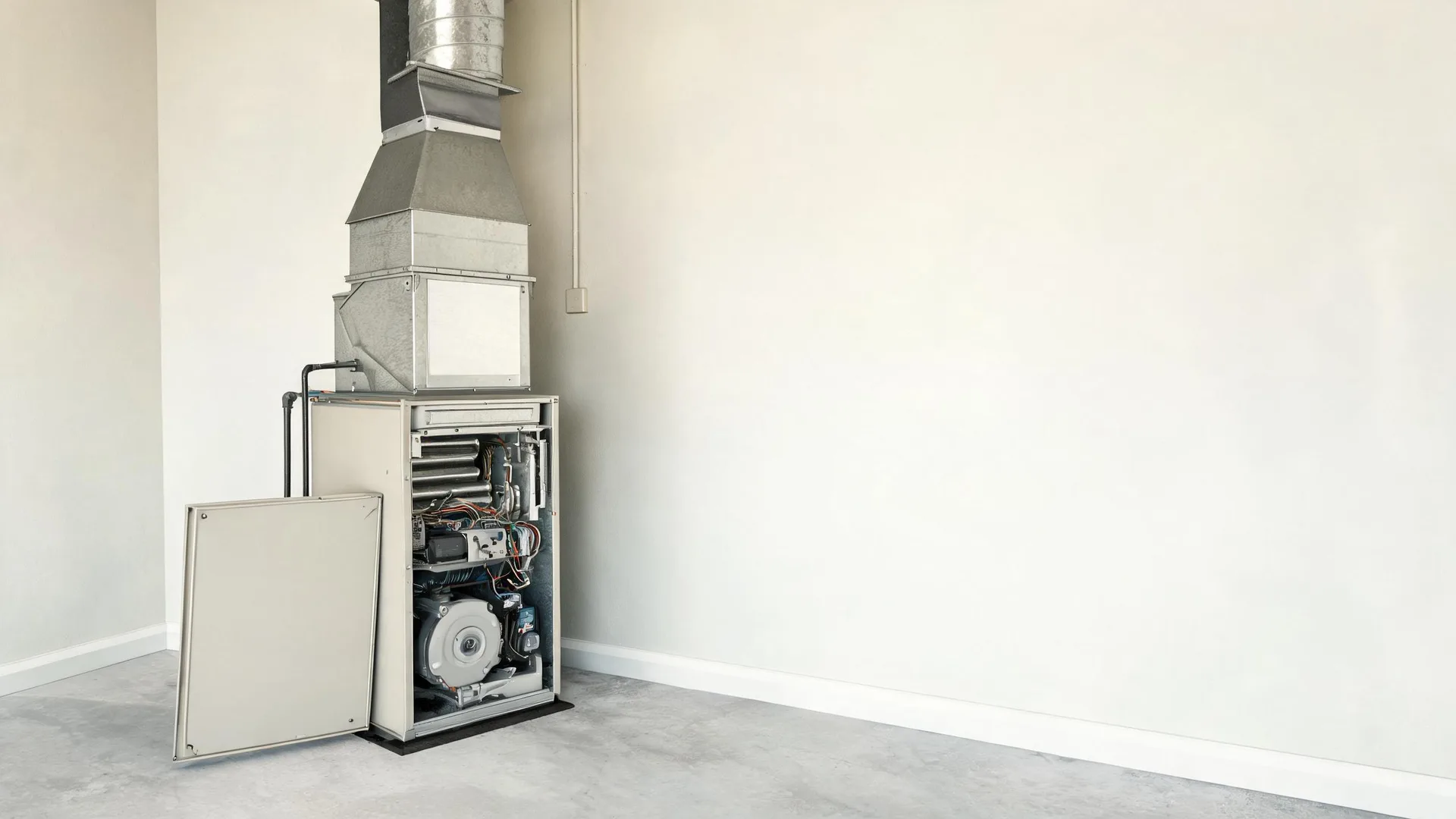
A diagnostic visit starts before any panel comes off. A tech runs the furnace through a full cycle, start to shutdown, and watches what it actually does against what the homeowner described. Then the panels come off. The igniter gets checked for a crack or a weak glow, the flame sensor gets pulled and looked at for buildup, and the control board gets read for a fault code or a burnt connection. Static pressure and temperature rise get checked too, since a furnace can have a good igniter and a good flame sensor and still run wrong if airflow through the ducts is off. The point is to find the one thing actually causing the symptom, not just the first worn part found, because a furnace can have more than one thing wrong and only one of them be the reason it's acting up.