



A wooden privacy fence runs along the left side of a dry grass lawn, with a row of single-story brick buildings with dark shingled roofs under large spreading oak trees on the right.

Furnace Repair in Weatherford, OK

Tell us about the job

Takes about a minute. No obligation.

RepairFurnace or heatingCuster County, OK
Step 1 of 2

What ZIP code is the job in?

Custer County saw 183 severe weather events between 2015 and 2024. That includes 98 damaging wind events, 60 hail events and 16 tornadoes. Most of that aims at the parts of your system sitting outside, and a furnace tied to a heat pump has an outdoor unit exposed to all of it. Hail can dent the cabinet or bend the fins without stopping it from running that day. A unit that still turns on after a storm hasn't necessarily come through it clean.

7 months
October through April, your furnace is on duty
27°F
the average winter night it heats against
9 winter storms
in ten years, the nights a failure hurts most
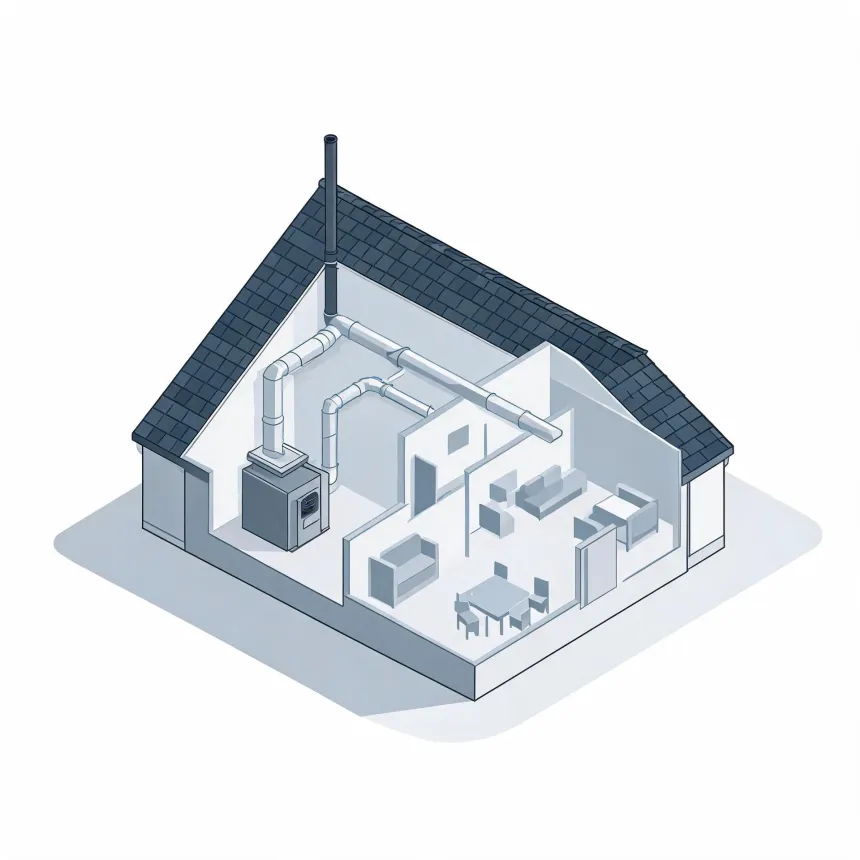
Isometric cutaway illustration of a house with a shingled gable roof, showing a gray furnace unit connected to overhead ductwork and a chimney flue, with simplified furniture in the rooms below.
Your furnace works hardest from November through March.

NOAA nClimDiv, 1991–2020 normals

A cracked heat exchanger gets worse every hour the furnace keeps firing.

Shut it down and get it looked at before that crack lets exhaust into the air you breathe.

October is when a weak furnace gets found

Heat runs October through April
Winter nights average 27°F
Climate zone 3A

An old igniter or a failing flame sensor is a cheap fix, and a furnace that's otherwise sound is worth repairing for it. A blower motor on its way out is usually still worth replacing on its own. A cracked heat exchanger is a different call. That's the part that separates the combustion gases from the air moving through your house, and once it's cracked it doesn't get welded back together. If the furnace is old enough that the exchanger is failing, other parts worn to the same age are not far behind it. A tech who's been inside the cabinet can tell you whether you're looking at one repair or the start of several. That answer matters more than any rule about how old the unit is.

If your system took a hit this year, get it checked before winter proves it

After a storm, a furnace that still turns on isn't the same as one that came through clean. If yours sits outside as part of a heat pump system, get it looked at before you trust it through the next cold snap.

Find a contractor
A man in a cap, dark jacket and tan work pants walks up porch steps toward a dark blue paneled door, carrying a canvas tool bag with tools in its outer pockets, beside a potted shrub.
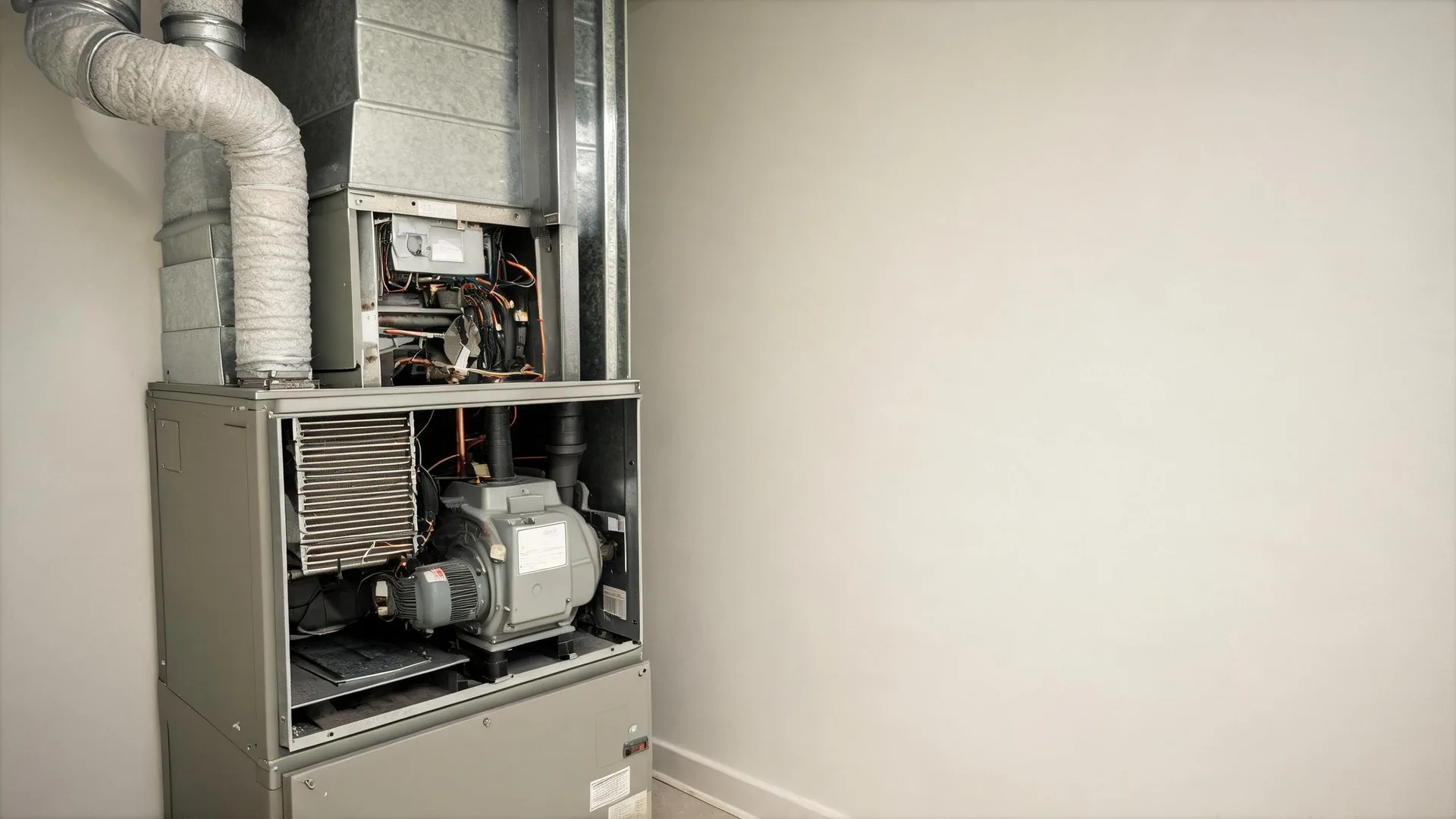
A gray high-efficiency gas furnace installed in an unfinished basement, surrounded by gas lines, a condensate drain, and sheet-metal ductwork.

What years of running does to a furnace

A furnace wears from two directions at once: age and cycling. Every time it fires, the heat exchanger expands, and every time it shuts off, it contracts. That flexing is what eventually cracks it, not any single cold snap. The igniter and flame sensor wear the same way, a little more each cycle, which is why they tend to fail first and why that failure often looks sudden when it isn't. The blower motor fails on a different clock, usually bearings wearing down from running hours rather than from cycling, so it can go either early or late depending on how much the system runs. Dust and neglect speed up almost all of it. A dirty flame sensor reads a weak signal and shuts the burner off as a safety measure, which looks like the furnace is broken when the sensor just needs cleaning. A clogged filter forces the blower to work harder and run hotter, which shortens its life and can also stress the heat exchanger from the inside. None of these parts fail on a schedule. They fail on how many hours the furnace has logged and how well it's been kept clean along the way.

What you'll actually notice first

A furnace that needs repair rarely just quits outright. It shows up as short cycling, where the burner fires and shuts off again before the house warms up. Or it's air coming out of the vents that's barely warm at all. Some furnaces click or try to ignite several times before catching, when a good igniter lights it on the first try. Any of these is the machine telling you something's already failing, not about to fail.
The signs you don't wait on

A burner flame that's flickering yellow instead of steady blue means it isn't burning clean, and that's worth a same-day call. So is a burning or metallic smell that doesn't fade after the first few minutes of a cycle, or soot around the cabinet. These point at combustion problems, not a worn part that can wait a week. If the carbon monoxide detector ever goes off near the furnace, shut it down and don't turn it back on until someone's checked it.

Before you call anyone, there are a few things worth checking yourself. Look at the filter first. If it's gray and packed with dust, swap it, because a clogged filter can cause a lot of the symptoms that feel like a bigger problem. Check that the thermostat is set to heat and the temperature is actually set above room temperature, since a bumped switch or a dead thermostat battery can look exactly like a dead furnace. Go to the breaker panel and look for a tripped breaker, and check that the furnace's own power switch, usually a light switch near the unit, hasn't been flipped off. If you have a gas furnace, make sure the gas valve is open. None of this involves opening the cabinet or touching the burner assembly. If the filter's clean, the power's on and it still won't run or won't warm the house, that's where your own checks end and a tech's job starts.

A diagnostic starts before the cabinet ever comes off. A tech will ask what you noticed and when, because short cycling, cool air and a burner that won't catch on the first try point at different parts. From there it's a combustion check: pulling the igniter or flame sensor to look at it, checking the flame color through the viewing port, and testing the safety switches that are supposed to shut the unit down if something's wrong. If the heat exchanger is in question, that usually means a closer look with a camera or a combustion analyzer, since a crack isn't always something you can see by eye. Airflow gets checked too, because a blower pulling air through a dirty filter or a blocked return can mimic problems that have nothing to do with the burner. By the end you should have a straight answer: what's failing, what it takes to fix it, and whether it's a part worth replacing on its own or a sign the furnace is further along than it looks.