






An unfinished basement containing a gas furnace with ductwork in the foreground and miscellaneous stored items along the far concrete wall.

Furnace Repair in Yukon, OK

Tell us about the job

Takes about a minute. No obligation.

RepairFurnace or heatingCanadian County, OK
Step 1 of 2

What ZIP code is the job in?

Canadian County saw 236 severe weather events between 2015 and 2024. Damaging wind caused 97 of those, hail caused 110, and 13 tornadoes touched down in that span. A furnace shares the attic or closet with ductwork that outdoor storms can affect, and the outdoor power supply it depends on is exposed to all of it. Statewide, a quarter of Oklahoma households went at least a full day without power in 2024. A furnace that still lights and runs after a bad storm can have damage you won't notice until the next cold snap.

7 months
October through April, your furnace is on duty
29°F
the average winter night it heats against
59%
of homes here heat with gas, so most furnaces here burn gas
15 winter storms
in ten years, the nights a failure hurts most
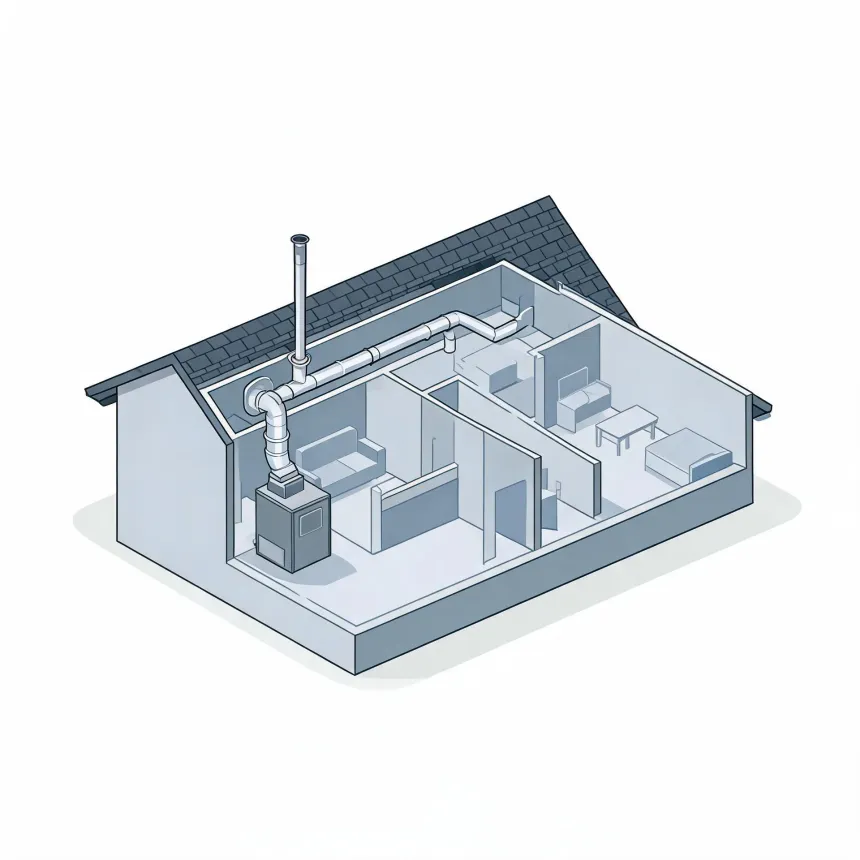
Isometric cutaway illustration of a single-story house showing interior rooms with furniture and a furnace connected to ductwork and a vertical flue pipe extending through the roof.
Your furnace works hardest from November through March.

NOAA nClimDiv, 1991–2020 normals

A furnace that short cycles is shutting down before the house ever gets warm.

That kind of stop and start wears the heat exchanger faster and it needs a look before it quits for good.

Half the homes here are newer, and newer furnaces are usually worth fixing

Half the homes here were built by 1999
Heat runs October through April
Winter nights average 29°F
Built for seven months of coldFurnaces here run October through April, and most trouble starts in that first October cold snap.

Get a repair quote before you get a replacement quote. If your furnace came with a house built in the last couple decades, the parts inside it are not worn out from age alone. A cracked heat exchanger or a dead control board can happen early, but a tech can usually swap the failed part and get years more out of the rest of the unit. Ask whatever contractor comes out whether they're quoting a repair or steering you straight to a new system, and ask them to explain why.

After a storm, get the furnace looked at before winter does

If your furnace went through a storm this year, get it checked, even if it still lights and runs fine. A tech can tell you whether the outage or the wind damage left anything behind before the next cold snap finds it.

Find a contractor
A man in a cap, gray long-sleeve shirt and tan pants walks up stone steps toward a dark blue front door, carrying a waxed canvas tool bag in his right hand.
A gray residential gas furnace installed in an unfinished basement, surrounded by ductwork, a metal flue pipe, and a gas supply line.

Why a furnace quits

A furnace fails the same handful of ways, year after year. The igniter wears out from repeated heating and cooling cycles until it stops glowing hot enough to catch the gas. A flame sensor coated in a thin layer of residue tells the control board there's no fire even when there is, so the unit shuts itself down as a safety measure. The inducer motor that pulls exhaust through the heat exchanger can seize or wear at the bearings, and the furnace won't fire without it running first. Dirty filters choke airflow, which runs the furnace hotter than it should and ages everything downstream faster. A cracked heat exchanger is the one that matters most, because it means combustion gases can leak into the air the house breathes, and that furnace needs to come off until it's fixed. Most of these start small, a slower light, a longer pause before heat kicks in, and get worse the same month they're ignored.

What's safe to check yourself

Look at the furnace and see if the display or indicator light is flashing a code. That code, even without knowing what it means yet, helps a tech when you call. Check that the thermostat is set to heat and the temperature is actually above room temperature. Check the air filter and swap it if it's gray or caked. Check the switch on the furnace itself, the one that looks like a light switch, since it can get bumped off during storage near the unit. If the furnace sits in a closet or attic with a door nearby, make sure nothing is blocking its air intake or exhaust vent outside.

What to leave alone

Don't open the burner compartment or touch the igniter, the flame sensor, or any wiring behind the access panel. Don't try to relight a pilot unless the manufacturer label on the unit walks you through it step by step. If you smell gas, don't flip any switches at all, including the furnace switch, and get out and call the gas utility first. A furnace that smells scorched or trips its breaker repeatedly needs a tech before it runs again, not a reset and a second try.

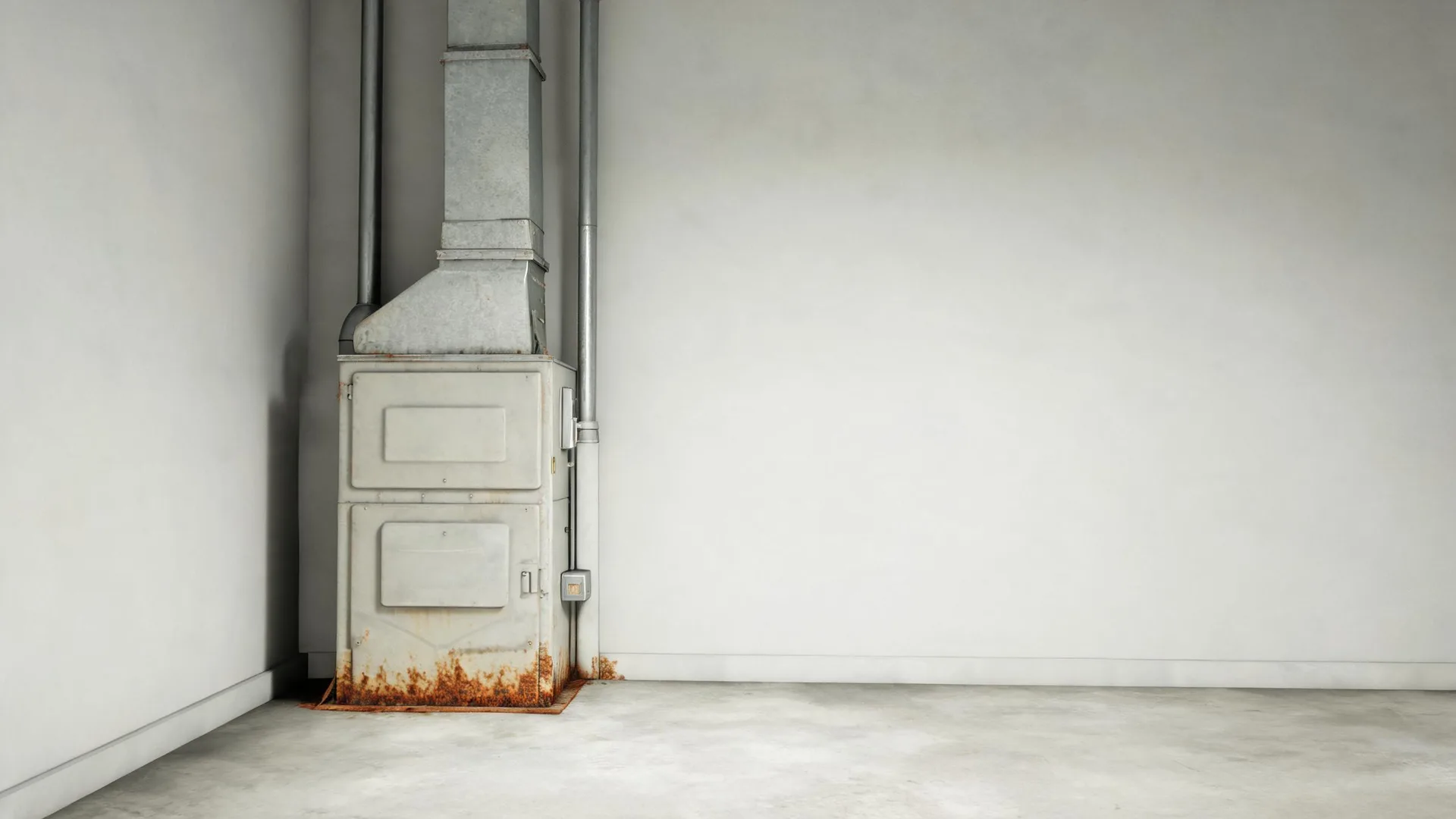
An unfinished basement interior showing a gray furnace unit beneath a bare incandescent bulb, surrounded by exposed joists, concrete walls, cardboard boxes, and utility pipes.

A new furnace would cut about $100 a year off heating for a typical Canadian County home.

  • A new high-efficiency furnace$490 a year
  • An older furnace$590 a year

Estimates for a typical Canadian County home, compared with an older unit built to the previous federal minimum, from EIA household energy data, Oklahoma fuel prices and NOAA climate normals. Your home will differ.

Repair makes sense when one part has failed and the heat exchanger is sound.

Replacement makes sense when the heat exchanger is cracked or the furnace keeps needing parts.

Age by itself doesn't mean much when you're deciding whether to fix a furnace or replace it. A unit that's otherwise sound can throw a bad igniter or a dead control board, and swapping that one part is usually the right call. What matters more is the heat exchanger. Once it's cracked, the furnace is done no matter how new it is, because that part isn't something a tech can patch. Short of that, most failures are single parts failing on their own schedule, not the whole system breaking down at once. A tech can tell you within a few minutes of testing which kind of problem you've got.