A wooden privacy fence runs along the left side of a dry grass yard beside single-story brick houses, with a large spreading oak tree and overcast sky above.

Heat Pump Repair in Durant, OK

Tell us about the job

Takes about a minute. No obligation.

RepairHeat PumpBryan County, OK
Step 1 of 2

What ZIP code is the job in?

November is when it gets tested

Your heat pump switches over to heating in November here. Whatever was marginal in the spring, a weak capacitor or a contactor that was already pitting, has to carry real load the first cold week. That's when it quits.

October is the month to catch it first

Have it looked at in October, before the switchover. A technician can find a failing part while it's still only running for a few minutes on a mild afternoon, instead of after it's tried to keep a house warm all night and failed.

5 months
November through March, your system heats
5 months
May through September, it cools
34°F
the average winter night it heats against
93°F
the average summer afternoon it cools against
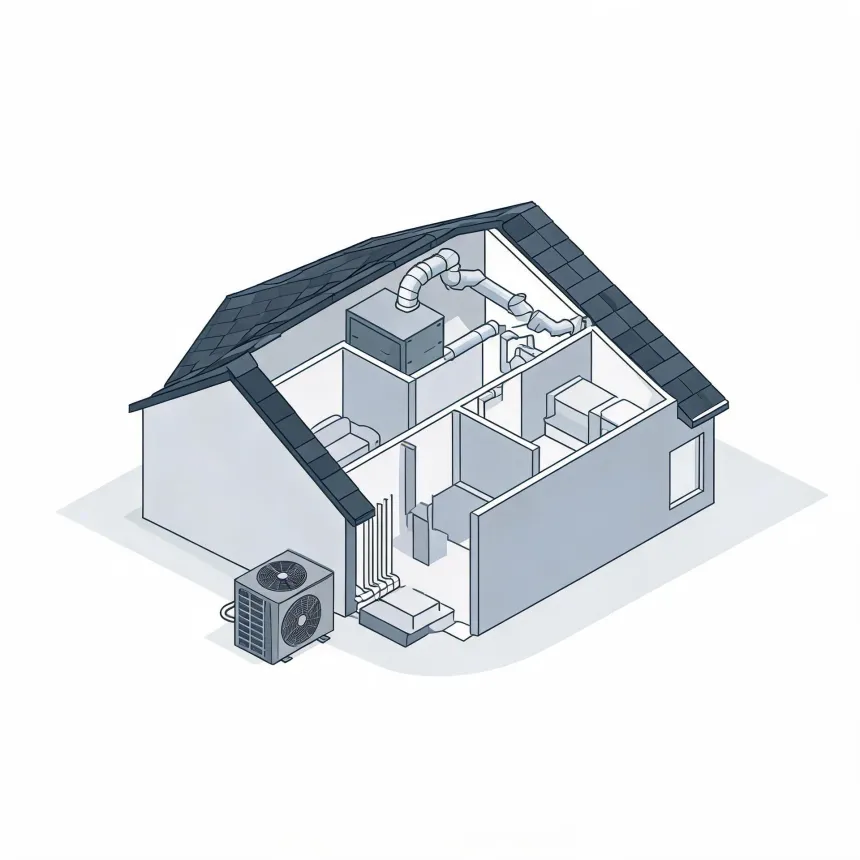
Isometric line illustration of a cutaway house showing interior rooms, an air handler with ductwork in the attic space, and an outdoor condenser unit beside the exterior wall.
Your system heats November through March and cools May through September.

NOAA nClimDiv, 1991–2020 normals

Half the homes in Bryan County were built in 1989 or later.

A heat pump that came with a newer house still has years in it, and that makes repair the right call here.

Bryan County sees this kind of weather often, and outdoor units take the hit

101 severe weather events from 2015 to 2024
25% of homes statewide lost power a day or more in 2024
50 damaging wind events from 2015 to 2024

Hail and wind are common enough here that an outdoor unit can take a hit without anyone noticing right away. A bent fin or a cracked fan blade won't always stop the heat pump from running, but it changes how hard the unit has to work to move the same amount of heat. If yours sat through a storm this year, have it looked at even if it still comes on and blows warm air. A technician can check the coil and fan for damage in a single visit, before that damage turns into a unit that won't start at all.

Get the repair done, not a replacement quote

Call it what it is. If your heat pump came with a newer house, there's no reason yet to think about replacing it. Have someone look at what's actually wrong.

Find a contractor
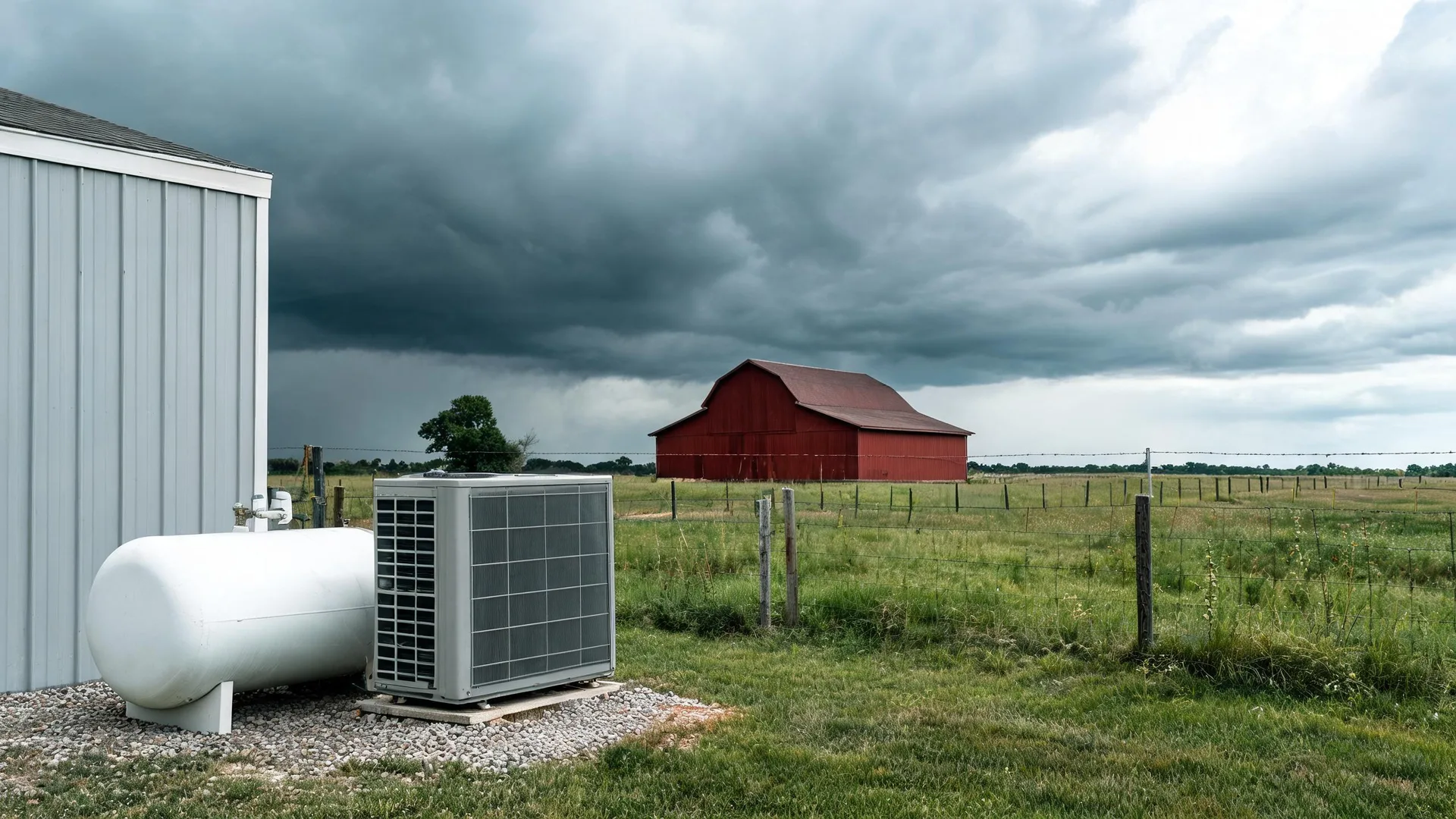
A gray heat pump outdoor unit mounted on a concrete pad next to the stone-accented exterior wall of a house.

The warm air feels a little less warm, that's the first sign

A heat pump doesn't fail all at once. It gives you something to notice first. Warm air that isn't as warm as it used to be. Short cycles, where it kicks on and shuts off again before the room changes temperature. A unit that runs and runs but never quite gets there. Ice on the outdoor coil that isn't melting off between defrost cycles. A clicking at startup that wasn't there before. Any of these is the system telling you a part is working harder than it should, a contactor, a reversing valve, a capacitor losing its charge. Caught at this stage it's a repair. Ignored, the compressor ends up carrying the strain, and that's the part you don't want to lose.

A weak part doesn't rest, it just loses

A contactor with pitted contacts still closes the circuit every time the thermostat calls, and a capacitor that's lost some of its charge still kicks the compressor on. Neither gets better with use. Every cycle they run is another cycle of arcing or strain, and a part that's marginal now is worse the next time the unit works hard.

The compressor pays for what else is failing

A heat pump keeps running through problems that would stop a simpler machine, low refrigerant, a weak capacitor, a dirty coil, by asking the compressor to make up the difference. It can do that for a while. It can't do it forever, and it's the one part in the system a repair can't easily replace on its own.

A reversing valve is what makes a heat pump different from a plain air conditioner, and it's a common point of failure. It's what switches the system between heating and cooling, and when it sticks, the unit can get stuck blowing the wrong temperature air or stop switching modes at all. The defrost cycle depends on a lot of small parts working together too, a sensor, a timer, a reversing valve again, to melt off the frost that builds up on the outdoor coil in cold weather. If any one of those fails, ice keeps building until the coil can't pull in enough air to work. Low refrigerant is another common cause, and it's almost never the refrigerant itself failing. It means a leak somewhere in the line, and running the system low on charge for long stretches is what wears down the compressor early.

So how do you tell a repair from a lost cause. Age matters less than what's actually wrong. A failed capacitor, a bad contactor, a stuck reversing valve, these are individual parts, and swapping one out doesn't put much wear on anything else in the system. The compressor is different. If a technician tells you the compressor itself is failing, that's worth weighing against the rest of the unit, because it's the most expensive part to replace and the one most likely to take the whole system down with it if it's ignored. A unit that's needed a string of small repairs in close succession is telling you something too, not that any one part is serious, but that the whole thing is wearing out at once. One failed part on a unit that's otherwise been reliable is just a repair.