




A white Southern-style house with a wraparound porch photographed at night, surrounded by Spanish moss-draped oak trees lit by landscape lights.

Heat Pump Repair in Idabel, OK

Tell us about the job

Takes about a minute. No obligation.

RepairHeat PumpMcCurtain County, OK
Step 1 of 2

What ZIP code is the job in?

McCurtain County saw 207 severe weather events between 2015 and 2024. Most of that was wind, 112 events, with 74 hail events on top of it. A heat pump's outdoor unit sits outside through all of it, and hail dents fins while wind throws branches and grit into the coil. The unit can keep running after that and still have a coil that's choked down or a fan blade that's bent out of balance. A quarter of Oklahoma households went at least a full day without power in 2024, so the backup side matters too, whatever's handling heat when the compressor can't run. If your outdoor unit took a hit this year, worth having it looked at even if it hasn't quit on you yet.

6 months
November through April, your system heats
5 months
May through September, it cools
33°F
the average winter night it heats against
91°F
the average summer afternoon it cools against
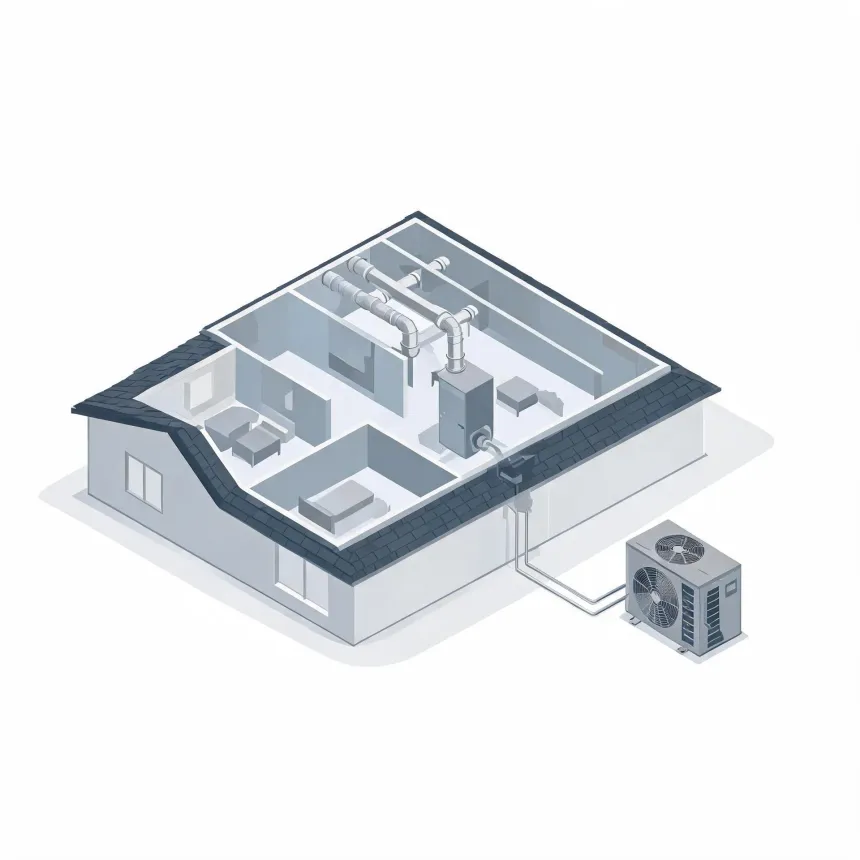
Isometric cutaway illustration of a single-story house showing interior rooms with ductwork, a furnace or air handler, and refrigerant lines running outside to a condenser unit on a pad.
Your system heats November through April and cools May through September.

NOAA nClimDiv, 1991–2020 normals

November brings the first hard pull on your heat pump's heating side.

A weak part that made it through summer often fails in that first cold week.

This much wind and hail finds every weak part eventually

112 damaging wind events from 2015 to 2024
74 hail events from 2015 to 2024
Power here costs 13.92 cents per kilowatt-hour

A heat pump that's taken a hit from wind or hail doesn't always show it right away. It might still run, just not the way it used to, pulling more power or struggling to keep up on the next cold morning. That's why a proper diagnosis matters more than guessing at it yourself. A technician can check the coil for airflow loss, see whether the fan's still balanced, and look at the refrigerant charge before deciding what's actually wrong. Fixing the symptom without finding what the storm damaged usually means the same problem comes back.

Get your heat pump checked before it has to prove itself

If this year's storms reached your outdoor unit, get it looked at before the cold settles in and the heat pump is working hard every day.

Find a contractor
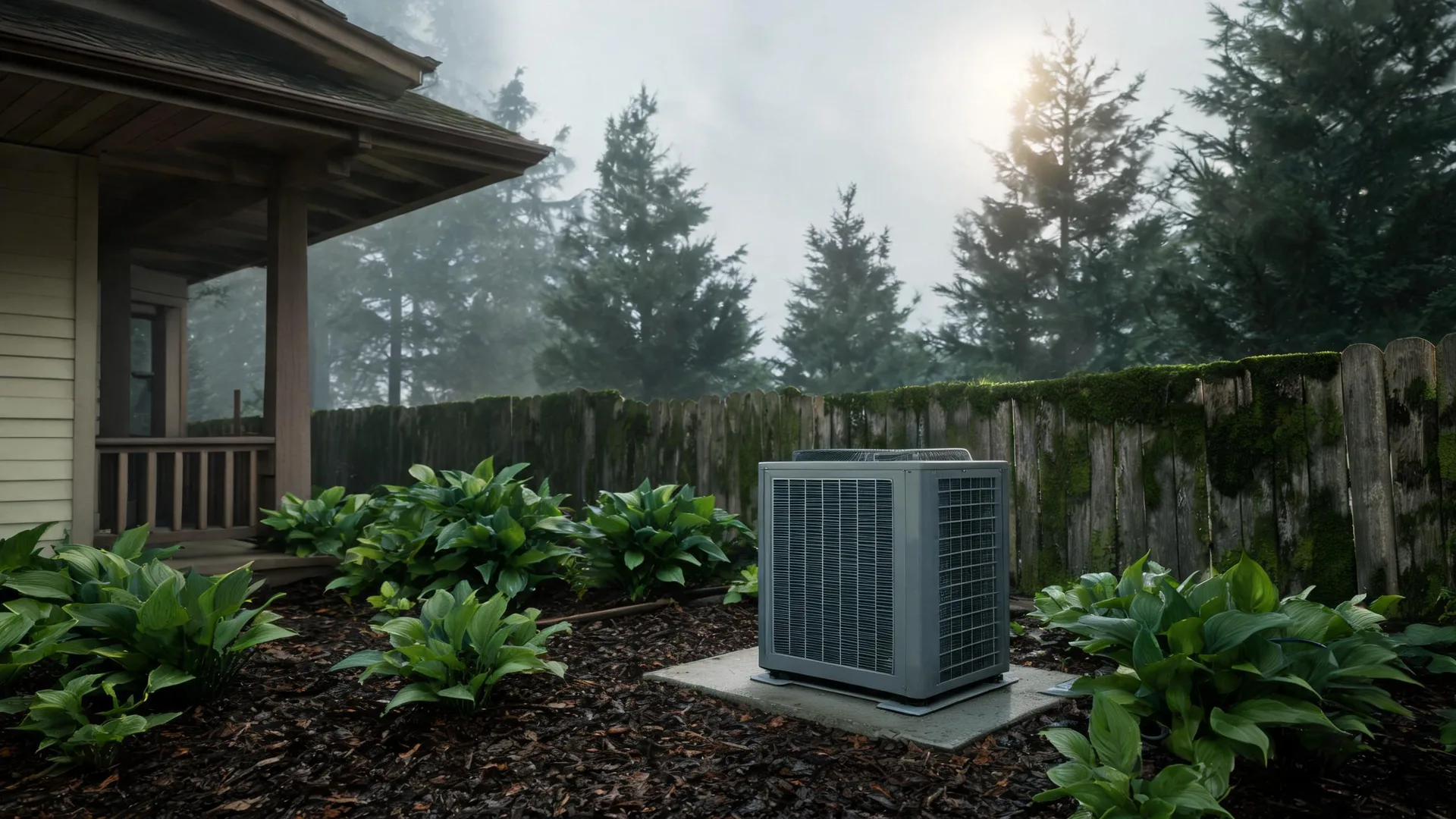
A dark gray heat pump unit mounted on a concrete pad next to a house with gray siding and a stone veneer wall.

What a heat pump tells you before it quits

A heat pump that's running fine doesn't suddenly break. It gives notice first. The outdoor unit cycles on and off more than it used to, never settling into a steady run. Air comes out of the vents warm in heating mode, but not warm enough to really take the chill off a room. Ice builds up on the outdoor coil and doesn't clear during the defrost cycle, so you see frost sitting there hours later. The system runs long stretches without ever seeming to catch up, or it shuts off and restarts on its own. Some of these point to a refrigerant leak, some to a failing defrost control, some to a reversing valve that's stuck partway. None of them get better by waiting. A heat pump that's struggling works harder to do less, and the part causing the trouble is usually easier to fix the sooner it's caught.

What's safe to check yourself

Look at the outdoor unit and clear anything piled against it, leaves, mulch, a fallen branch, so air can move through the coil. Check the air filter and swap it if it's gray with dust. Walk your breaker panel and see if the heat pump's breaker has tripped. Look at the thermostat, make sure it's set to heat and the batteries aren't dead. These take a few minutes and rule out the simple stuff before anyone comes out.
What to leave alone

Don't pull the outdoor unit's cover or reach into the cabinet. The coil fins bend if you touch them wrong, and there's a capacitor in there that holds a charge even with the power off. Don't pour water on a frozen coil to melt it faster either, that just pushes moisture where it doesn't belong. If the breaker trips again after you reset it, stop resetting it and get a technician out instead.

Most heat pump failures trace back to a handful of parts that wear with ordinary use. The capacitor that gets the compressor and fans started loses its charge over time and eventually can't deliver the kick needed, so the unit hums but doesn't start, or the fan spins slow. Contactors pit and burn from the arcing that happens every time they open and close, until one day they don't make contact at all. The reversing valve, which switches the system between heating and cooling, can stick partway if the coil that controls it weakens or debris gets into the valve body, leaving you with warm air in heating mode or cold air when you wanted heat. Refrigerant leaks show up at joints and fittings that flex and loosen over years of the system cycling on and off. Outdoor fan motors wear out bearings from running in the weather year round, and a motor that's straining sounds different before it quits outright. None of these fail without warning. Each one gives you a sign, weak airflow, a strange sound, a cycle that won't settle, before it actually stops working.

Age matters more than any single part failing. A capacitor or a contactor is a small, cheap fix on a system of any age, worth doing almost every time. It's a different question when the compressor itself is failing, or when the repairs start stacking up, one part fixed this year and another going next. A heat pump has a design lifespan, and a system near the end of it costs more to keep patched than to replace, because each fix is buying back less time than the last one did. The refrigerant type matters too. Older systems use a refrigerant that's being phased out, and if yours needs a major charge or a leak repair, that part alone can tip the math toward replacing the unit instead. A technician diagnosing the failure can tell you which kind of repair you're looking at, a worn part or a system that's done giving warnings and started failing for good.