

What winter actually asks of a heat pump here
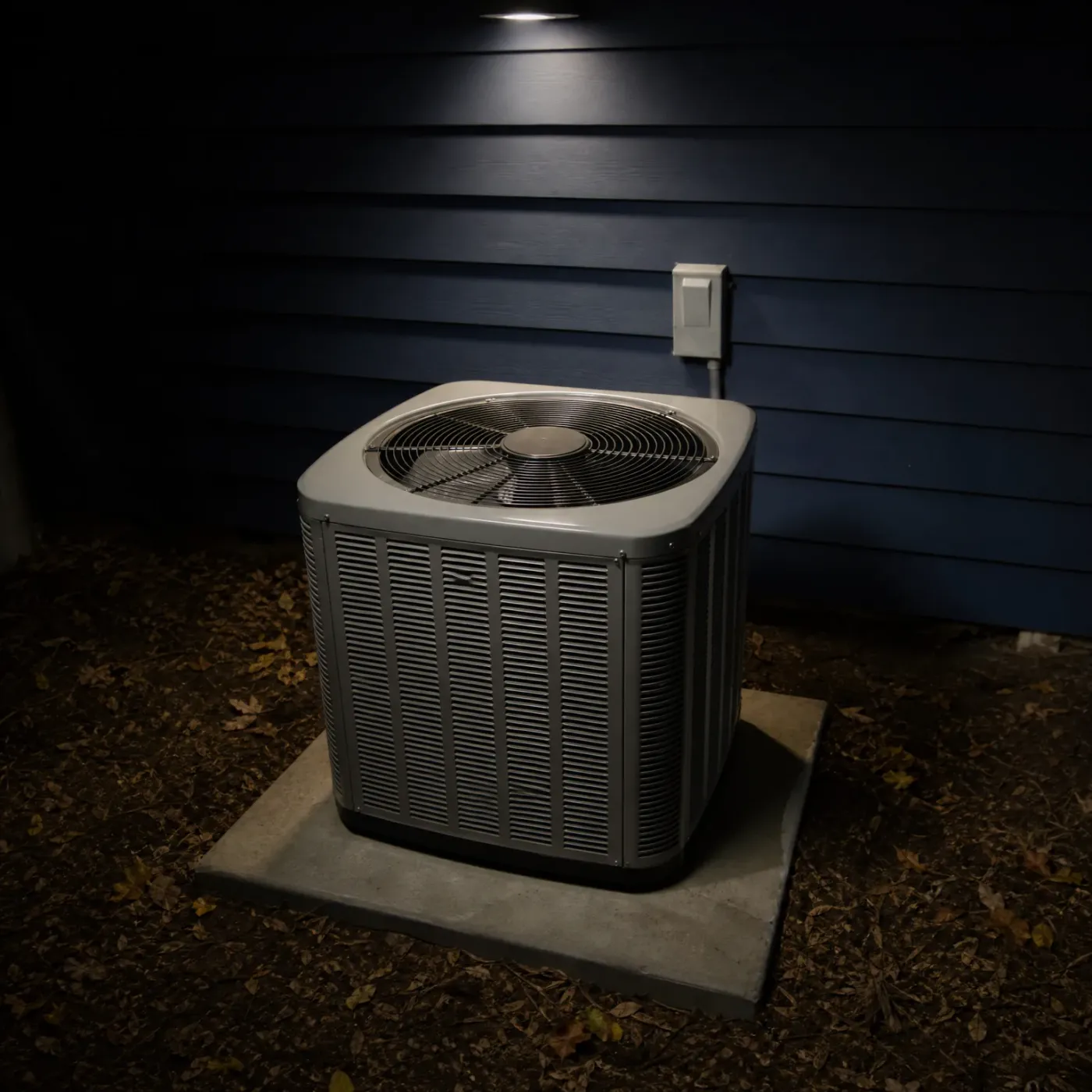
A heat pump has to work harder as the air gets colder, and McCurtain County sits right at the point where that starts to matter. The average overnight low across December, January and February is 33°F. That is below both marks that matter for a standard heat pump: below 40°F it puts out less heat than its rating says, and below about 35°F it often needs backup heat to make up the difference. So on a typical winter night here, a standard heat pump is already working past both of those lines.
This happens often, not occasionally. About 70 nights a year here drop to freezing or below, almost half the roughly 180 nights that make up the heating season. On every one of those nights a standard heat pump is below the 40°F and 35°F marks at once. It will still heat the house, but it leans on backup heat to do it.
What saves this county is how it stays below freezing. Almost none of those cold nights go further than that. Fewer than one night a year drops to 0°F, and of the 70 nights at or below freezing, essentially none reach 0°F. A standard heat pump struggles most in that deep cold, and McCurtain County rarely sees it. The cold here is frequent but shallow, which is a much easier problem for a heat pump than the same number of nights spent near zero.
That gap is what the cold climate models are built for. To earn the ENERGY STAR Cold Climate label, a heat pump has to deliver real heat and hold on to most of its capacity even at 5°F, verified by independent testing, not the manufacturer's own numbers. Field tests of these units in occupied homes back it up: backup heat covered only a small share of the winter heat between 0°F and 35°F, and running on backup alone was rare even at 0°F. That is the range this county's winters actually sit in. A standard heat pump will get you through a McCurtain County winter leaning on backup heat on about 70 nights a year. A cold climate model is built to need that backup far less.