A gas furnace and sheet-metal air handler unit installed in an unfinished concrete basement.

Furnace Maintenance in Idabel, OK

Tell us about the job

Takes about a minute. No obligation.

Tune-up, service, or cleaningFurnace or heatingMcCurtain County, OK
Step 1 of 2

What ZIP code is the job in?

McCurtain County sees real storms

McCurtain County recorded 207 severe weather events between 2015 and 2024. That includes 112 damaging wind events, 74 hail events and 15 tornadoes. Six winter storms brought heavy snow, ice or blizzard conditions in that same stretch.


A furnace sits through all of it

Wind and hail reach the parts of a furnace system mounted outside, and ice and snow pile up around vents. A quarter of Oklahoma households went at least 24 hours without power in 2024, and a furnace that depends on electricity to run needs to be in good shape before that happens.

Furnace season starts in November here.

Have it checked in October, before the cold and the storms that come with it arrive.

Six months on, six months off

Heat runs November through April
Winter nights average 33°F
Climate zone 3A
Most of Idabel heats with electric furnaces68.9 percent of homes in McCurtain County run on electric heat, with gas and propane furnaces in the rest.

Six months a year is light work for a furnace, and that matters once it's running again after an outage. A yearly check is what catches the part that's worn thin before it has to carry that load. The igniter, the flame sensor, the blower motor, all of it sits idle most of the year, but idle time doesn't stop a part from aging. A tune-up before November means that when the power comes back on after a storm, the furnace just starts, instead of tripping on the one part nobody checked.

Have the outdoor parts checked before the next storm finds them first

A tune-up gives a technician a chance to check what sits outside for storm damage and clear debris before it causes trouble. That's one less thing to find out about after the next storm comes through.

Find a contractor
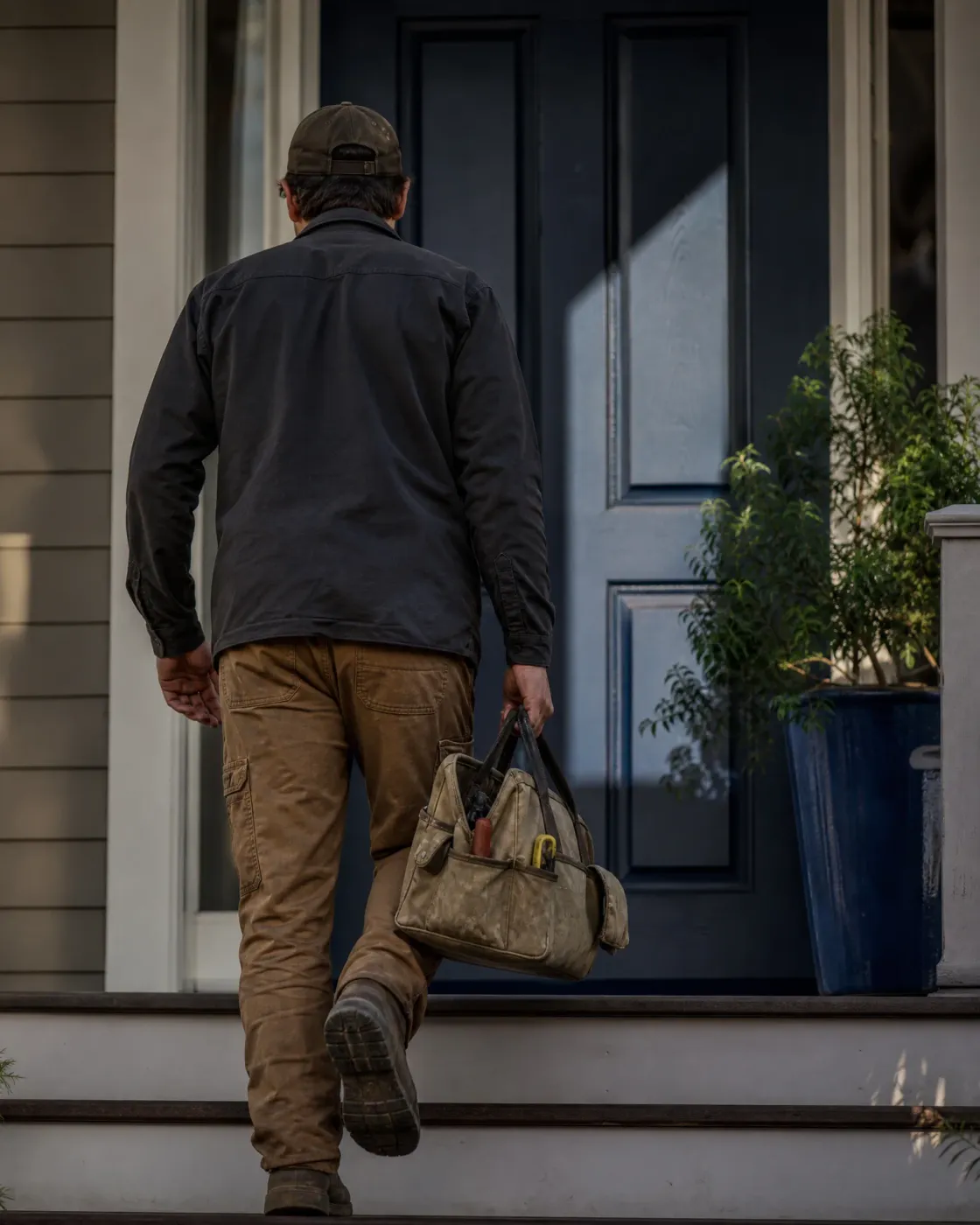
A man in a cap, dark jacket and tan work pants walks up porch steps toward a dark blue paneled door, carrying a canvas tool bag with tools in its outer pockets, beside a potted shrub.
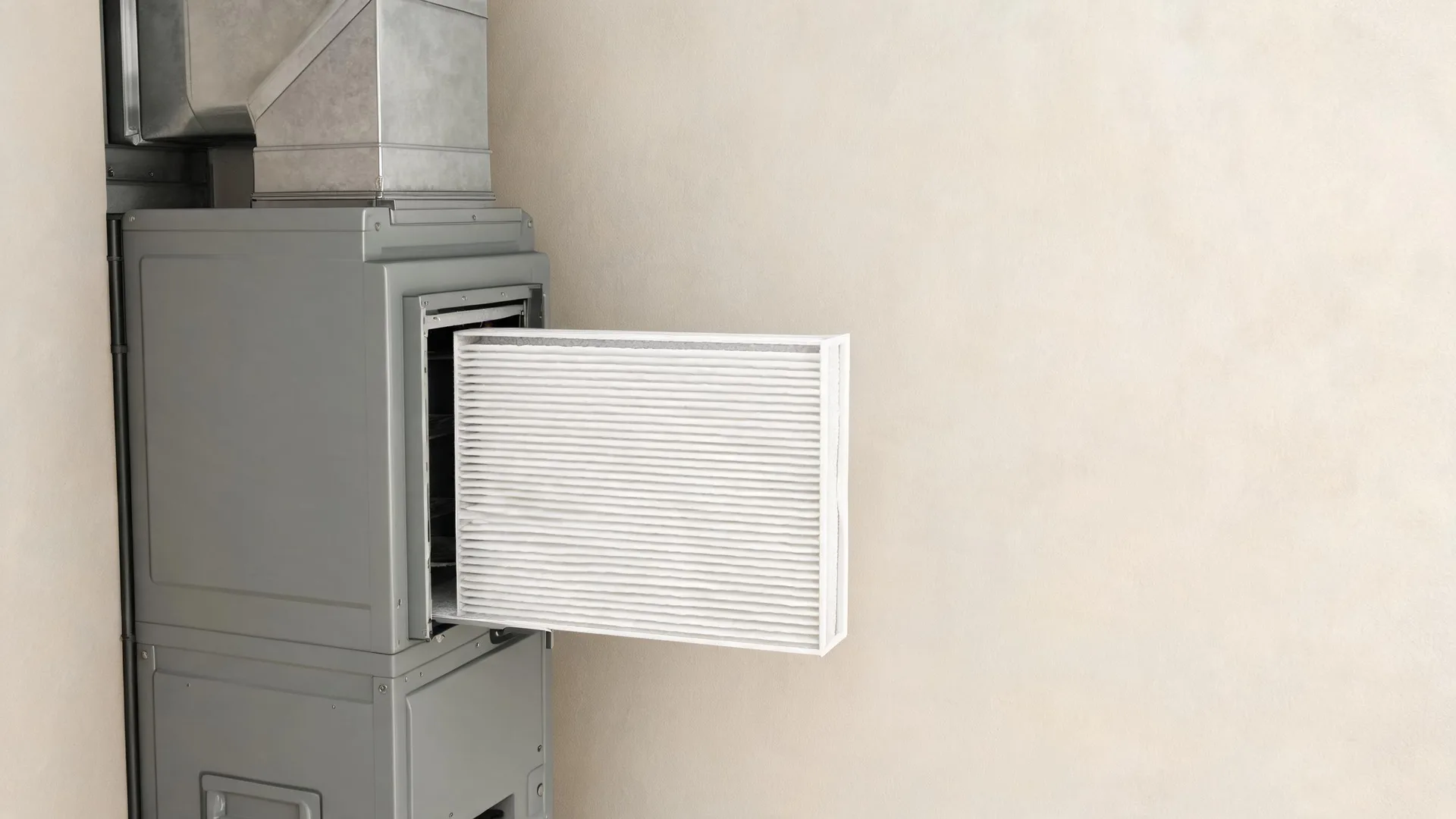
A gray high-efficiency gas furnace installed in an unfinished basement, surrounded by gas lines, a condensate drain, and sheet-metal ductwork.

Skip it long enough and the furnace tells you at the worst time

A furnace that gets skipped doesn't fail on a mild day. It fails on the coldest night, because that's the one time every part has to work at once. Dust builds up on the blower wheel and throws it off balance, so the motor strains to push the same air. A dirty flame sensor stops recognizing the flame and shuts the burner down, sometimes on the second or third cycle rather than the first. Burners caked with dust and lint burn unevenly, and that uneven flame is what scorches a heat exchanger over years instead of letting it wear evenly. None of this shows itself ahead of time. The furnace still turns on, still blows warm air, right up until the one worn part gives out.

A furnace doesn't ask for help until it can't start

Watch for a burner flame that's yellow or flickering instead of steady blue, a blower that cycles on and off faster than it used to, or a smell of burning dust that doesn't clear after a few minutes of running. A furnace that takes more than one try to light, or clicks without catching, is already telling you the igniter or flame sensor is failing. None of these stop the furnace from running that day. They're just what it looks like before the part finally quits.

A check finds the small failure before it becomes the only failure

A technician can test the flame sensor's signal, check amp draw on the blower motor, and look at the heat exchanger for cracks or scorching, none of which a homeowner can see from the thermostat. Catching a weak part during a check means replacing one component on a mild afternoon instead of waiting for it to take the whole system down on the night the furnace is working hardest.

A furnace doesn't have a coil or a drain the way the air conditioner does, but the filter still runs through it, and a clogged one causes real damage. Airflow that can't get past a dirty filter backs up into the cabinet, and the heat exchanger starts running hotter than it was built for. That heat cycles the metal harder every time the burner fires, and over years it's what cracks a heat exchanger that would have otherwise lasted. A restricted filter also makes the blower motor strain to push air that isn't moving freely, which wears the motor bearings down faster than normal use would. None of this shows up as a sound or a smell at first. It shows up as a furnace that runs longer to heat the same space, and a part that fails earlier than it should have.

A proper tune-up starts with the burners, pulled and cleaned if they're caking up with dust or lint, since uneven burn patterns are what scorch a heat exchanger over time. The flame sensor gets cleaned or tested, because a coated sensor is the single most common reason a furnace locks out mid-cycle. A technician checks amp draw on the blower motor, which catches a motor that's straining before it burns out. The heat exchanger gets inspected for cracks or scorch marks, something no homeowner can see without pulling the furnace apart. Gas pressure gets checked and set to the right level, since too high or too low both cause problems that show up as uneven heat or a burner that won't stay lit. Every electrical connection gets checked too, because a loose wire at the control board is what causes a furnace to work fine one day and not start the next.