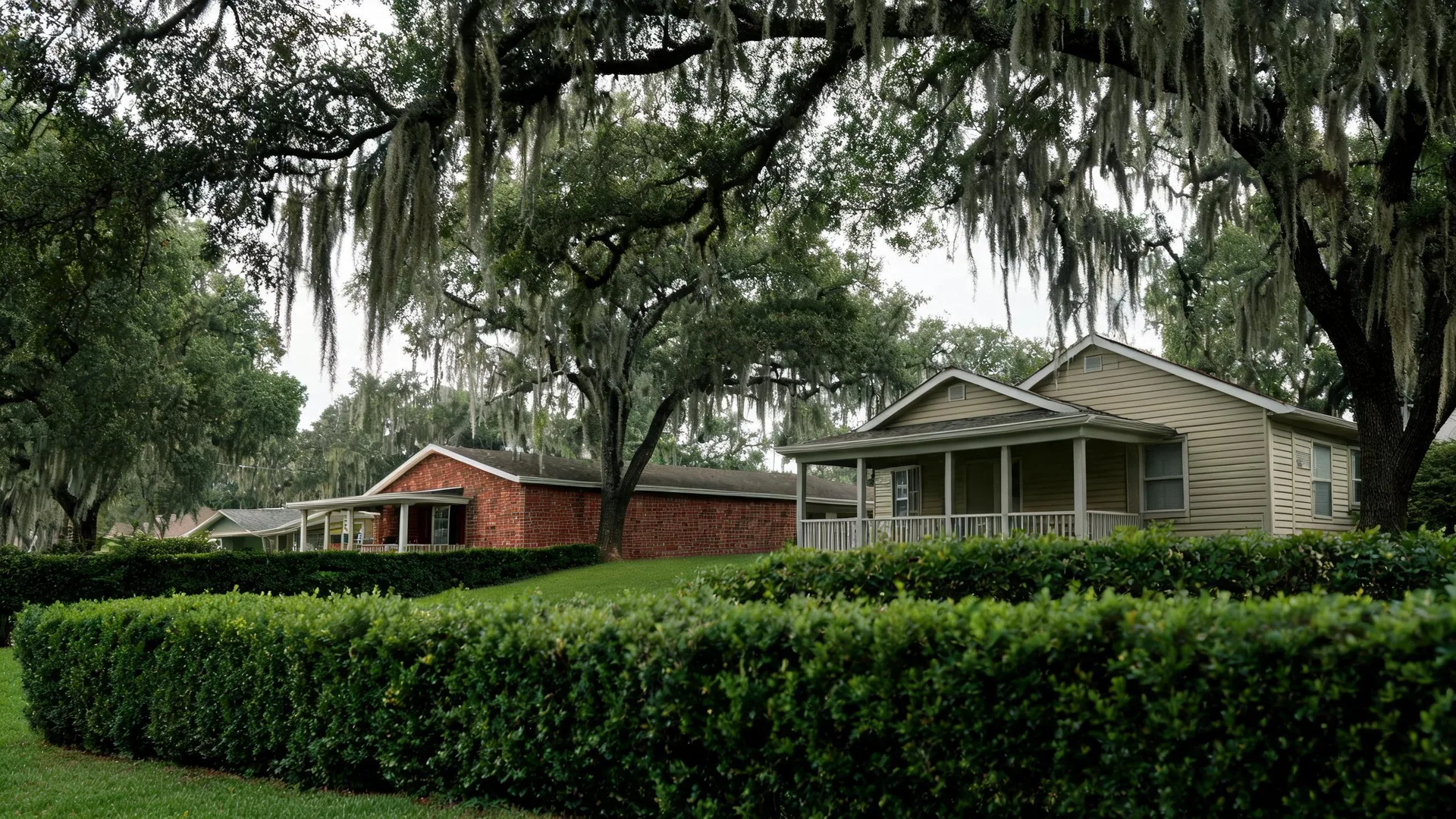






Single-story houses with a covered porch and a brick building behind a trimmed hedge and lawn, under large oak trees draped with Spanish moss.

Furnace Repair in Idabel, OK

Tell us about the job

Takes about a minute. No obligation.

RepairFurnace or heatingMcCurtain County, OK
Step 1 of 2

What ZIP code is the job in?

McCurtain County saw 207 severe weather events between 2015 and 2024. That includes 112 damaging wind events, 74 hail events, and 15 tornadoes. Most homes here heat with electricity, so when the power goes out, the furnace goes with it. Statewide, a quarter of Oklahoma households went at least a full day without power in 2024. Hail and wind-blown debris can also damage the outdoor unit without stopping it from running, so if your system took a hit this year, it's worth having someone look even if the furnace still comes on.

6 months
November through April, your furnace is on duty
33°F
the average winter night it heats against
6 winter storms
in ten years, the nights a failure hurts most
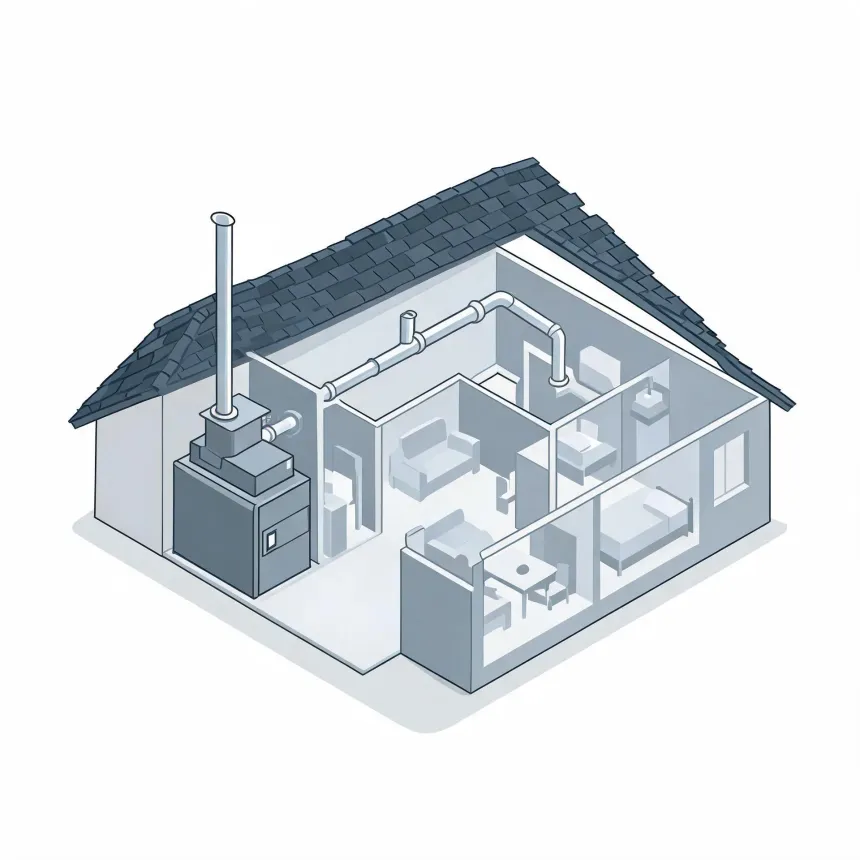
Isometric cutaway illustration of a single-story house showing interior rooms with furniture, ceiling ductwork, and a large furnace unit with a tall flue pipe in a corner room.
Your furnace works hardest from November through March.

NOAA nClimDiv, 1991–2020 normals

A furnace that won't fire usually comes down to the igniter, the flame sensor, or the control board.

Find which one failed before you replace anything, since swapping parts that still work won't fix it.

Six months of work a year is a light load on a furnace

Heat runs November through April
Winter nights average 33°F
Climate zone 3A
The first cold night finds the weak partOctober is the month to catch a weak part, before November's first cold night puts the load on it.

Six months of work a year with a mild stretch on either side of it is not much to ask of a furnace. That light load means a repair here is usually worth doing instead of walking away from. If yours is acting up, the cause is more likely a part that wore out or got skipped at a tune-up than a system that got run into the ground. Worth checking before you call it done: when was the last time anyone serviced it. A furnace that has sat without a filter change or a yearly look tends to show problems sooner, no matter how light the season was.

Had storm damage this year? Get it checked before it fails

If your outdoor unit took hail or debris this year, have it looked at even if the furnace still fires. Damage like that doesn't always show up as a breakdown right away.

Find a contractor
A man in a navy shirt and tan trousers, seen from behind, carries a canvas tool bag up wooden porch steps toward a dark blue front door, with shrubs and a large planter nearby.
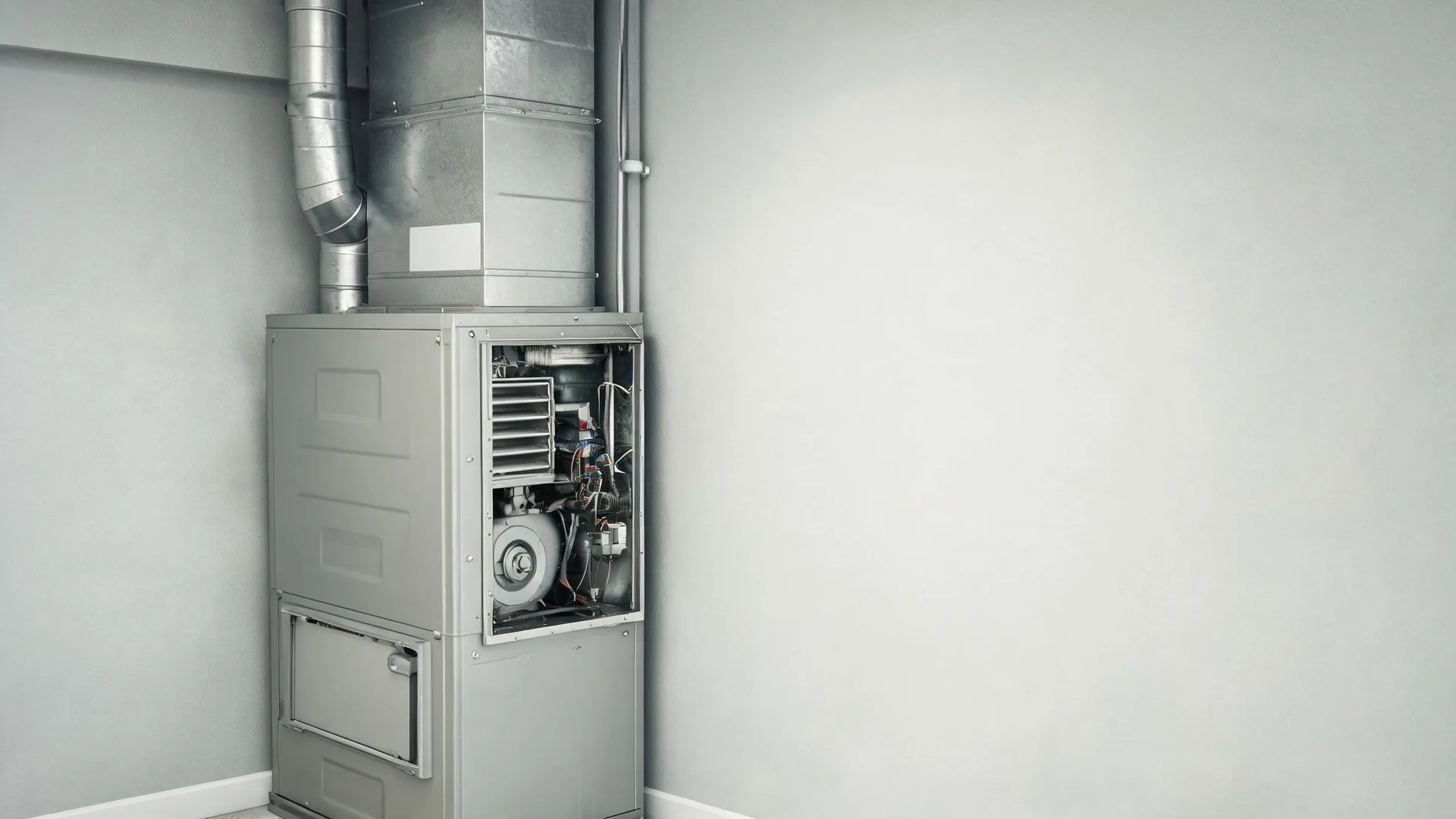
A gray residential gas furnace installed in an unfinished basement, surrounded by ductwork, a metal flue pipe, and a gas supply line.

Running it doesn't wear a problem out, it wears the part out further

A furnace that's struggling will often still run if you let it, and that's the problem. A cracked heat exchanger can keep heating a house while it leaks exhaust into the air supply. A blower motor with a failing bearing will keep turning until the bearing seizes and takes the motor with it. A flame sensor coated in residue will still let the burner fire, just weaker each time, until the furnace starts short cycling or won't stay lit at all. None of these fix themselves by running more. The part keeps wearing under the same strain that caused the problem, and what would have been a single repair turns into a motor, a heat exchanger, or a control board, instead of just the part that failed first.

What you can check yourself

Look at the thermostat first. Make sure it's set to heat and the set temperature is actually above room temperature. Check the furnace switch, the one that looks like a light switch near the unit, and make sure it's on. Check the breaker it runs on. A furnace that won't start at all is sometimes that simple. Pull the filter and look at it. If you can't see light through it, it's choking off airflow, and some furnaces will shut themselves down rather than run with one that blocked.
What to leave alone

Don't open the burner compartment or go near the flame sensor and igniter. Those parts are fragile and wiring them wrong or touching the sensor with bare hands can cause a new problem. If the furnace is trying to start and failing, clicking over and over without lighting, or if you smell gas, turn it off at the switch and call someone. That's not a filter problem, and running it while it fails like that only risks the parts further.

A furnace usually tells you something is wrong before it quits for good. Short cycling, where it fires and shuts off again before the house warms up, often points to a flame sensor that needs cleaning or a thermostat sensing heat wrong. A burner that makes a boom or thud when it lights means gas is building up before ignition instead of catching right away, and that points to a dirty igniter or burner. Cold air out of the vents while the furnace runs can mean the burners aren't lighting at all and only the blower is working. A furnace that cycles on and off rapidly without ever heating the house, or one that smells like something is burning after the first few minutes, is worth calling in rather than waiting out. The sounds and smells are the furnace telling you which part is struggling before it fails outright.

A diagnostic visit starts before any panel comes off. A tech will ask what the furnace is doing, when it started, and whether anything changed first, a breaker trip, a thermostat swap, a strange smell. That history narrows things down fast. Next comes a look at airflow and power: the filter, the switch, the breaker, the thermostat signal, because there's no point chasing an igniter if the problem is upstream of it. Only after that does the burner compartment open, where the tech checks for spark or flame sensing, tests the control board's readings, and watches a full cycle to see where it breaks down. Most calls end with one part identified as the cause, not a guess at several.