




An outdoor heat pump unit mounted on a concrete pad in front of a two-story suburban house with a landscaped lawn.

Heat Pump Repair in Lawton, OK

Tell us about the job

Takes about a minute. No obligation.

RepairHeat PumpComanche County, OK
Step 1 of 2

What ZIP code is the job in?

Comanche County saw 358 severe weather events between 2015 and 2024. Most of that was hail and wind: 185 hail events and 148 damaging wind events, with 11 tornadoes and 14 winter storms mixed in. The outdoor unit sits right in the path of all of it, out in the open where hail dents the cabinet and wind throws branches and debris into the coil. A unit can take a hit like that and still run, at least for a while, with a bent fin or a cracked fan blade quietly working against it. Statewide, a quarter of Oklahoma households lost power for 24 hours or more in 2024, and a heat pump does nothing for heat or hot water when the power's out. If yours took weather recently, even a storm that seemed to pass it by, it's worth having someone look before the damage turns into a failure.

6 months
November through April, your system heats
5 months
May through September, it cools
31°F
the average winter night it heats against
94°F
the average summer afternoon it cools against
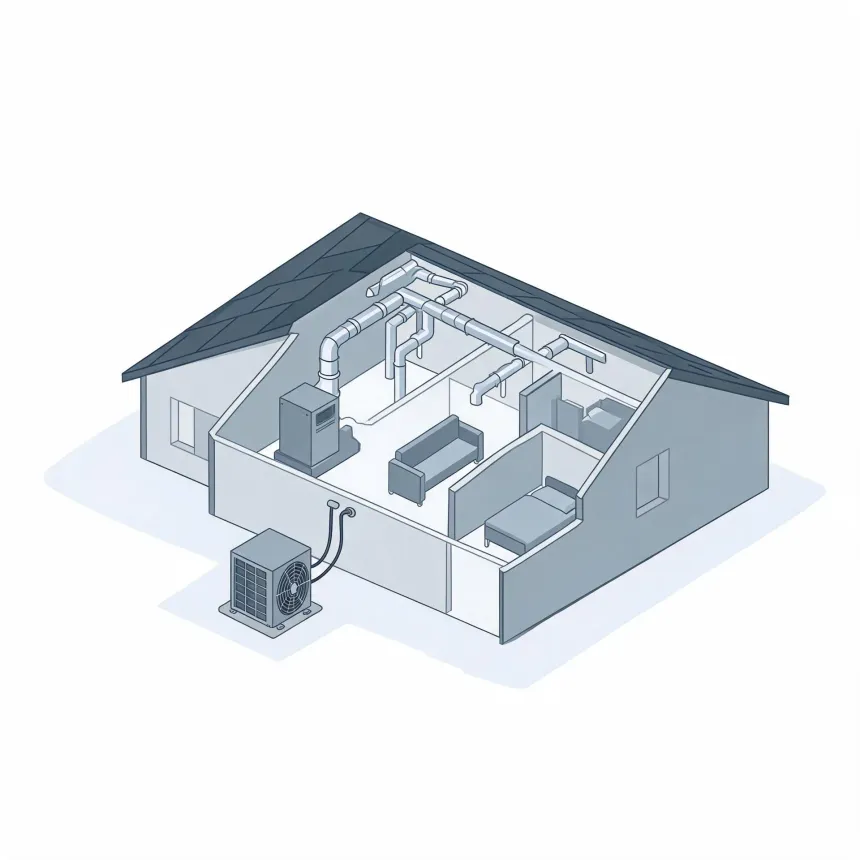
Isometric cutaway illustration of a single-story house showing interior rooms with furniture, an attic duct network connected to a furnace or air handler, and an outdoor condenser unit linked by lines outside the wall.
Your system heats November through April and cools May through September.

NOAA nClimDiv, 1991–2020 normals

November is when heat pumps here go back to work after months of sitting idle.

A weak part that survived summer easily can fail in the first cold snap.

148 storms, 185 hail events, one outdoor unit taking every hit

148 damaging wind events from 2015 to 2024
185 hail events from 2015 to 2024
Power here costs 13.82 cents per kilowatt-hour

The storm count above is the reason to get a tech out instead of waiting to see if the noise gets worse. Hail dents a cabinet in seconds, but what it does to the fan blade or the coil fins underneath doesn't always show up as a problem right away. It shows up a month later as a system that runs longer than it should, or short-cycles, or trips out on a cold morning. A proper diagnosis means someone actually pulls the panel and checks the coil, the fan, the wiring, not just listens to it run for a minute and guesses. If your unit took a hit this year, even one that didn't knock it out at the time, that's worth saying out loud when you call. It changes what gets checked first.

Had storm damage this year? Get it checked before it fails.

If your outdoor unit has taken hail or wind this year, get it looked at even if it's still running. A bent fin or a cracked blade won't always show up as a problem right away, and the next storm or the next cold morning is when it will.

Find a contractor
A dark gray heat pump unit mounted on a concrete pad next to a house with gray siding and a stone veneer wall.

Running Through a Problem Doesn't Fix It

A heat pump that's struggling doesn't fail quietly. Ice building on the outdoor coil blocks airflow, so the unit works harder to move the same amount of heat, and that extra strain lands on the compressor. A refrigerant leak behaves the same way: the system keeps running, keeps trying to hit the setpoint, and keeps pulling the compressor down below the level it's built for. A failing capacitor makes the fan motor or compressor start harder each cycle, and each hard start wears the motor windings a little more than the last. None of this fixes itself by running longer. The unit either keeps compensating until something gives out, usually the compressor, which is the most expensive part to replace, or it trips a safety switch and shuts itself down. A short left alone turns into a no-heat or no-cool call. Catching it while it's still just a noise or a weak cycle is what keeps it a small repair.

Most failures start with the reversing valve or the defrost cycle

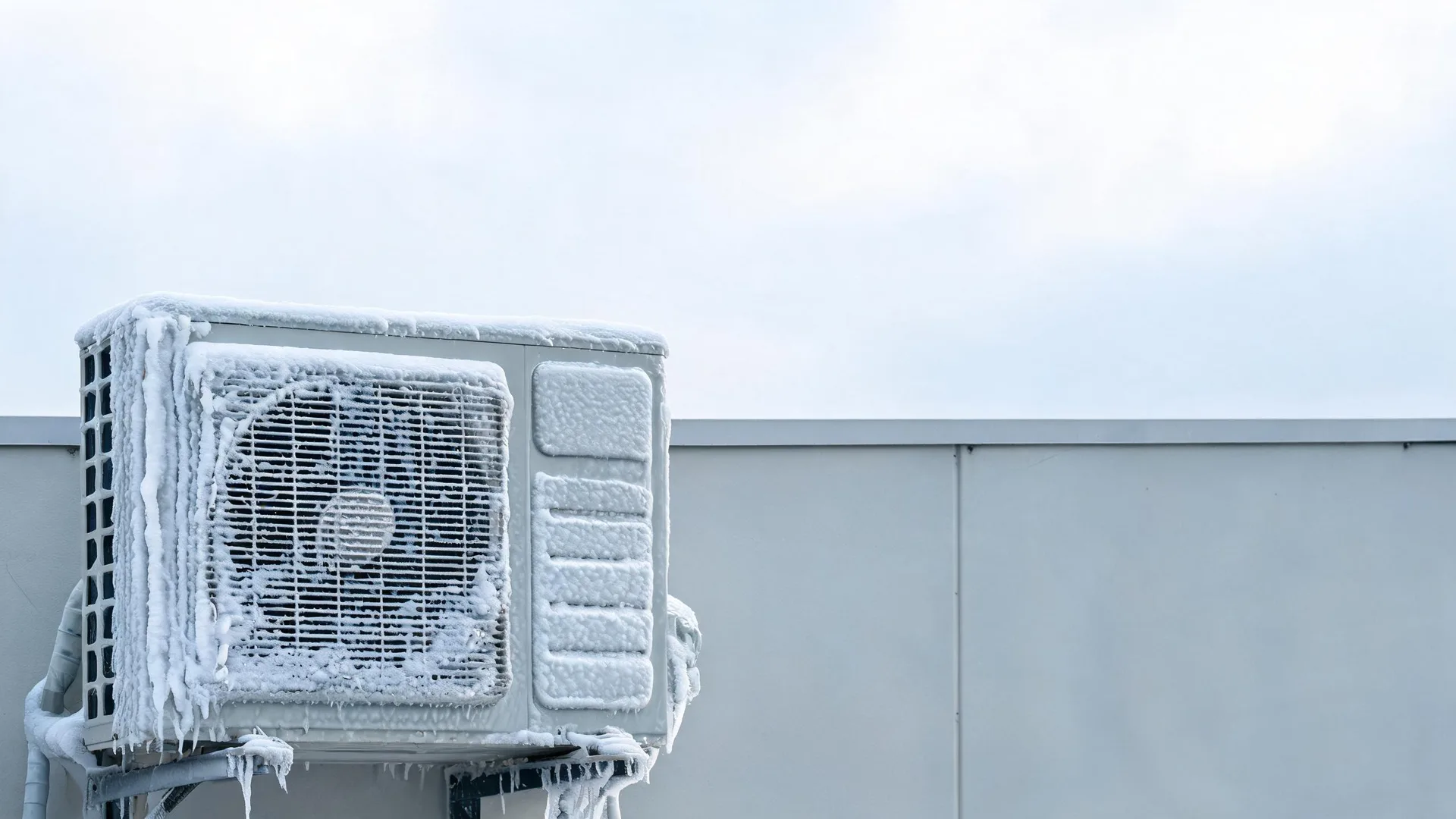
A heat pump has to switch directions to move from heating to cooling, and that job falls on the reversing valve. When it sticks, the system can blow the wrong temperature air or get stuck between modes. The defrost board and sensor are just as often the problem: if they misread the outdoor coil temperature, the unit either frosts over because it never defrosts, or it defrosts too often and loses heat it should be delivering.
Parts that cycle on and off wear out first

The contactor, the capacitor and the fan motor all start and stop every cycle, and that repeated start is what wears them down. A contactor pits and sticks. A capacitor loses its charge slowly until the motor it feeds starts hesitating or humming instead of turning over. Catching a weak start before it becomes a no-start is usually the difference between swapping a part and replacing a motor.

A heat pump usually tells you something is wrong before it quits outright. Air coming out lukewarm instead of hot is one of the first signs, especially if the unit runs and runs without ever catching up to the thermostat. A hissing or bubbling sound near the lines points to refrigerant escaping where it shouldn't. Ice on the outdoor unit in the middle of a mild day, not overnight, means the defrost cycle isn't doing its job. A loud bang or squeal at startup is usually the contactor or the fan motor telling you it's on its way out. Short cycling, where the system shuts off a few minutes after it starts, puts more wear on the compressor than almost anything else it does. Any of these is worth a call before the unit tries to push through it.

At some point the question stops being what's wrong and starts being whether it's worth fixing at all. Age matters less than what's already failed. A heat pump that's on its first repair in years, with a compressor and reversing valve that still test fine, is usually worth fixing no matter what the one broken part costs to replace. A unit that's had the capacitor replaced, then the contactor, then shows up again with a refrigerant leak, is telling you the failures are going to keep coming. The compressor is the part that decides this more than any other. It's the most expensive component in the system, and a compressor going bad, from years of hard starts or running low on charge, often costs enough to replace on its own that putting that money toward a new unit makes more sense than saving the old one. A tech who's honest with you will say so plainly, and will also tell you when the fix in front of you is small enough that the question doesn't even apply yet.